Amarillo Texas Travel Guide: Wind, Steak, Horses and the Spirit of the Panhandle
Planning a trip to Amarillo, Texas? Discover the best things to do in Amarillo, from exploring Palo Duro Canyon and Route 66 to eating at the famous Big Texan Steak Ranch, visiting the American Quarter Horse Hall of Fame, and experiencing authentic Texas Panhandle culture.
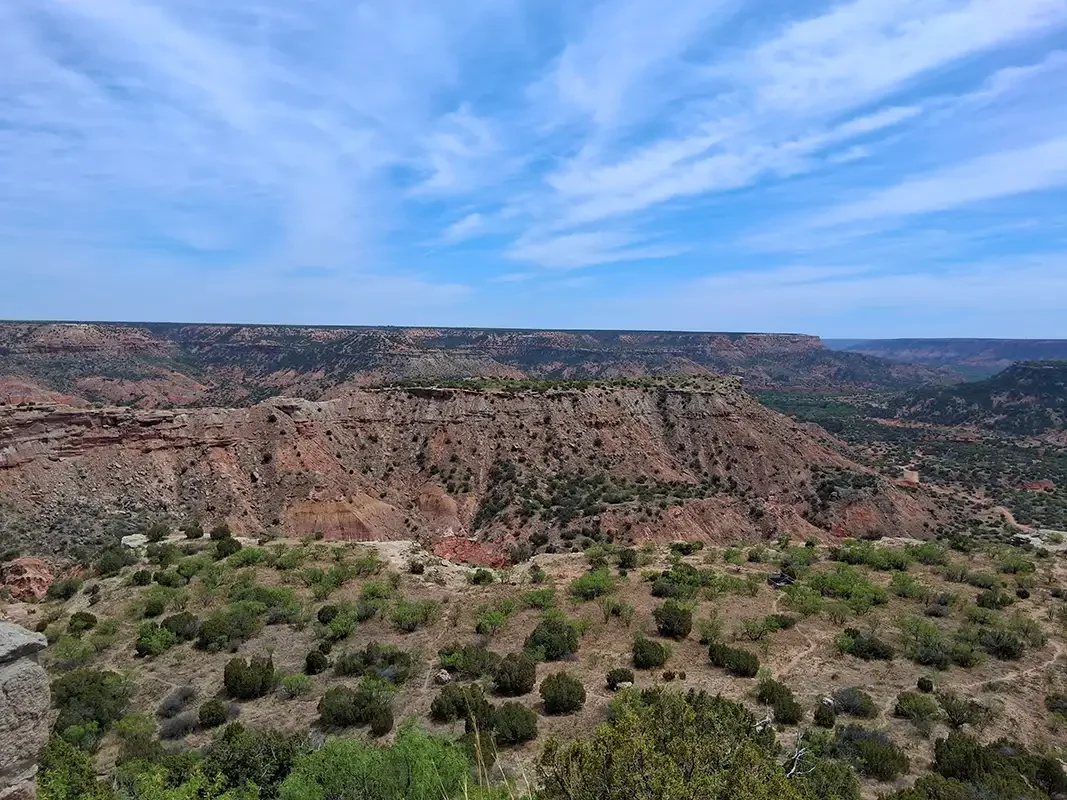
Table of Contents:
Located in the Texas Panhandle, Amarillo is a destination where Route 66 history, cowboy culture, legendary steakhouses and the dramatic landscape of Palo Duro Canyon come together.
Oddly enough, the week I was in Amarillo, Texas, George Strait was playing down the road in Lubbock, which meant his name floated through every diner, hotel lobby and gas station conversation in the Panhandle. I had been humming Amarillo by Morning since I landed in Houston earlier that day, partly because it is a longtime favourite of mine and partly because I was fired up to visit a place I had only ever known from a song.
By the time our plane dipped toward the runway, I felt like I was arriving in a town I had been hearing about my whole life.
From my window seat, I saw the land opening up beneath us. Amarillo sits in the middle of a wide plain that extends in every direction. Wind turbines stand in long rows, turning in the steady wind common to this part of Texas. The ground appears dry, with pale soil and scattered scrub. Irrigated fields come into view as the plane gets lower. Cattle operations and working farms are spread across the flat terrain, showing the region’s role in agriculture despite its arid conditions.
On the horizon, the plains drop into the red- and rust-coloured walls of Palo Duro Canyon State Park, a deep cut in the landscape. The area is shaped by wind, weather and long‑established land use. The first peoples who lived here, including the Comanche and other Plains nations, adapted to the same conditions. Later settlers did the same, relying on endurance and routine to make the land workable.
Checking In: The Barfield, Autograph Collection
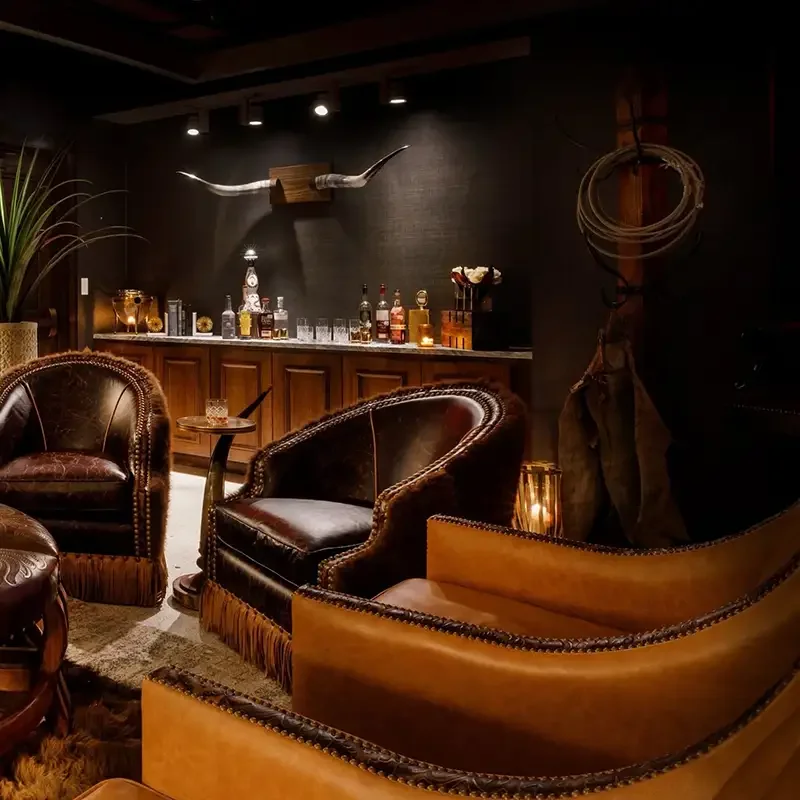
My base for my Amarillo itinerary was The Barfield, a beautifully restored historic hotel in the heart of downtown Amarillo. It is one of the city’s first true luxury boutique hotels, and it wears its Panhandle heritage proudly. The lobby mixes Western character with modern polish, the kind of place where you half expect a rancher in a Stetson to walk in and order an espresso. The building dates back to the 1920s, and its revival feels almost reverential, as if the walls themselves were relieved to be back in circulation.
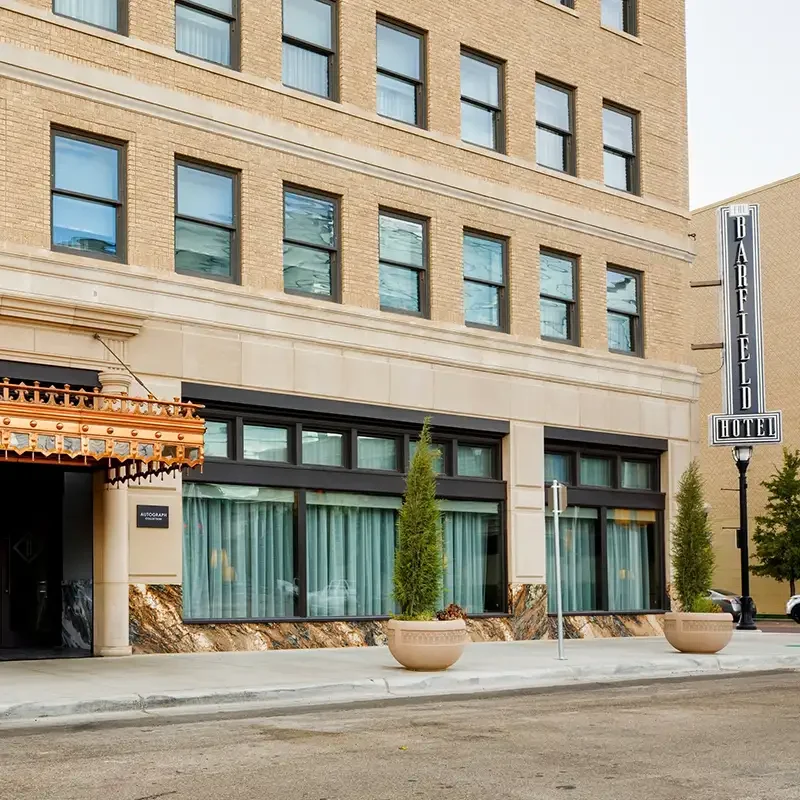
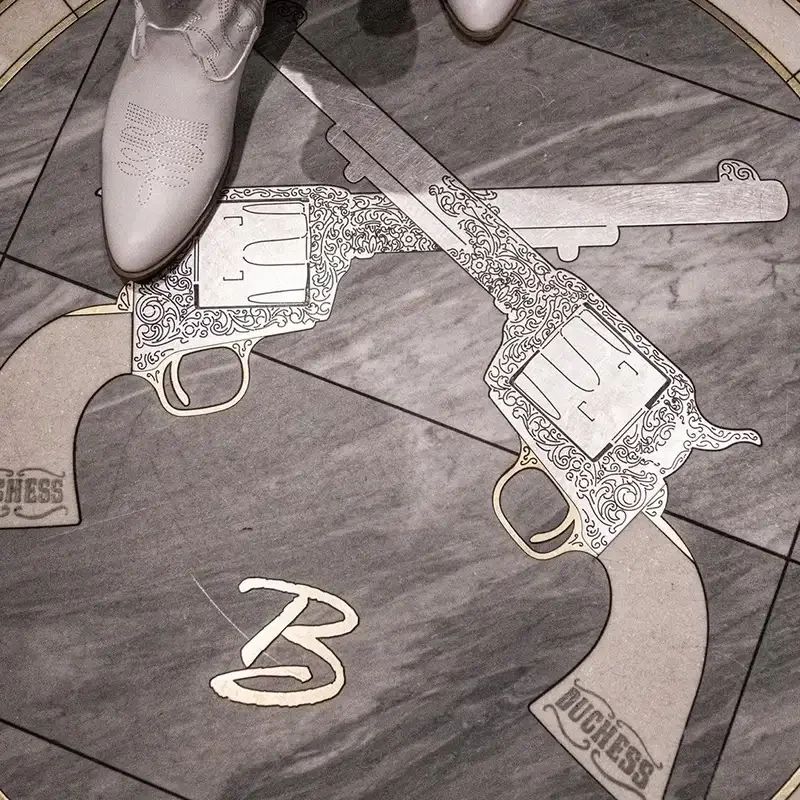
The Barfield carries the name and spirit of Melissa Dora Oliver-Eakle, the woman behind the original Barfield Building and one of the most influential ranch owners in Texas Panhandle history. A New York heiress who married into cattle country, she adapted to the frontier with a grit that became part of local lore. She helped run the vast JA Ranch, rode the open range, worked alongside cowboys, and earned a reputation for intelligence and quiet authority, all of which helped make her a true Texas legend.
The hotel’s crossed pistols symbol is a direct nod to her. It is not meant to be flashy or aggressive. It reflects the reality of Cornelia’s world, where carrying a sidearm was simply part of surviving the frontier and asserting your place in it. The pistols have become a shorthand for her independence and the unapologetic confidence she brought to Amarillo long before the city had paved streets or neon signs. The Barfield uses the emblem to honour her legacy and to signal that its luxury is rooted in real Panhandle history rather than borrowed Western clichés.
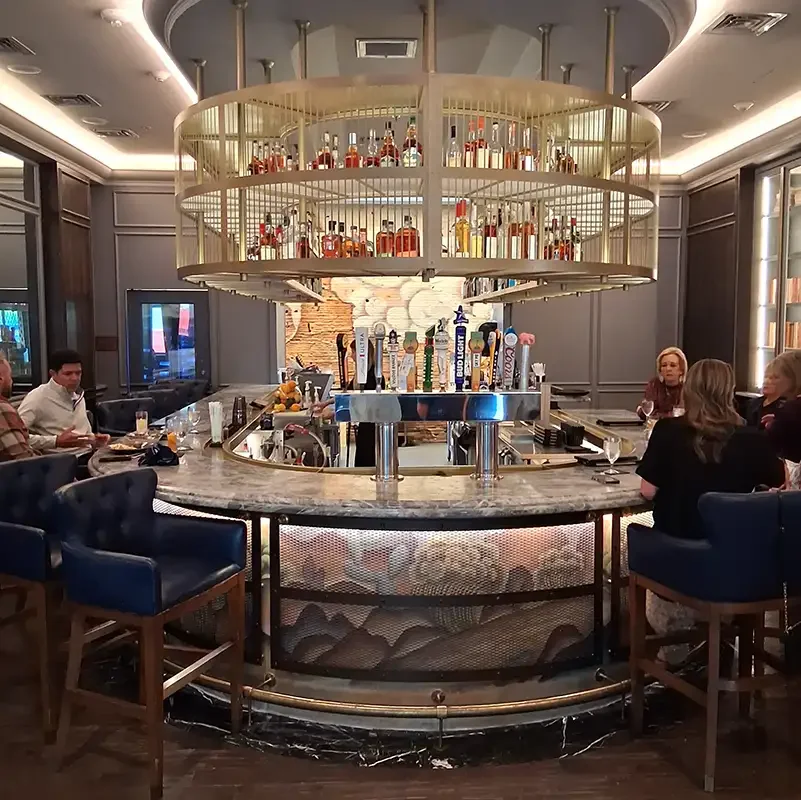
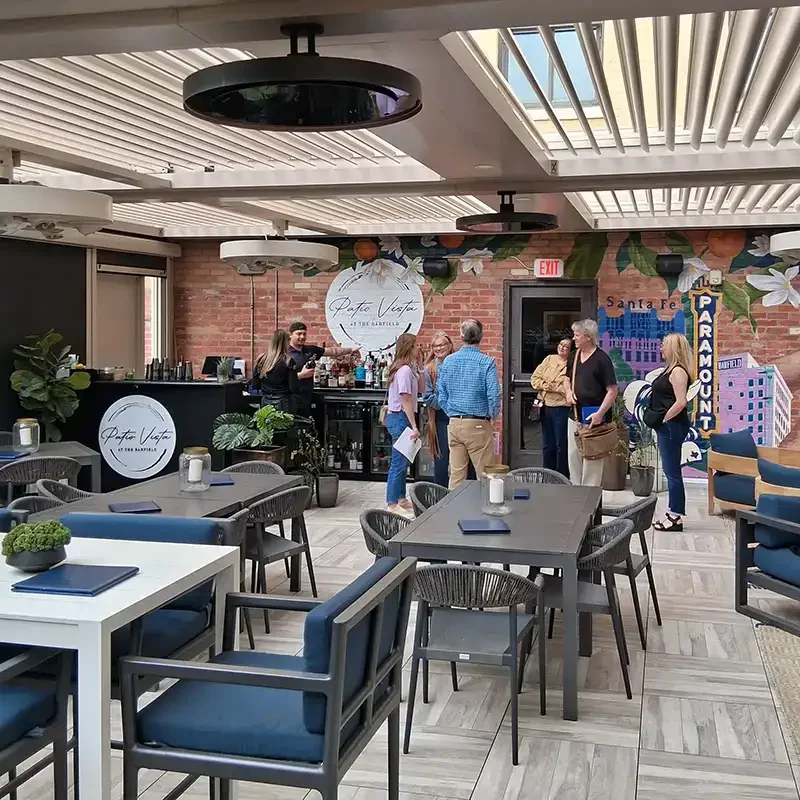
The afternoon I arrived, I did what any sensible traveller does after a long day at airports. I wandered over to the bar, skipped the espresso I had been pretending I needed, and ordered a cold beer. The staff could not have been friendlier, and the bar had the kind of relaxed feel that makes you sit down for a minute and stay longer than you planned. The hotel’s amenities follow the same mix of history and comfort. The rooms have leather accents, practical lighting and Western touches that feel genuine rather than themed. The fitness centre is modern and well equipped, a small surprise in a building that predates most of Amarillo’s paved roads. The Barfield also has a patio terrace that fills up in the evenings when the warm Panhandle breeze settles in, and guests drift outside with drinks. From there, you can look out over Amarillo and see downtown moving at its steady, everyday pace.
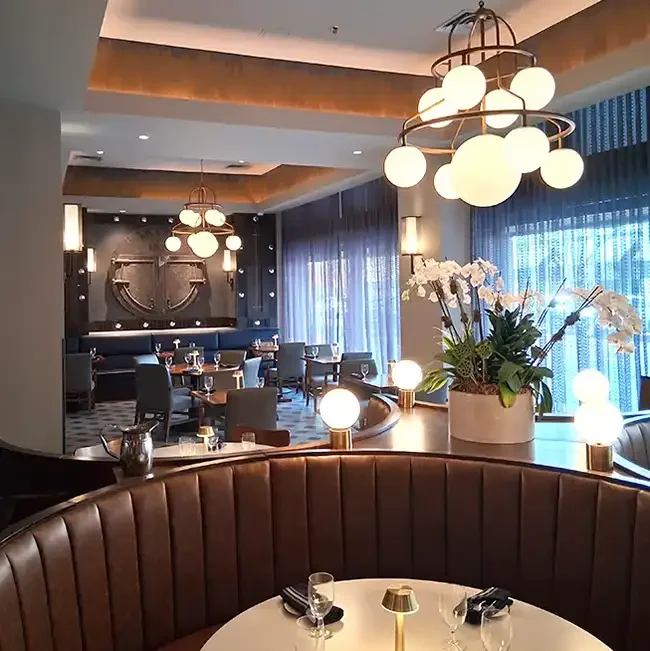
Later that evening, I headed downstairs and found the Paramount Recreation Club tucked behind an unmarked door. It is a Prohibition-era speakeasy reimagined with velvet seating, low lighting and cocktails that would hold their own in any major city. The hotel’s Italian steakhouse adds another unexpected note. Amarillo may be cattle country, but the Barfield shows it can deliver elegance as easily as grit.
Best Things to Do in Amarillo, Texas
Eating at the Big Texan Steak Ranch: Amarillo’s Famous Steakhouse
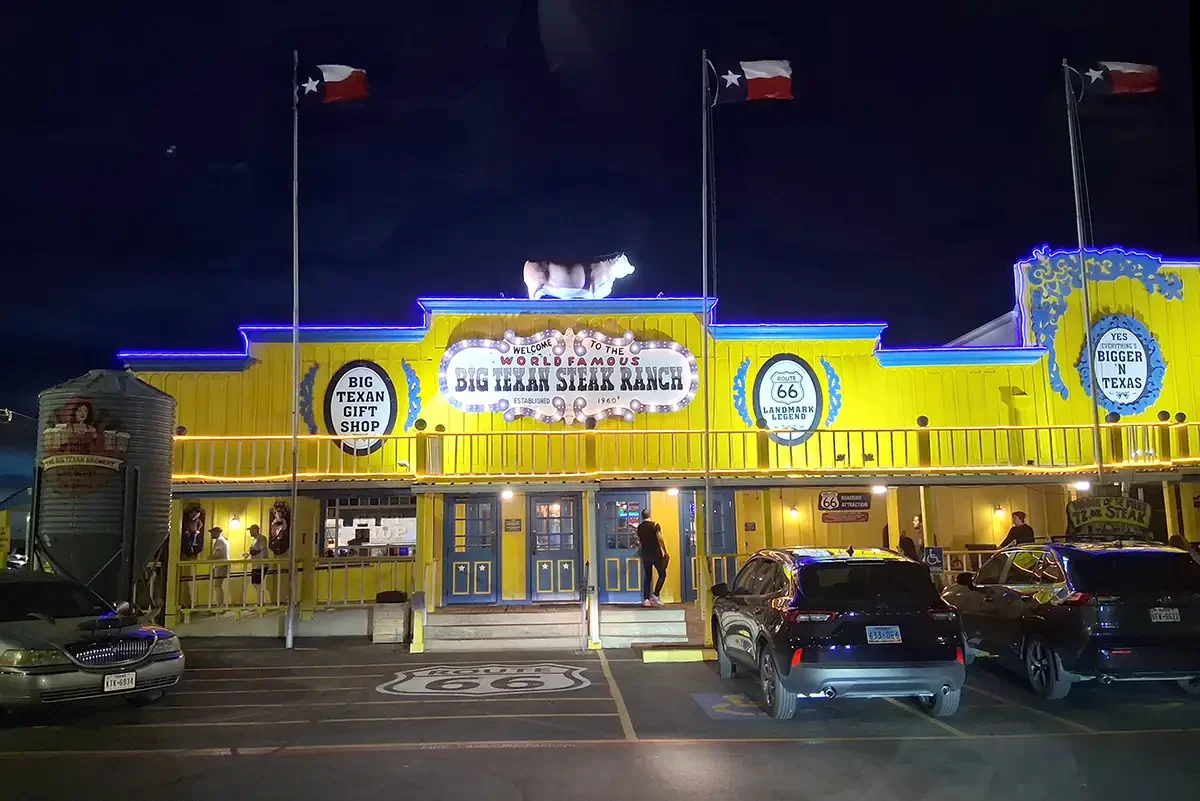
Of course, elegance only gets you so far in a town famous for a seventy-two-ounce steak challenge. The Big Texan Steak Ranch is one of the most famous restaurants in Amarillo and one of the most recognizable stops along Route 66. The building is painted a bright, unapologetic yellow, trimmed in blue, the kind of colour choice that feels less like branding and more like a wake‑up call to anyone drifting along Interstate 40. Out front stands a giant bull statue, a landmark in its own right and a magnet for road‑trip photos.
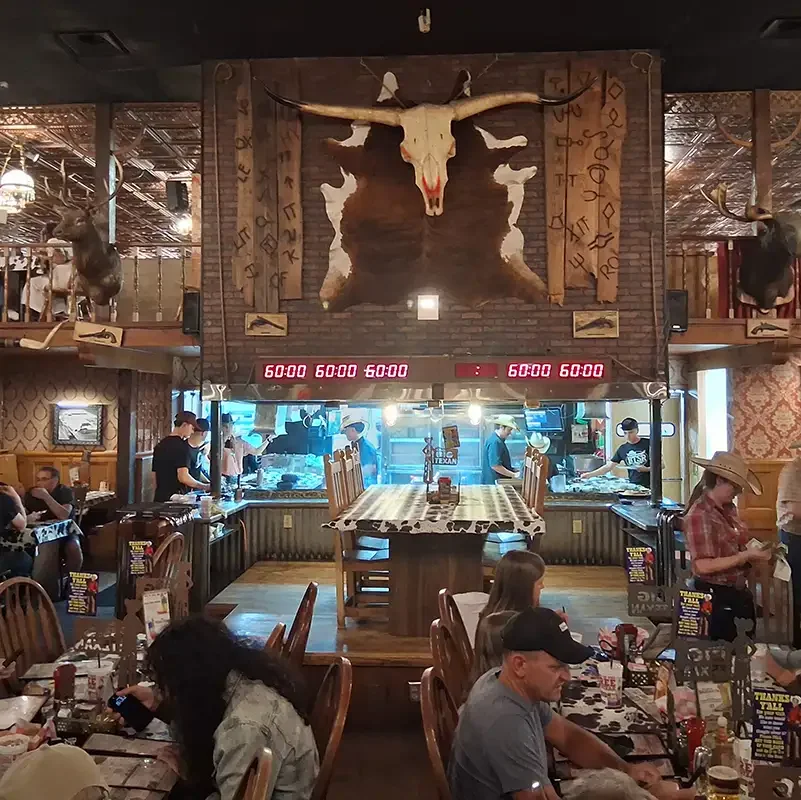
The Big Texan opened in 1960 and has been a Route 66 institution ever since. Today it seats about 650 people, and roughly three-quarters of its customers are tourists, which puts its annual foot traffic comfortably into the hundreds of thousands. Inside, the place is pure Texas theatre. Wagon wheel chandeliers hang overhead, long communal tables fill the dining hall, and the gift shop sells everything from oversized belt buckles to Big Texan hot sauce and T‑shirts that proudly announce you survived Amarillo.
The restaurant’s history is as colourful as its paint job. It was founded by R. J. Lee, a man who believed that if Texas was going to do steak, it might as well do it with personality. When Interstate 40 replaced Route 66, the Lees moved the entire operation to a new seven acre site east of town, even salvaging lumber from a former POW camp at the Amarillo Air Force Base to build parts of the new structure. A fire in 1976 destroyed the main dining room and gift shop, but the family rebuilt and reopened in 1978 with even more swagger. Today the restaurant is run by Lee’s sons, Bobby and Danny, who have kept the original spirit intact while turning the Big Texan into one of the most recognizable stops in the Panhandle.
Steak With Swagger
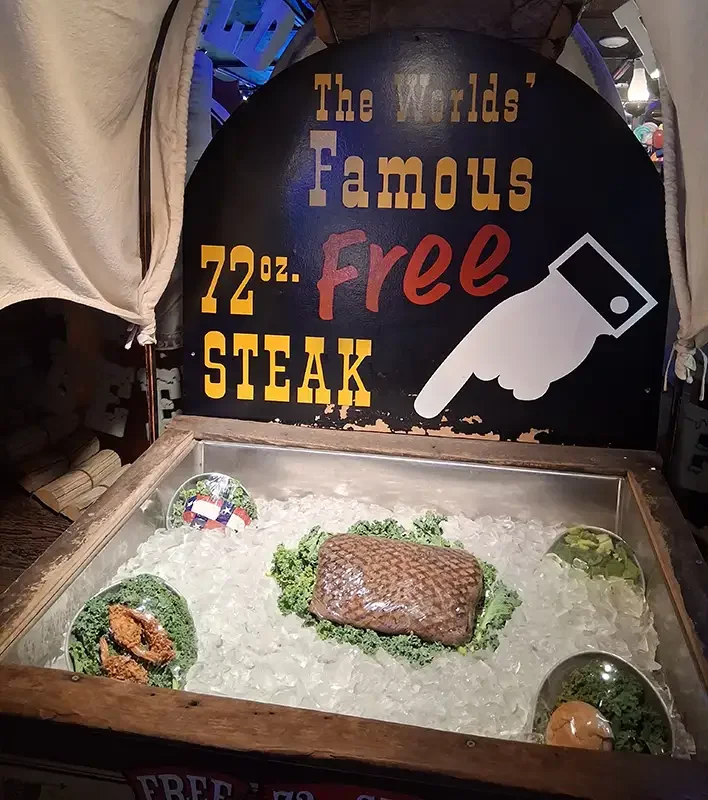
And then there is the famous seventy-two-ounce steak challenge. The rules are simple. Finish the steak, the baked potato, the salad, the shrimp cocktail and the roll in under an hour, and the meal is free. Miss the mark and the bill is seventy-two dollars, which feels like the restaurant tipping its hat to Texas humour. Challengers sit on a raised stage under bright lights, a countdown clock beside them like a carnival attraction for people who fear vegetables.
Some show up with a plan. Some show up with swagger. Some show up with the kind of blind optimism that burns off faster than the butter on the baked potato.
The rest of us stayed safely at our tables, enjoying dinners that did not require medical supervision while we quietly rooted for a patron who was giving the challenge an honest try. I stuck to a reasonable cut of beef and enjoyed the spectacle, which is the surest way to leave the Big Texan with both your pride and your pulse intact.
As for how much beef the place goes through, the numbers are exactly what you would expect from a restaurant that has built a global reputation on steak. Between the dining room and the steady stream of challenge attempts, the Big Texan moves an astonishing amount of beef every year, enough to keep state, national and local suppliers busy and visiting cardiologists nervous. The exact poundage shifts with the season, but the volume is enormous, and the kitchen handles it with the kind of efficiency that only decades of practice can produce.
Riding the Rim of Palo Duro Canyon
The next morning brought one of the real highlights of the trip. Cowgirls and Cowboys in the West run guided horseback rides along the rim of Palo Duro Canyon, and it is hard to imagine a better way to understand the scale and spirit of the Texas Panhandle. The operation is run with the kind of quiet professionalism that shows up again and again in guest reviews. The horses are steady and well trained, the guides know the land like an old friend, and the pace is relaxed enough that even first‑timers settle in quickly.
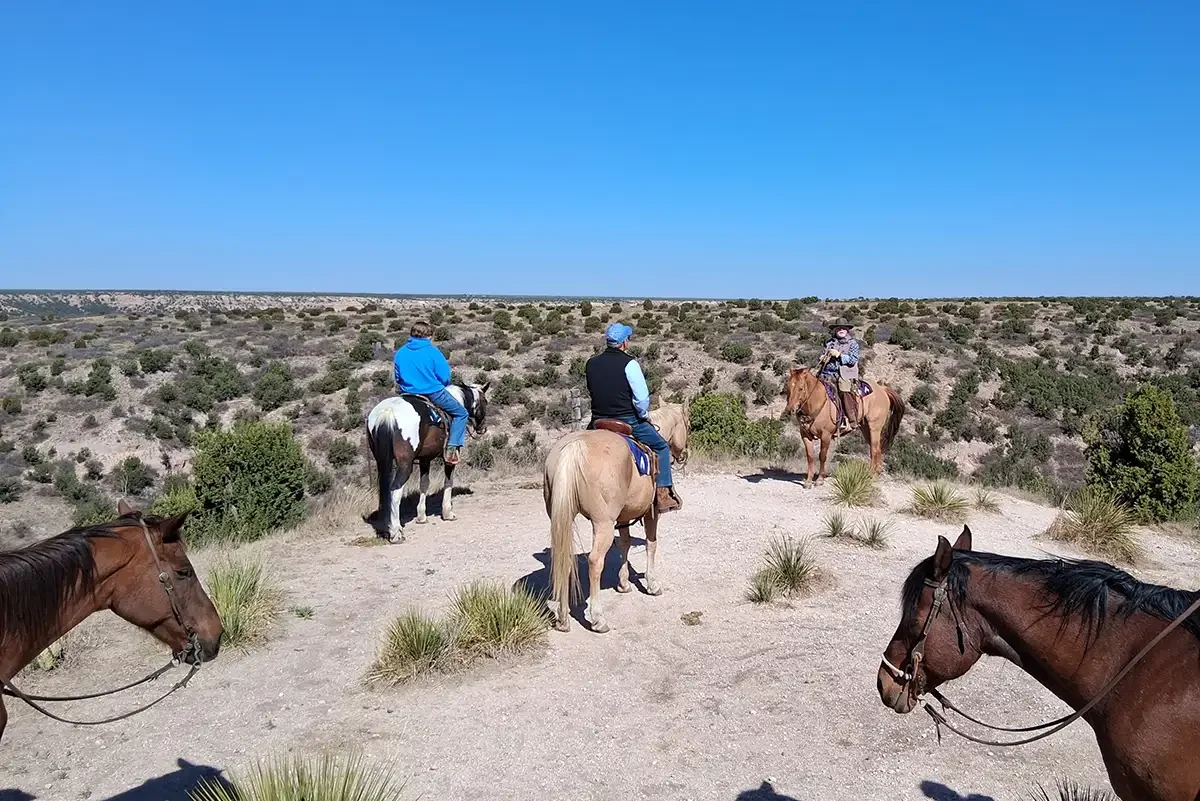
Our ride wound through open grassland before reaching the edge of the canyon, where the world suddenly drops away into a sweep of red, orange and gold. Palo Duro Canyon State Park is the second-largest canyon in the United States, and from horseback, the view feels almost cinematic. The layers of rock stretch out in every direction, carved by wind, water and time into a landscape that looks both ancient and alive.
We had a local historian riding with us that morning, a soft-spoken man who waited until we reached the overlook before explaining the history tied to this area. In the 1870s, the U.S. Army carried out a campaign to force the Comanche, Kiowa and Cheyenne from this region, which had been their base for generations. The Comanche leader Quanah Parker grew up here and remains a significant figure in Texas history. This land formed the centre of his people’s territory and offered shelter, food and a strong defensive position.
The historian pointed out the high ground where Comanche scouts once watched for approaching soldiers and described how the Army destroyed the tribe’s horse herd in a single strike, ending their ability to resist. The account was delivered plainly, without embellishment, and it added context that no photograph could provide. Paused there in the saddle, with the wind moving across the rock and brush, it was impossible not to feel the weight of that history.
The ride back was quiet. The horses moved steadily along the trail, and the guides pointed out a few details about the land as we went. The light changed as the sun climbed and the colours across the rock and brush shifted with it. It was a simple, steady end to the morning and a clear reminder of how much history sits in this landscape.
Later that day, back in Amarillo, the focus shifted from the past to the present. The city has its own rhythm, and the best way to tap into it is to start where locals have been gathering for decades.
Starting Route 66 With Lunch at the Golden Light Café
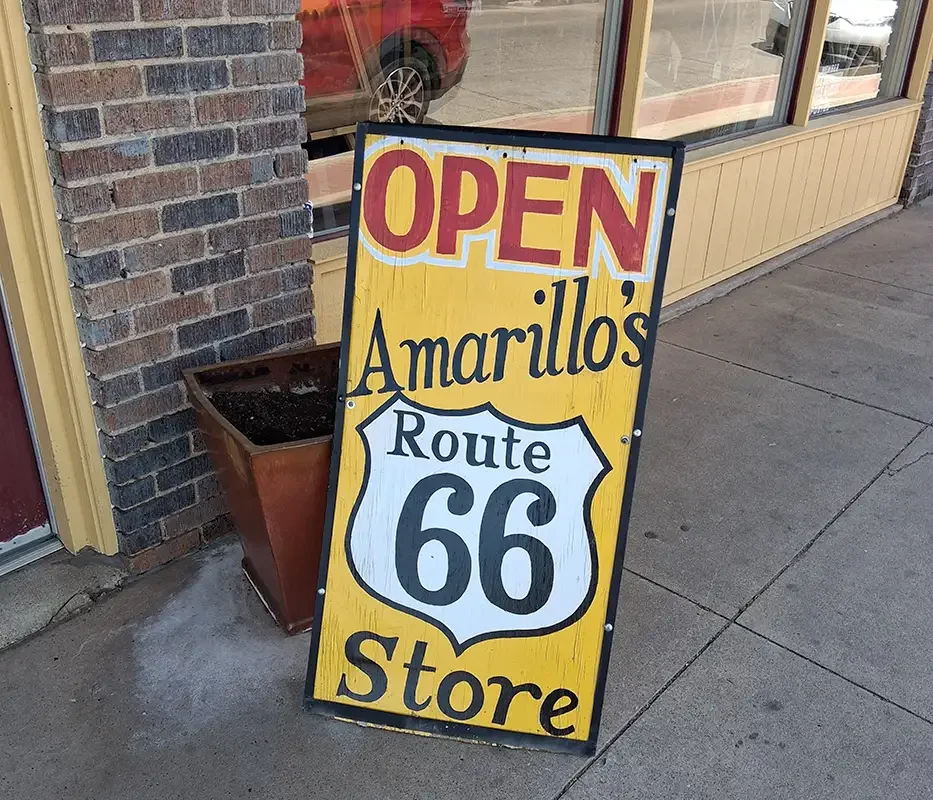
Amarillo’s Historic Route 66 District preserves one of the most authentic stretches of America’s once great cross-country highway in Texas. Route 66 stretched from Chicago to Santa Monica and carried generations of travellers chasing work, weather or the simple promise of the open road. Much of it has since been replaced by the Interstate system, but Amarillo still holds one of its most authentic surviving stretches. I kicked off my wander there with lunch at the Golden Light Café, a no‑nonsense local institution that has been feeding travellers since 1946.
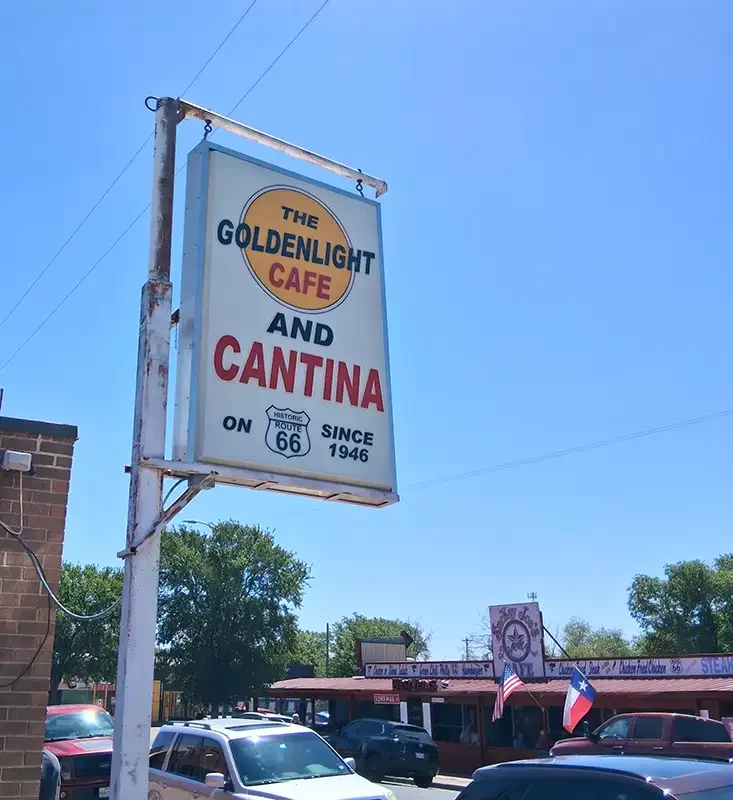
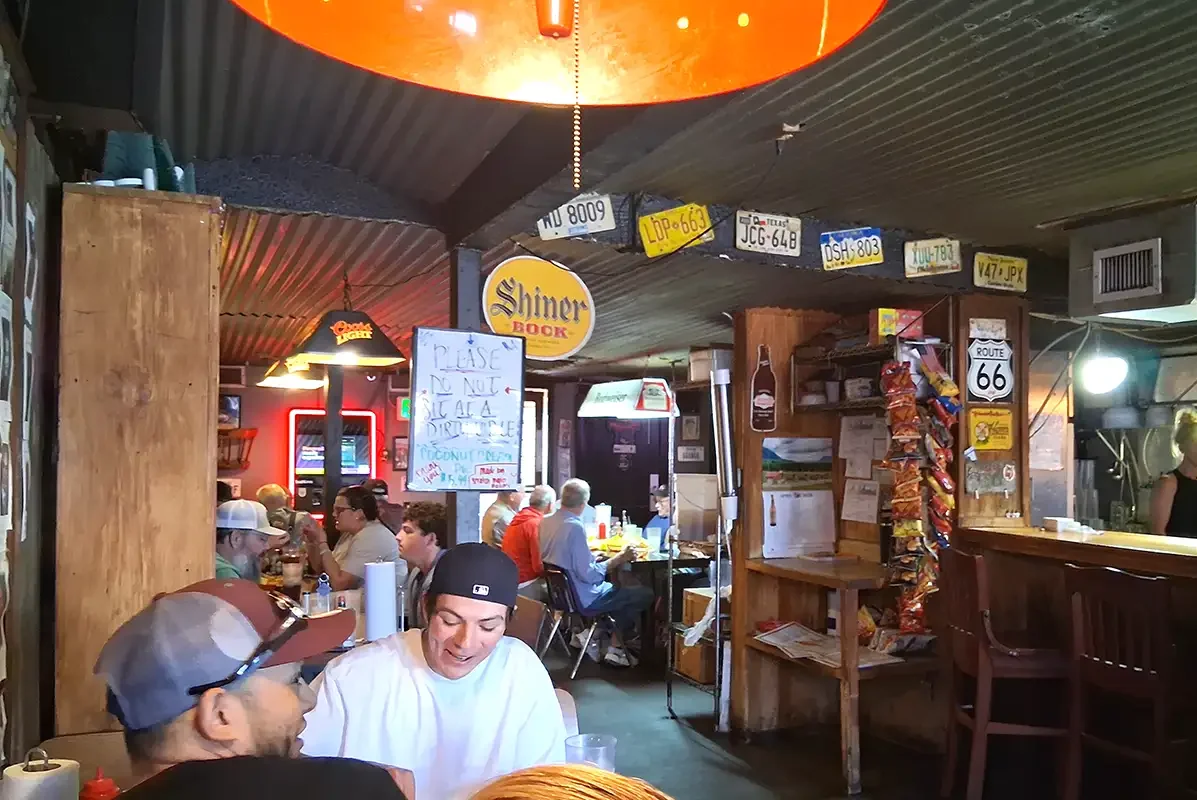
The Goldenlight is the kind of place where the walls have absorbed decades of conversation, where the burgers arrive exactly as advertised, and where the staff treat everyone like a regular, whether you’re from Amarillo or Ottawa.
The Goldenlight sits right on the old highway, and stepping out afterwards feels like walking into a living postcard.
The Route 66 Historic District runs for a few blocks along Sixth Avenue, a stretch lined with vintage storefronts, neon signs, antique shops and murals that celebrate the road’s long, strange, wonderful history. Some buildings still carry their original mid‑century bones, while others have been restored with just enough polish to keep the past visible without turning the place into a museum. I wandered past retro gas stations, old motor courts and shops selling everything from vinyl records to cowboy boots.
A few locals were sitting outside on shaded patios, swapping stories the way people do in places where time moves at a more forgiving pace. The district has an easy swagger to it, the kind that comes from surviving the rise and fall of the Mother Road and finding a second life in the travellers who still come looking for a piece of the old highway.
Route 66 may no longer run unbroken across the country, but in Amarillo it still feels alive — not preserved under glass, but lived‑in, weathered and proud of every mile it has carried.
World Championship Blacksmith Competition
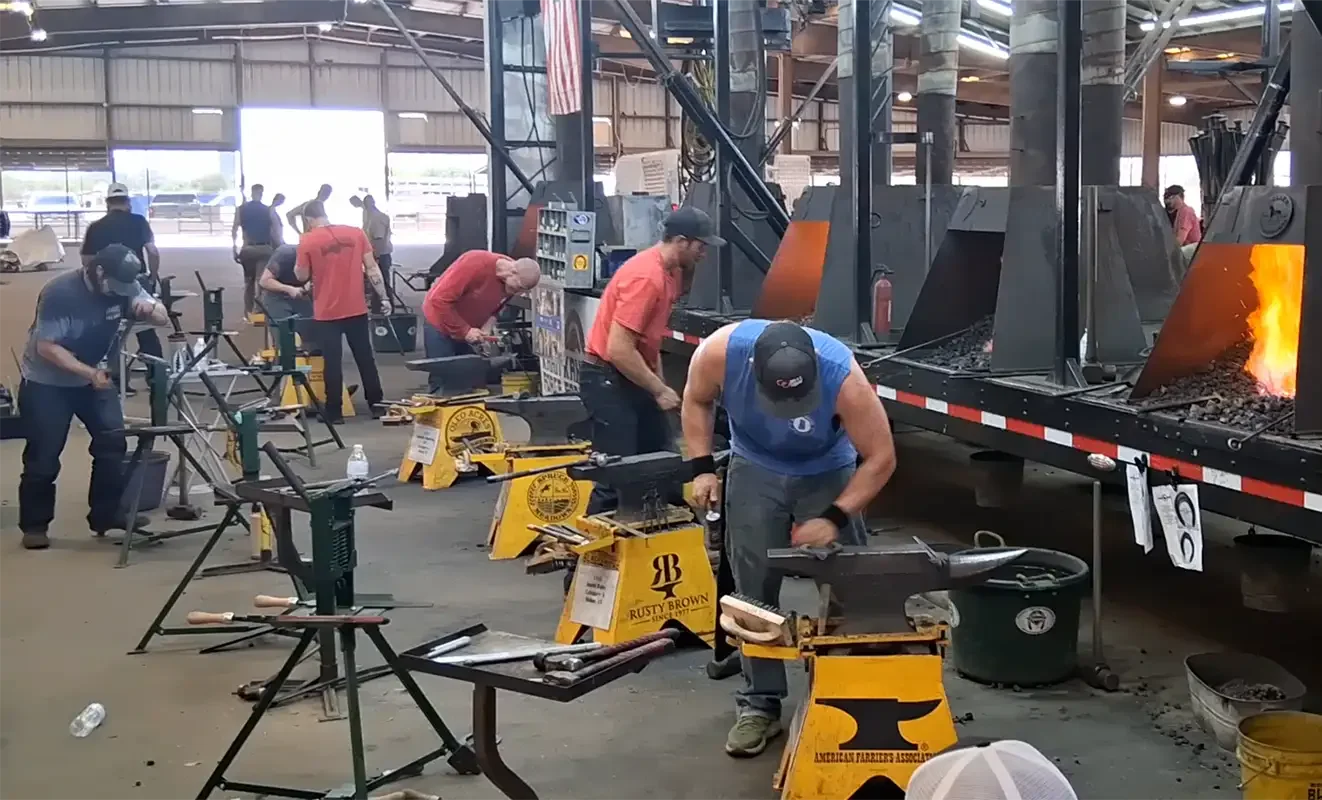
Timing worked in our favour. The World Championship Blacksmith Competition was underway in Amarillo the week we arrived, bringing together some of the most skilled farriers and metalworkers in the region. It’s a serious event, yet there’s something undeniably intriguing about watching a blacksmith turn a bar of red‑hot steel into a perfectly balanced horseshoe. The hammer rhythm, the sparks, the focus — it all creates a kind of quiet theatre that draws you in.
Men and women competed side by side, each showing a level of precision that only years of practice can produce. One competitor handed my colleagues and me a finished horseshoe after their round. I carried mine home and hung it over my office door with the open end facing up, following the long‑standing ranch‑country belief that it brings good luck.
The competition honours a craft that has shaped ranching life for generations and still matters today. Watching these blacksmiths work, you can’t help but admire the grit, the talent, and the pride they bring to a trade that remains essential in the Panhandle.
American Quarter Horse Hall of Fame and Museum


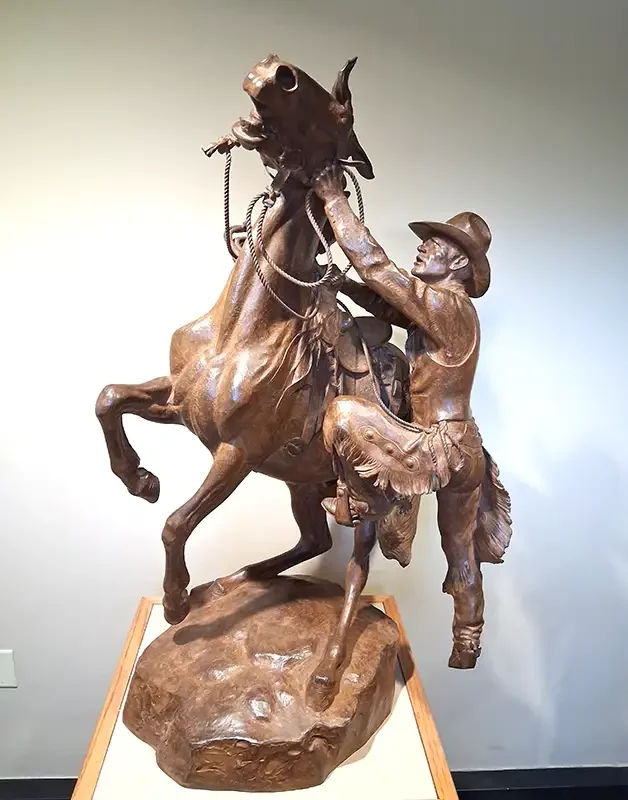
A visit to the American Quarter Horse Hall of Fame and Museum adds another layer of understanding to the region. The Quarter Horse is the workhorse of the West, valued for its speed, strength and steady temperament, and the museum shows why the breed became so central to life here. Inside, the space feels calm and deliberate, with warm lighting and wide galleries that let the exhibits breathe. One wall is dominated by a massive bronze relief of running horses, a striking piece that sets the tone for the rest of the museum. It captures the power and movement of the breed in a way that photographs never quite can.
The exhibits mix historic images, personal stories and well‑used ranch gear, giving a sense of how deeply these horses shaped the culture of the Panhandle. You see the families who bred them, the riders who trusted them and the ranch hands who relied on them every day. The result is a quiet but genuine appreciation for a breed that helped build this part of the country.
Dinner at OHMS Café
Dinner at OHMS Café is a welcome shift into upscale dining. The restaurant has been part of Amarillo’s downtown for decades and has earned a loyal following that extends well beyond tourists. Locals treat it as a kind of reliable refuge, the place you go when you want a proper meal in a room that feels intimate without trying too hard.
Inside, the lighting is low and warm, the artwork is eclectic and the bar is surprisingly lively for a space this size. Regulars sit shoulder to shoulder with out‑of‑towners, and the staff move with the easy confidence of people who know their menu is strong. Reviews often mention the bar as one of the city’s best spots for a pre‑dinner drink, and it shows. There is a steady hum of conversation, the kind that signals a restaurant that has been doing things right for a long time.
The kitchen leans into creative dishes that blend local ingredients with global influences, and the result is far more polished than you might expect in a cattle town. Amarillo has a reputation for big steaks and roadside diners, but OHMS proves the city’s culinary scene has range. It is thoughtful, quietly ambitious and unmistakably local, which is exactly what makes it stand out.
West Texas Ranch Rodeo
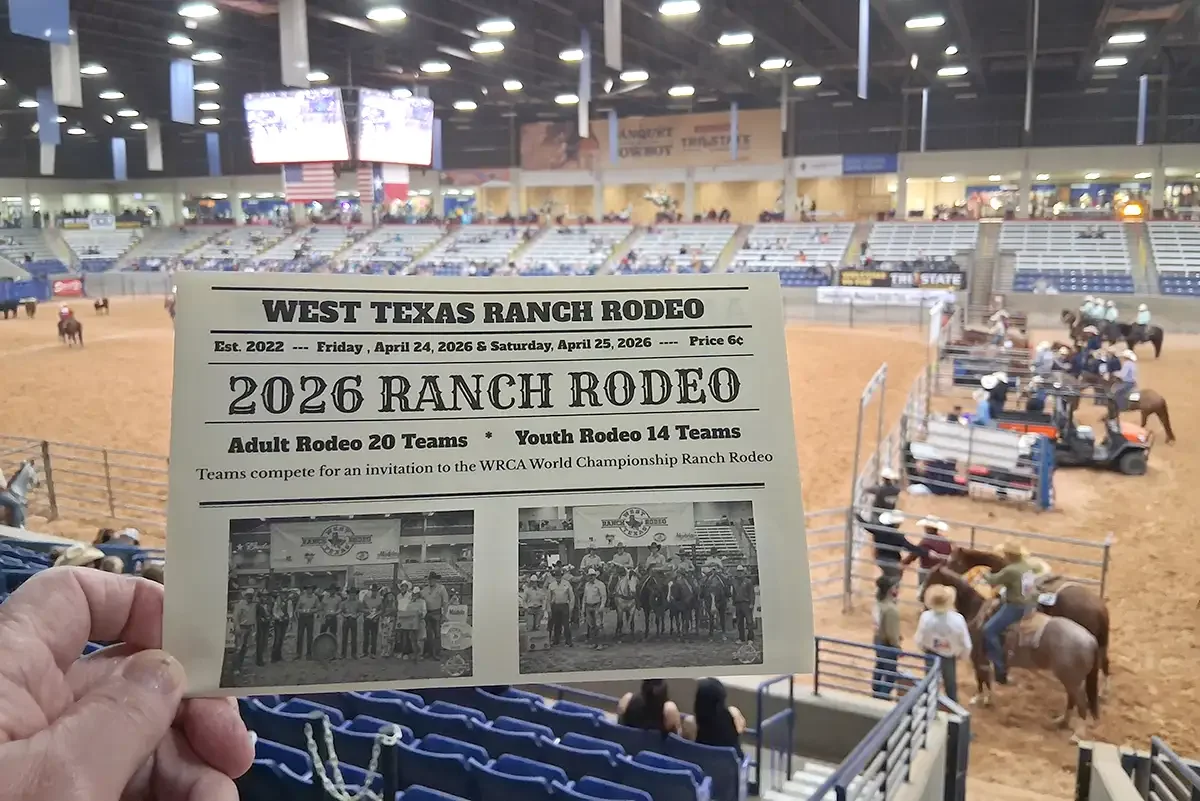
The West Texas Ranch Rodeo was a true highlight of the trip. This is not a glossy arena production with spotlights and scripted drama. It is the real thing. Ranch teams show up in the same gear they wear to work, and the events mirror the jobs they do every day. The result is a rodeo that feels raw, fast and completely authentic.
Teams from long‑established ranches across the Panhandle compete, and the lineup of events reflects the rhythm of actual ranch life. There is team branding, where riders rope and handle a calf with the kind of efficiency that only comes from years of working cattle together. There is wild cow milking, which is chaotic, hilarious and strangely impressive. Bronc riding is rougher and less polished than the pro circuit, and that is exactly what makes it compelling. You are watching people who ride because they have to, not because it looks good on a poster.
Other events include stray gathering, team doctoring, trailer loading and the always unpredictable mugging, where a steer must be roped, controlled and tied in a race against the clock. These events are not designed for showmanship. They are designed to test teamwork, horsemanship and the ability to stay calm when a thousand pounds of animal decides it has other plans.
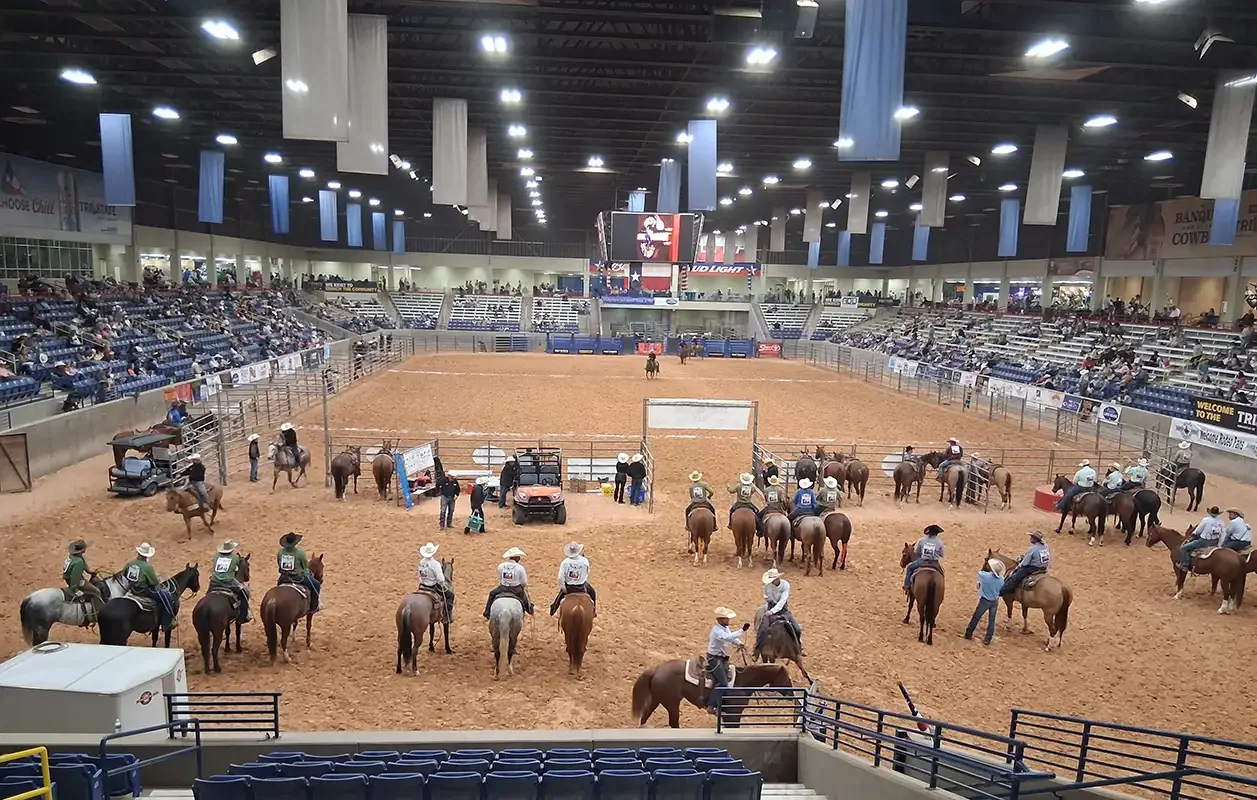
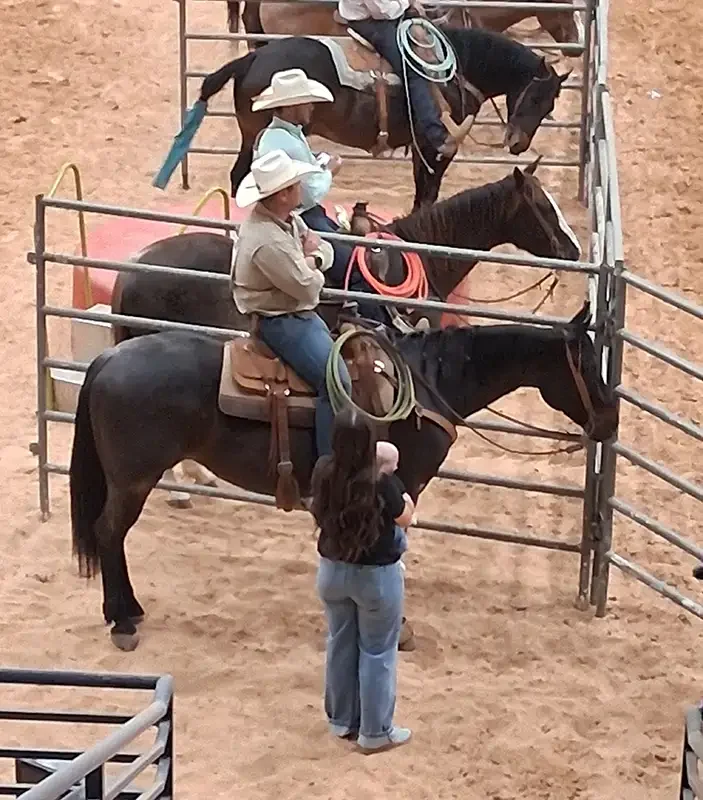
It is not a performance. It is a window into the working life that still defines this part of Texas.
The crowd is a mix of ranch families, old hands who have seen decades of rodeos and visitors like us who quickly realize we are witnessing something that has not changed much in generations. The dust hangs in the air, the announcer keeps things moving and the teams work with a rhythm that comes from trust and long days on the range.
It is loud, gritty and absolutely worth seeing. The West Texas Ranch Rodeo captures the spirit of Amarillo and the Panhandle better than anything else on the itinerary.
Cadillac Ranch
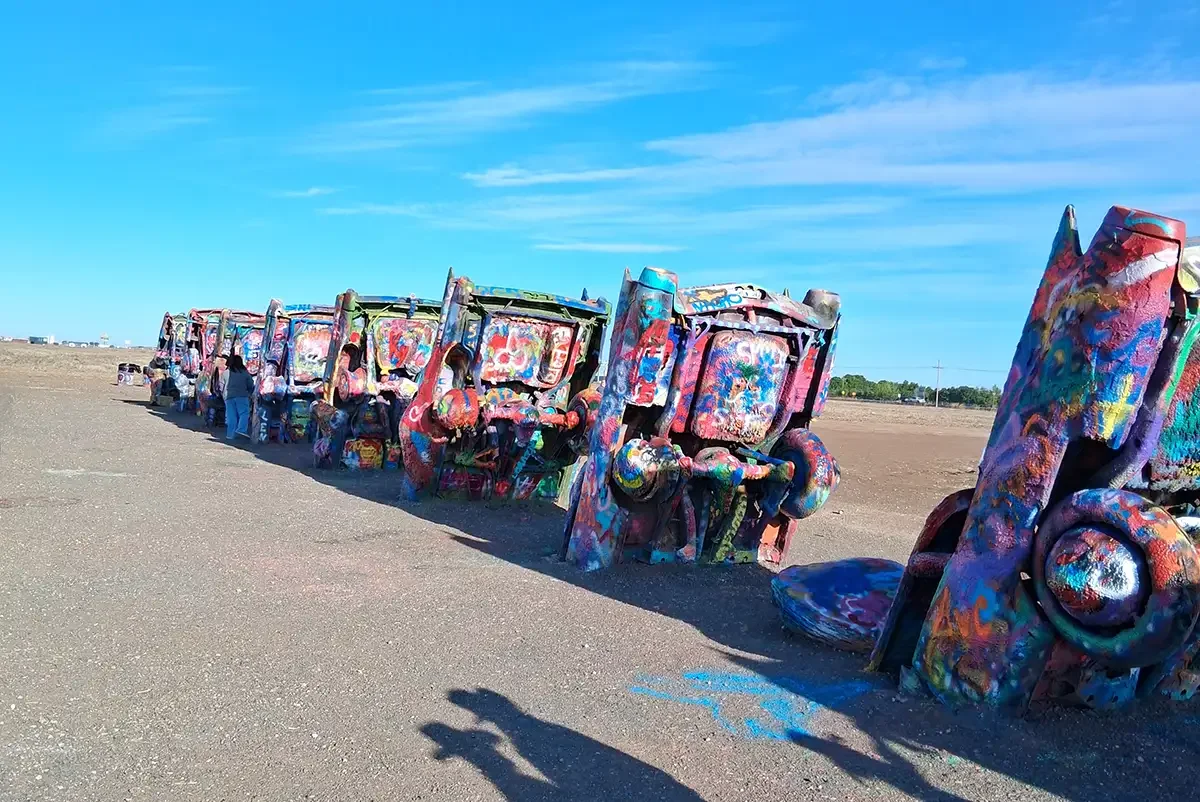
The last day began west of Amarillo at the Cadillac Ranch, a row of ten Cadillacs buried nose-first in a field that has become one of the most recognizable stops on Route 66. The cars were already alive with colour when we arrived. A group of twentysomething women from Alberta and Saskatchewan had beaten us there after driving straight through the night, eighteen hours on the road, to compete in a team event at the rodeo. It felt serendipitous to run into fellow Canadians at a place like this, especially women who understood Texas as naturally as Texans do.
The Prairie provinces share the same ranching backbone, the same rodeo culture, the same instinct to show up, work hard and enjoy the ride. They were loving Texas, and their heart for the place was every bit as strong as their pride in their home. Before heading off to the arena, they painted a Canadian flag across one of the Cadillacs.
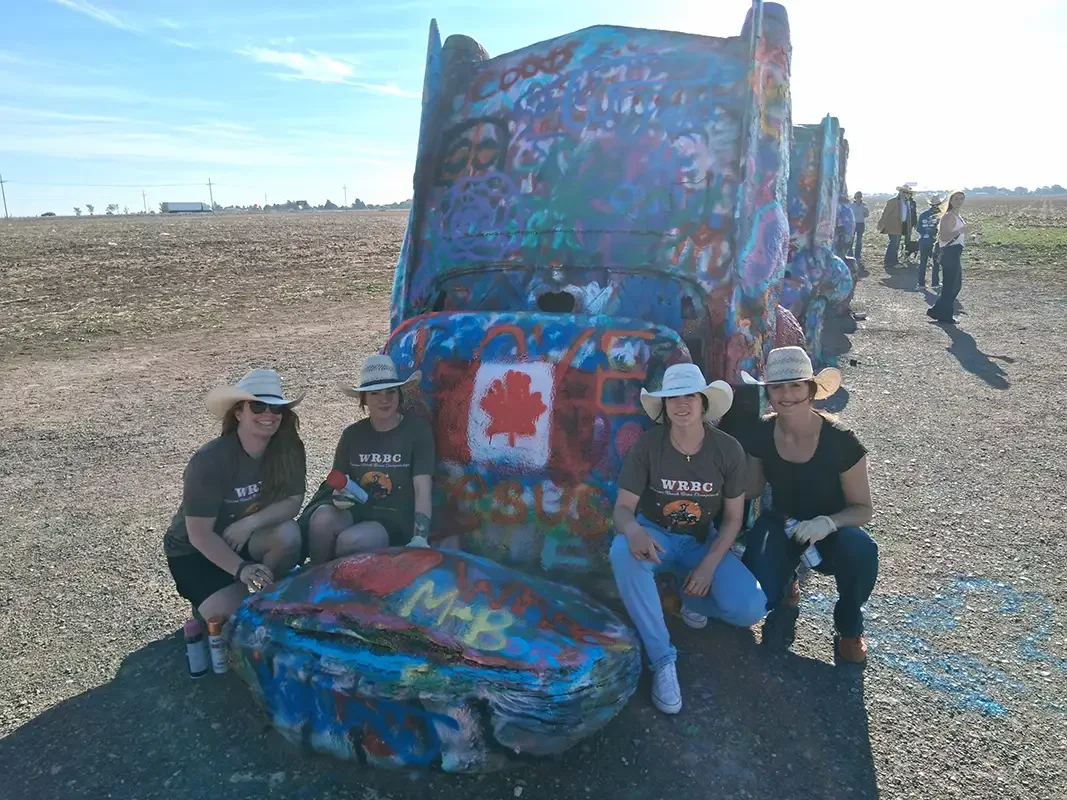
It would be covered within days, as tradition goes, but for that moment, it was theirs, a small Western handshake between two places that speak the same language.
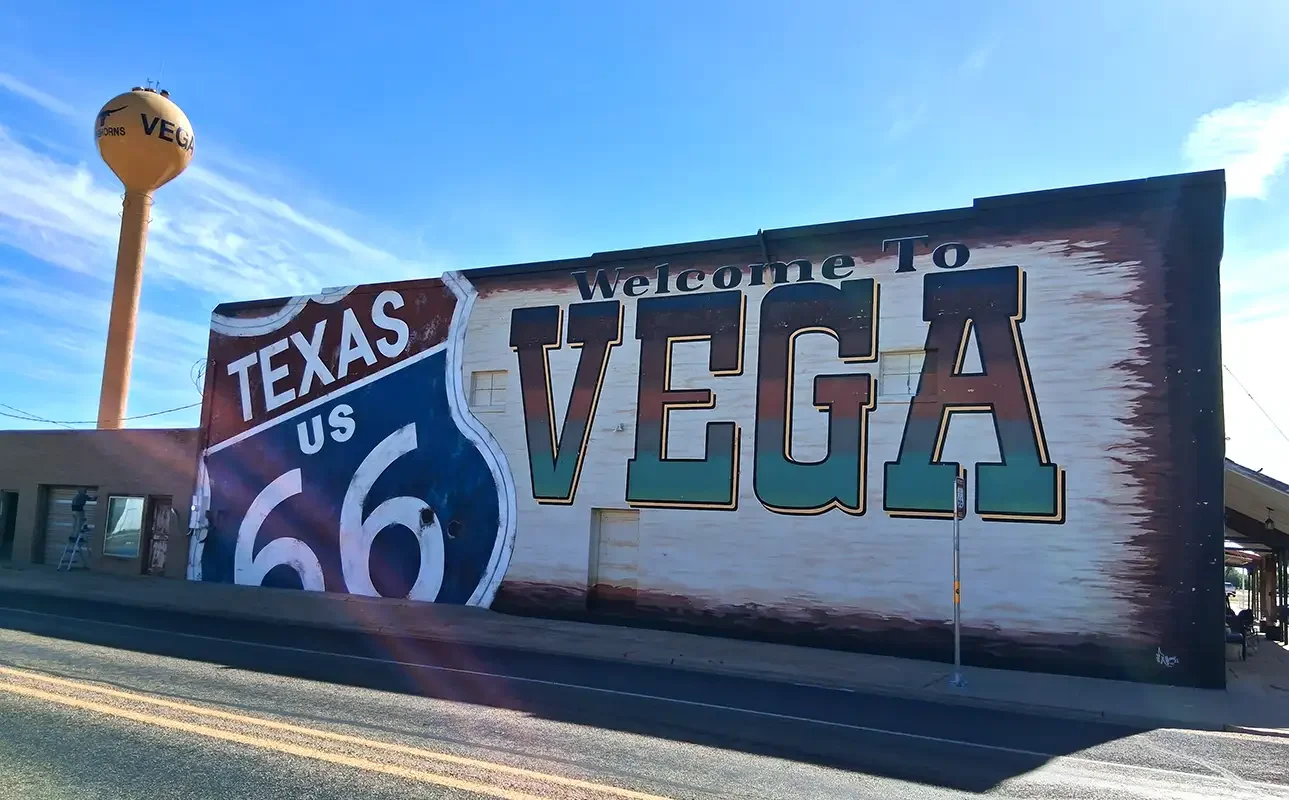
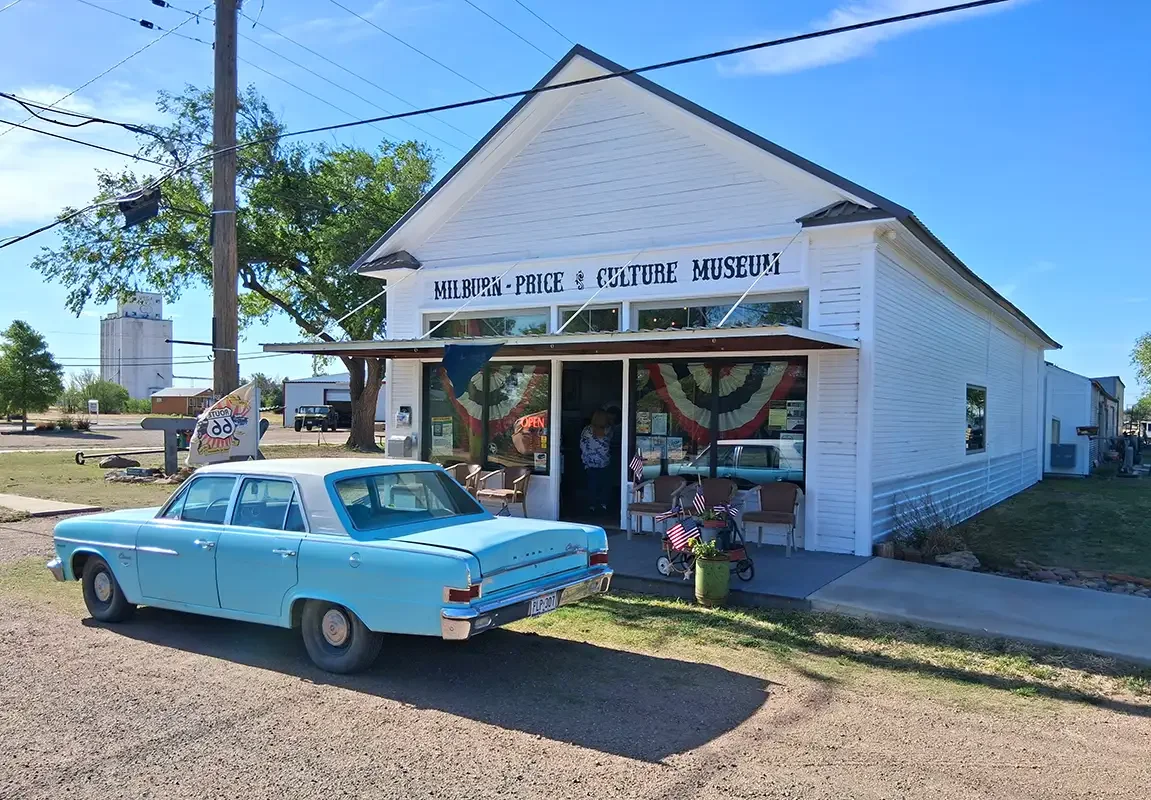
From there, the road carried us to Vega, a small town that still holds tight to its Route 66 roots. The Milburn Price Culture Museum sits right off the main drag, filled with local stories and the kind of memorabilia that reminds you the Mother Road was built as much by places like this as by the big cities at either end.
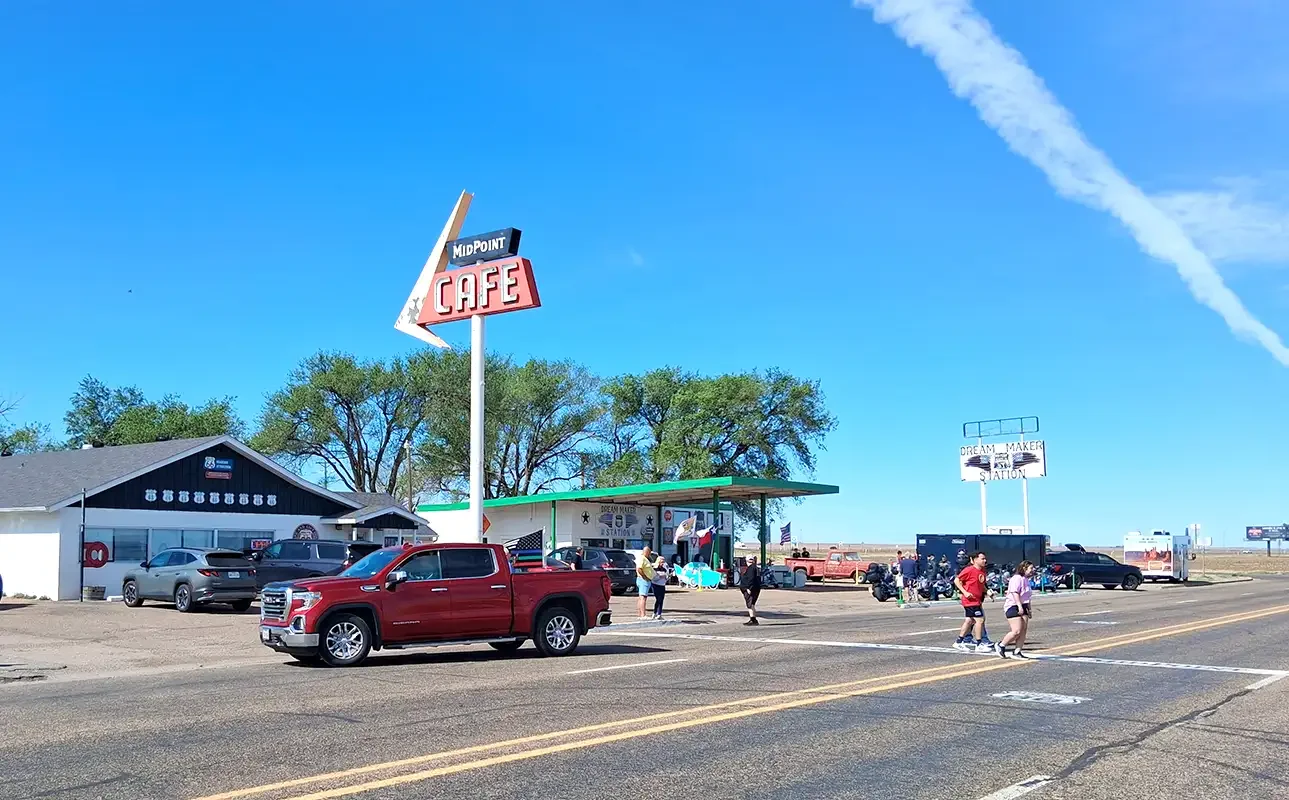
A few minutes farther west sits the Midpoint Café, exactly halfway between Chicago and Los Angeles. Travellers have been stopping here since 1928, and the place still feels like a proper roadside café. The ugly crust pie lives up to its reputation, and the room has the easy, unhurried feel of a stop that has seen generations of people pass through.
By midday, we had turned south toward Creek House Honey Farm, a quiet break from the highway. Lunch was simple and fresh, served on a patio that looks out over the fields. The owners make honey‑based products on-site, and the whole place has a calm, lived‑in charm that fits the Panhandle more than any brochure ever could.
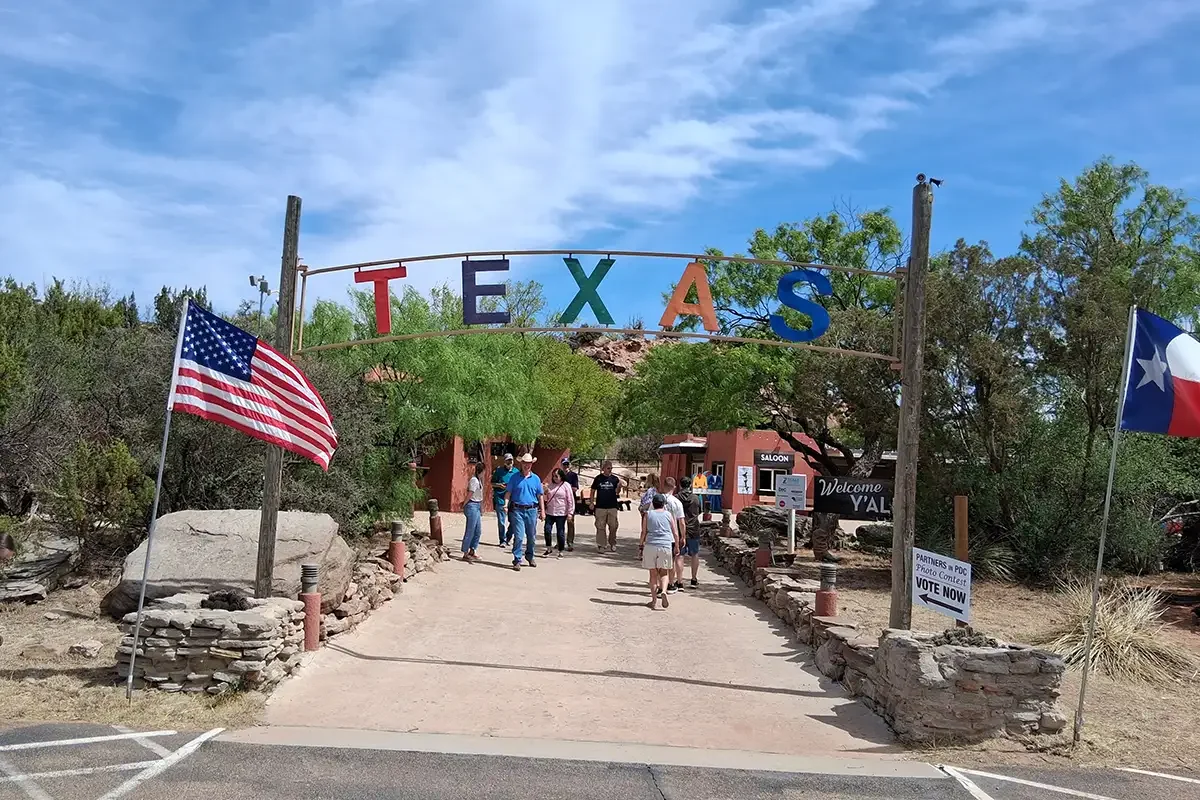
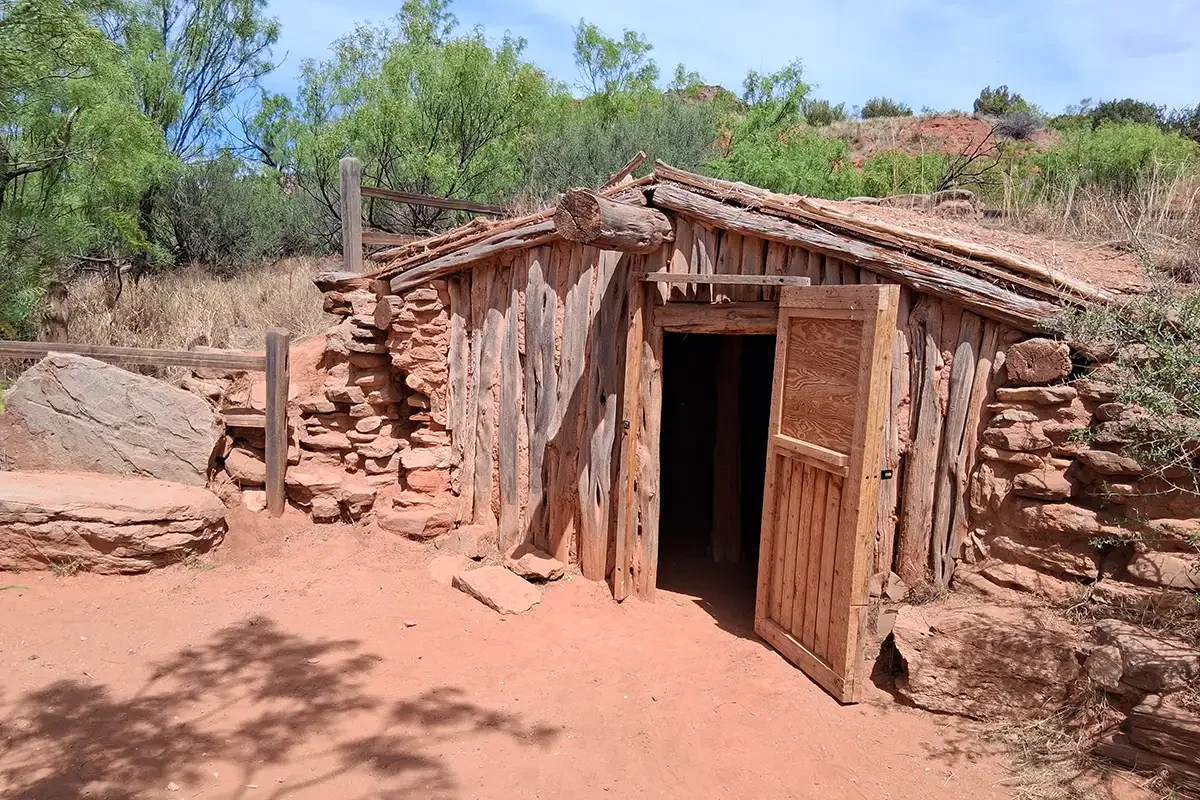
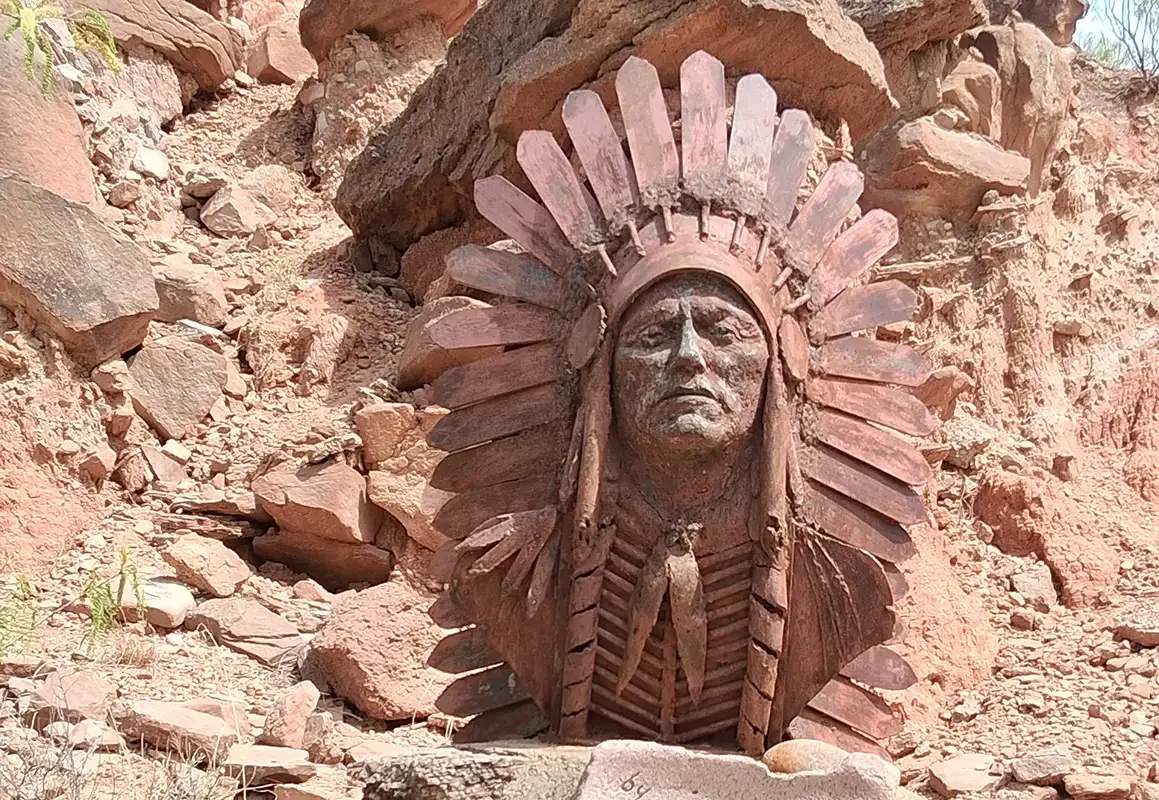
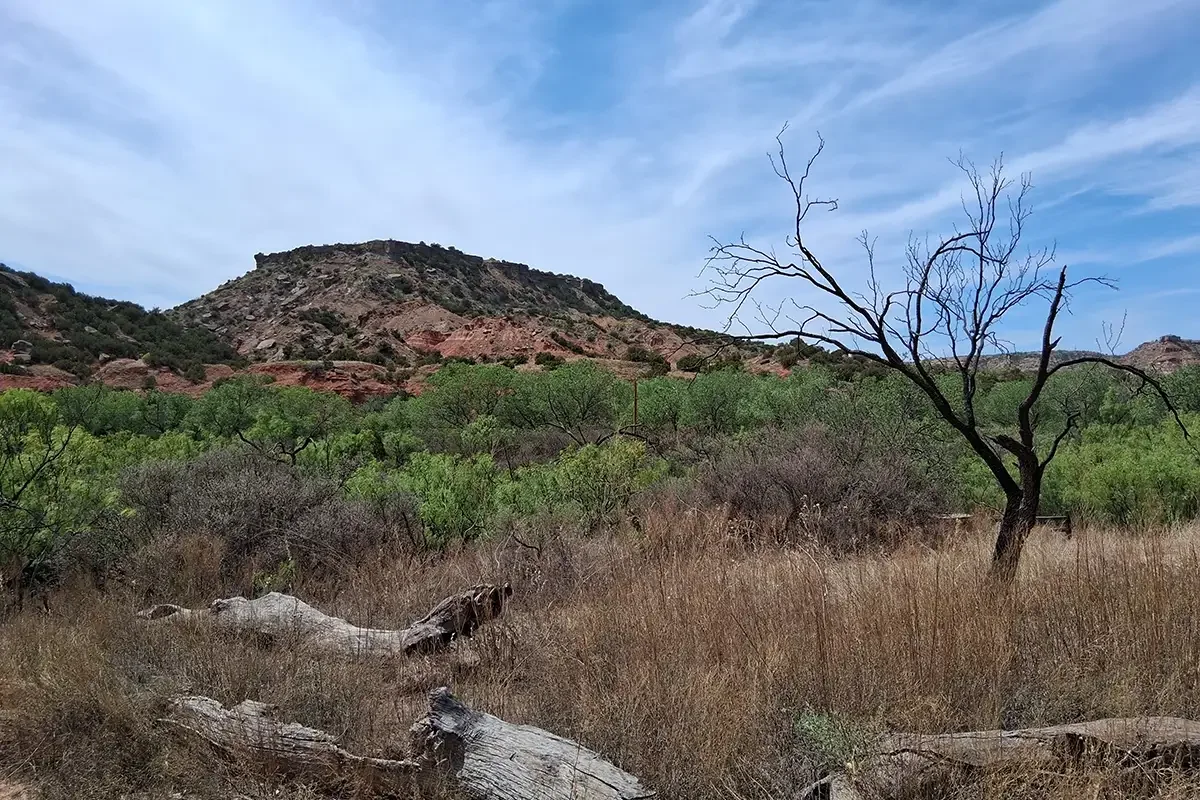
The afternoon was reserved for one last look at Palo Duro Canyon. A deeper tour of the state park shows just how vast the place really is. The canyon runs for more than one hundred kilometres, dropping hundreds of metres into layers of rock that shift colour as the light moves. It is a landscape that tells its own story without needing much help.
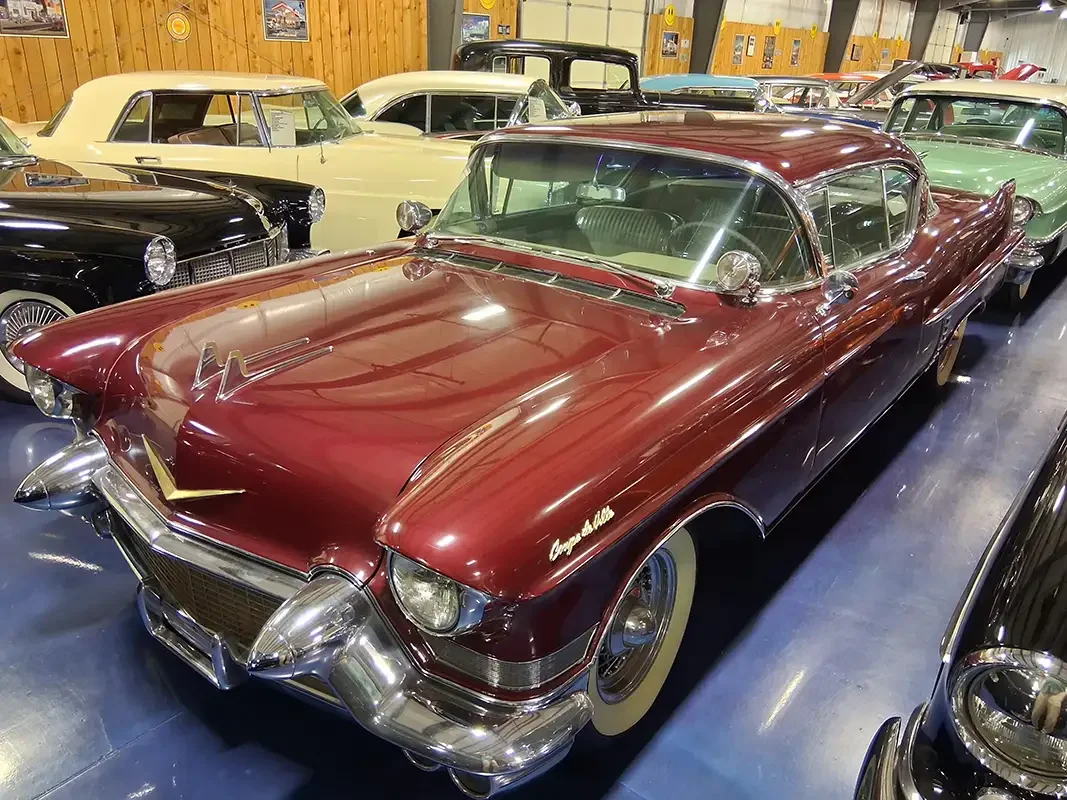
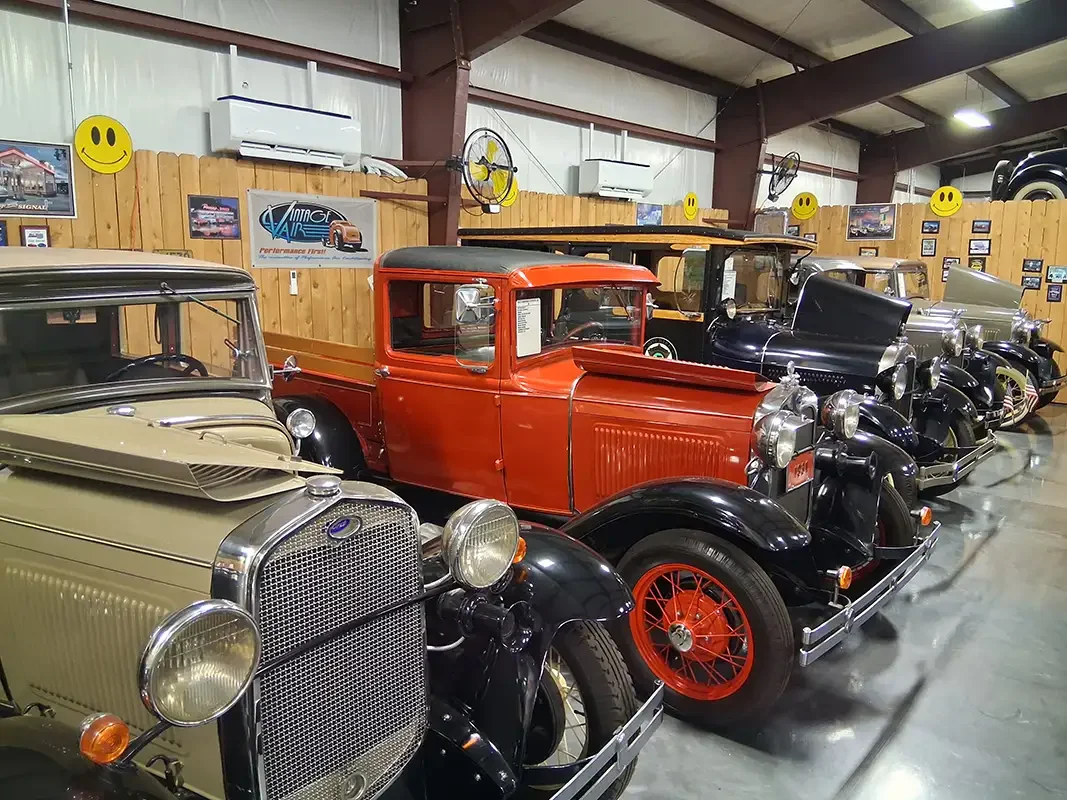
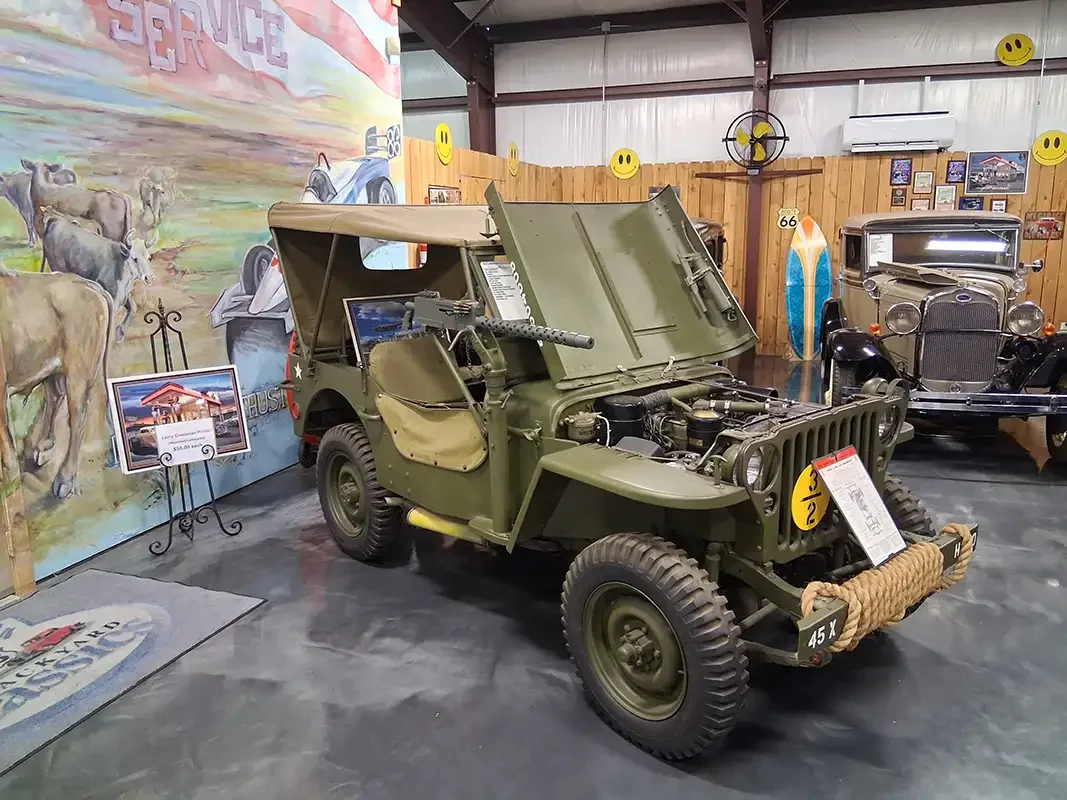
On the way back to Amarillo, we stopped at Bill’s Backyard Classics, a private car collection tucked away in an unassuming building. Inside, row after row of restored vintage cars sit polished and ready, each one with a story the mechanics are happy to share. It is the kind of place you only find when someone tells you about it.
The day ended at the Western Horseman Club, a straightforward, good‑hearted spot where ranchers, travellers and locals settle in for a steak and a drink. The room has no pretence, great live music, and it felt like the right place to decompress after a great couple of days and close out a trip through the Panhandle.
Amarillo leaves an impression that has nothing to do with slogans or polish.
From iconic Amarillo attractions like Cadillac Ranch and the Big Texan Steak Ranch to the natural beauty of Palo Duro Canyon, the city offers a surprising mix of history, adventure and Western culture. People here work hard, take the weather as it comes and carry a dry humour that fits a place where the wind is a constant companion. The city moves at its own pace, steady and unbothered, shaped by ranching, rail lines, its unique history, and the long reach of the plains. It is a place that stays with you, and I already know I will return.
For more information on planning a trip to Amarillo, visit www.visitsamarillo.com
For more U.S. destinations, check out our articles here.