Iceland by Sea: Glaciers, Waterfalls & Remote Fjords Up Close
Explore Iceland by ship with glaciers, waterfalls, and wildlife up close with Adventure Canada.
🚢 Access to remote coastal regions
🎓 Expert-led guided excursions
✨ Small group, immersive experience
- Love nature + photography
- Want small-group exploration
- Prefer guided experiences
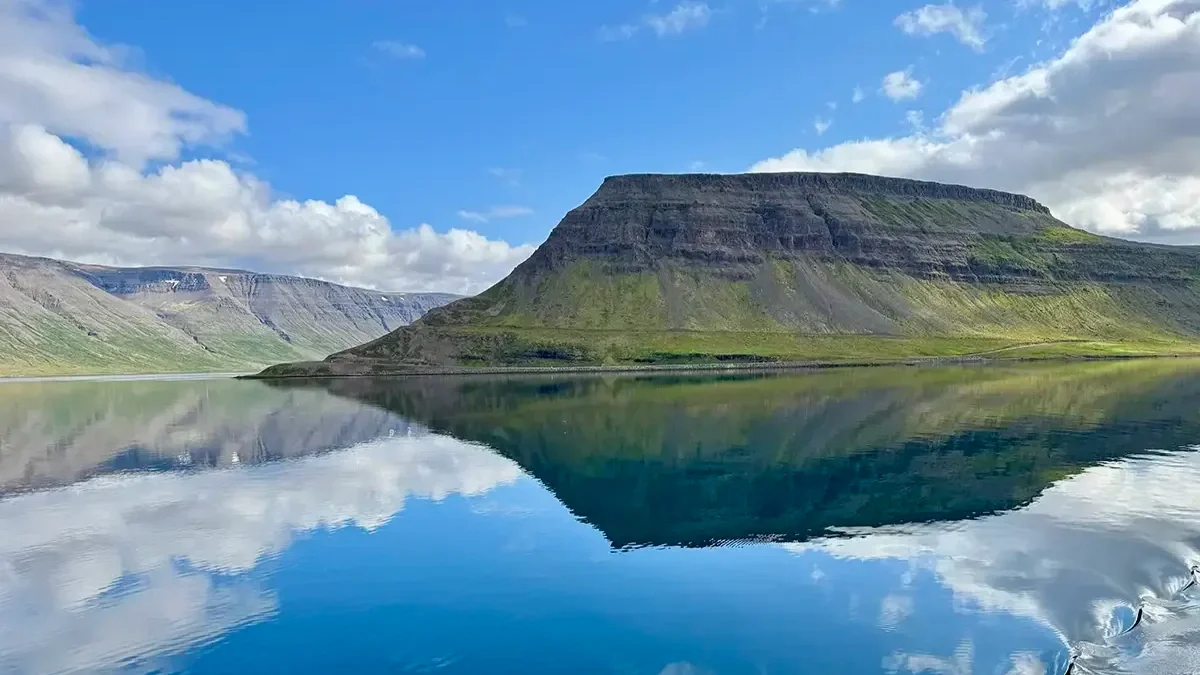
Just south of the Arctic Circle lies one of the world’s geological wonders. It is one of the few places in the world where the Mid-Atlantic Ridge (an enormous underwater mountain range that runs through the middle of the Atlantic Ocean) rises above sea level and where spectacular, steep and jagged cliffs line the country’s fjords and coastline.
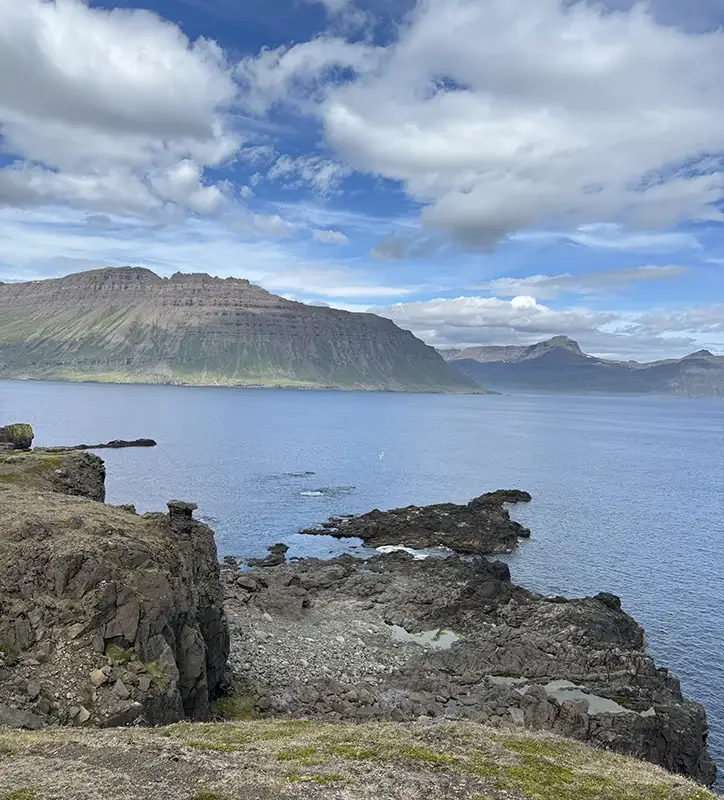
Iceland is breathtaking. At the end of its fjords, a plethora of natural majesty awaits, with waterfalls, bird sanctuaries, stunning hiking trails, and small, welcoming fishing villages.
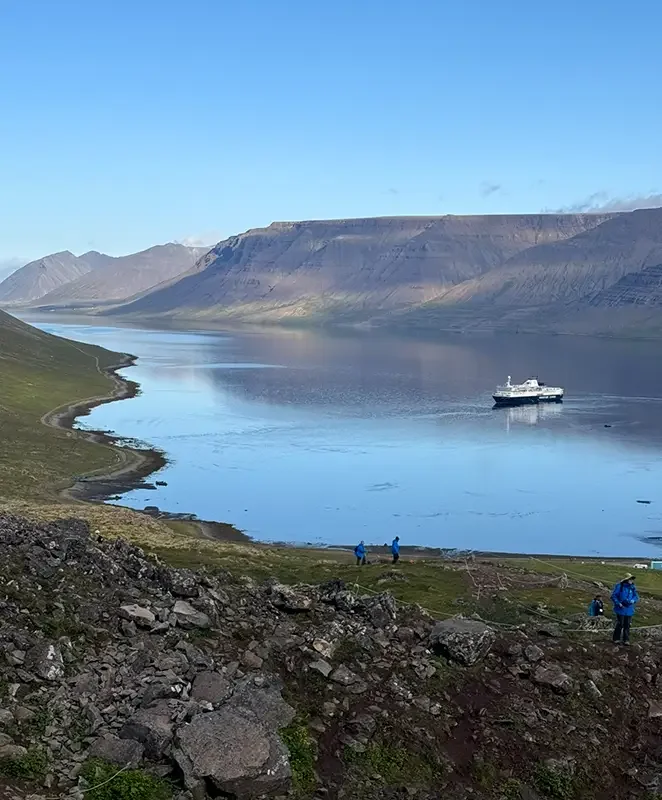
Peaceful Westfjords
There is no better perspective to experience these secluded areas than by ship, and there is no one better to take you there than Adventure Canada, a family-owned and operated Canadian small-ship expedition company.
With experts on board to provide context on all aspects of Iceland — there are scientists, botanists, mammal experts, geologists, and award-winning, best-selling authors — the trip is a nourishing experience for all the senses.
There is even an Icelandic storyteller, enriching the trip with folklore, flavour and history.


The opportunity to engage with people from other cultures—to learn a little of their language, appreciate their art, and see their ways of looking at the world—is a core strength for Adventure Canada.
Reykjavík
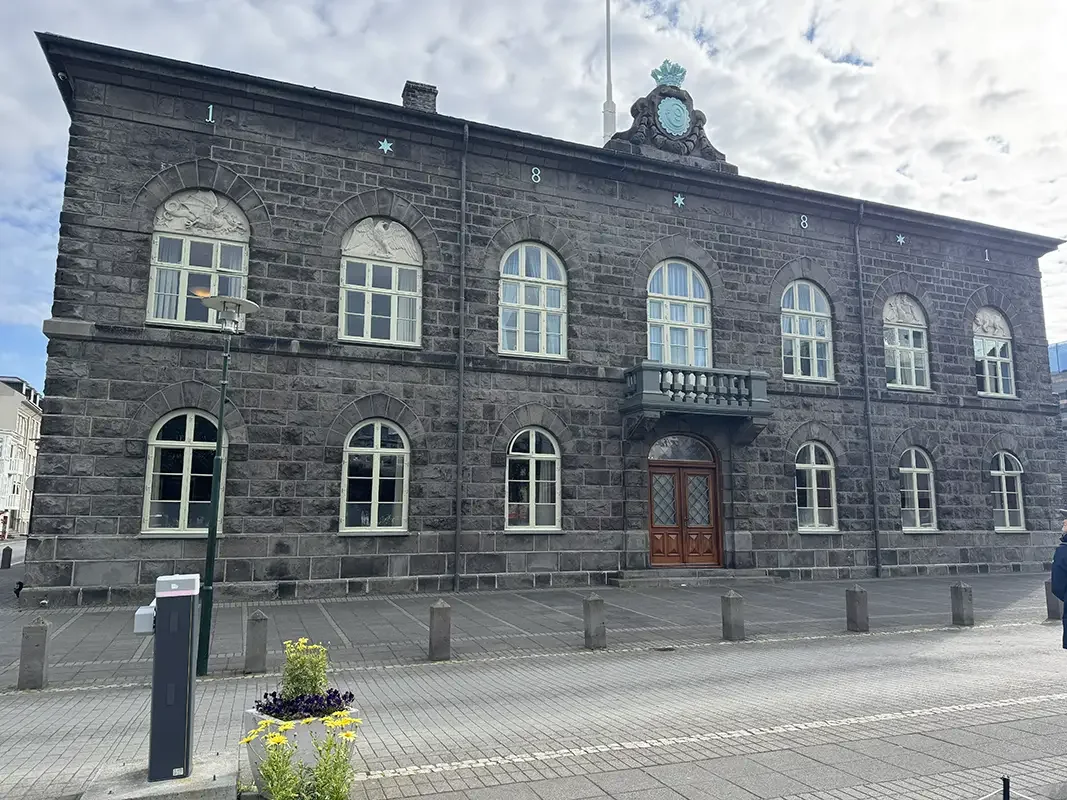
🏛️ Iceland is home to the world's oldest parliament
🍺 Beer was banned until the 1980s
👥 The country has just over 400,000 residents
It’s an expensive city for sure, but it provides a vibrant night life with a plethora of bars — be sure to hit Lemmy bar for live music and fabulous vibe. This is interesting considering that beer was banned in Iceland until the 1980s. They are making up for lost time with over 100 bars and pubs.
Walk around the city to take in the chill ambiance.
If spas are your thing, there are geothermal pools, heated by hot springs, everywhere. Blue Lagoon is certainly the most famous for good reason.
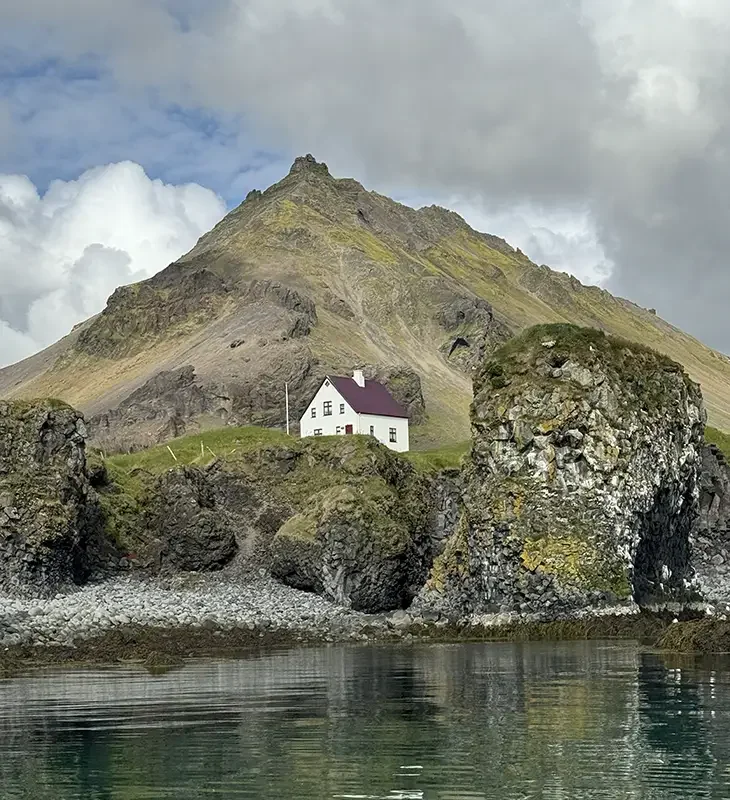
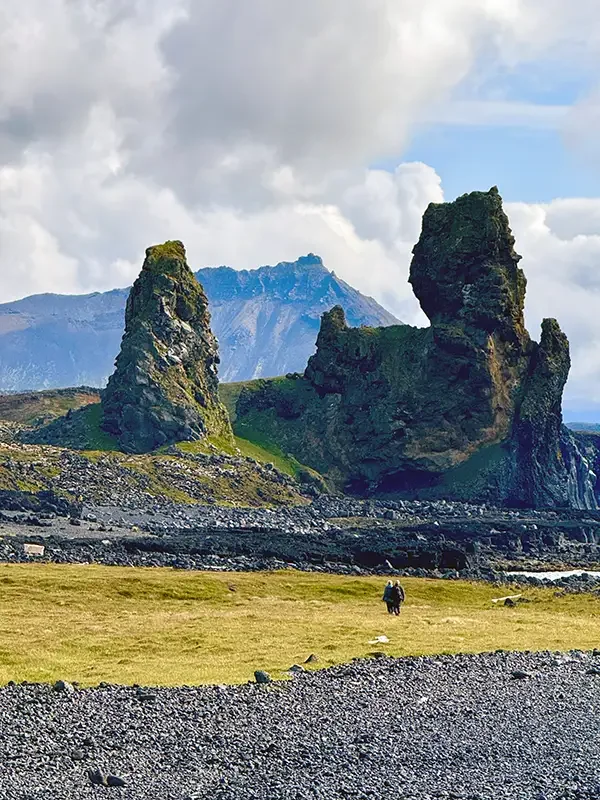
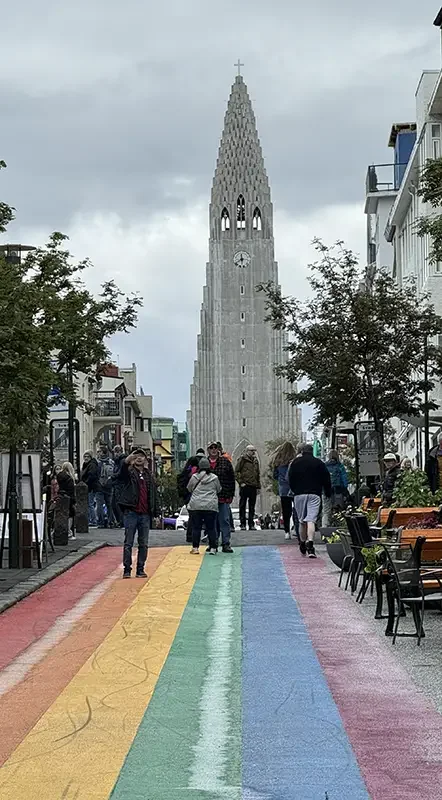
The church that dominates the skyline, the Hallgrímskirkja, was inspired by the country’s basalt columns. (On the voyage, you will see the real basalt columns during a hike in the spectacular Snæfellsjökull National Park.)
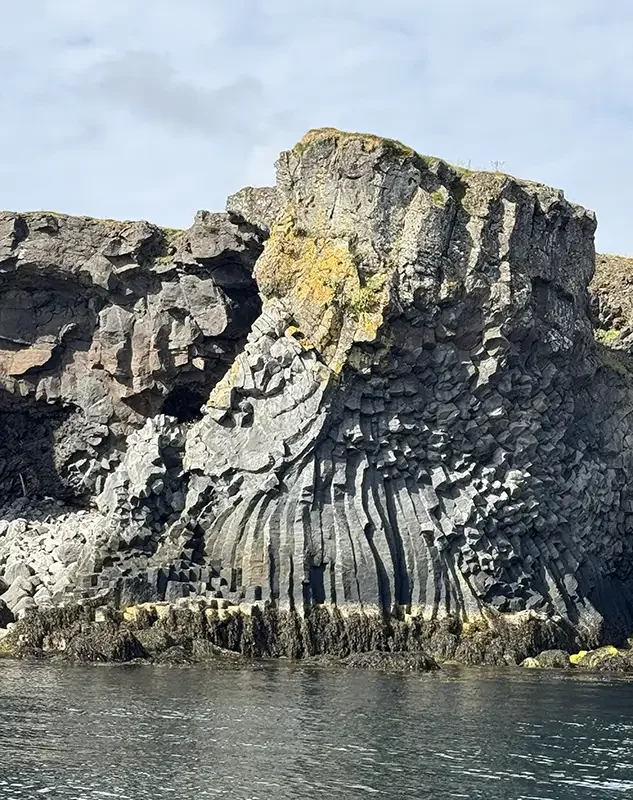
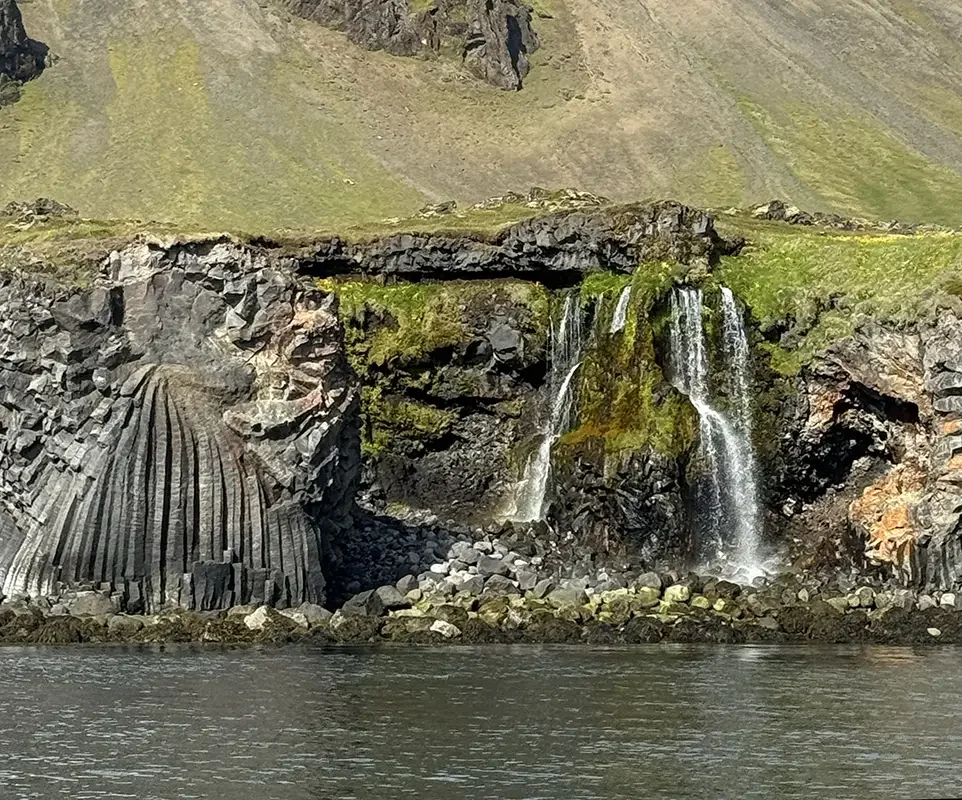
Basalt columns are part of Iceland’s unique landscape.
The Perlan Museum has an immersive exhibit that voyages to the core of a volcano, juxtaposed by a real ice cave exhibit. It is a unique museum that is well worth the price and experience.
The National Museum of Iceland features Viking and Icelandic history for history buffs. Every street corner sells the famous Icelandic wool sweaters in every colour and design.
Hot stuff
The fiery red of bubbling volcanoes (and if you are lucky, some will be spewing hot magma when you are there) result in beautiful black volcanic rock giants and stunning lava flows that pepper the landscape. They create zigzagging hiking paths (thinking here of Dimmuborgir) and, by the water, black sand beaches are created over time.

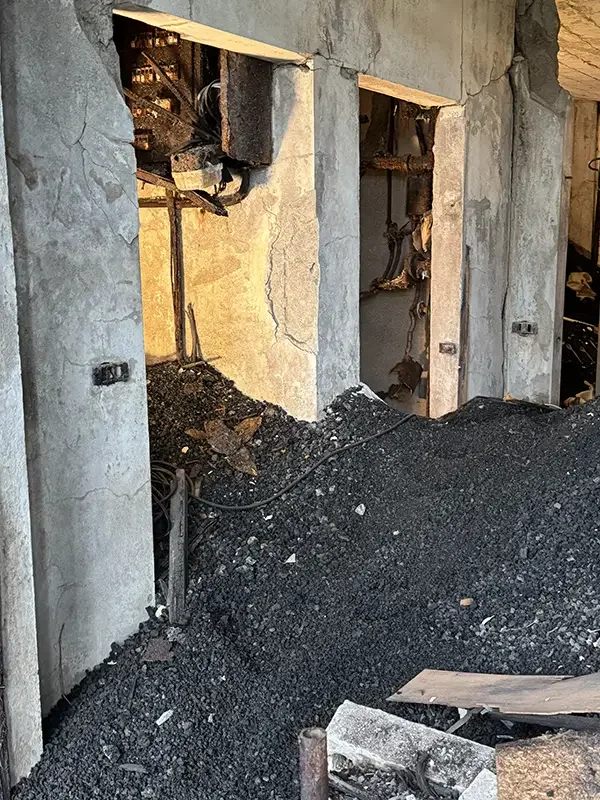
The 1973 Eldfell volcano eruption garnered international attention and destroyed one-fifth of the town of Vestmannaeyjar. Climbing Eldfell — a fabulous hike with a great guide to provide context — should be followed by a visit to the village museum, which explores the incredible devastation the eruption caused. The museum was built around the homes destroyed by lava and ash. It is humbling to see. The Eldheimar bears witness to the power of the earth and the resilience of Icelanders.
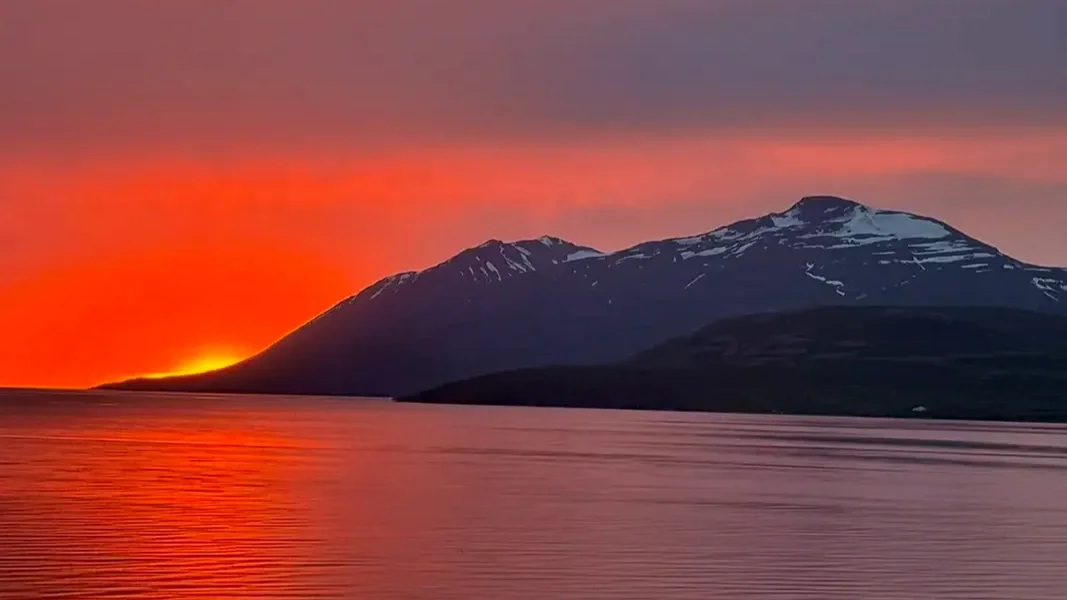
Spectacular sunset at midnight.
Blue Waters
In contrast to the fires, the ocean blue waters surround Iceland and are life-sustaining for Icelanders. Small fishing villages survive on the ocean’s bounty. Hrísey (population of 170) has a great museum on Icelandic fishing history.
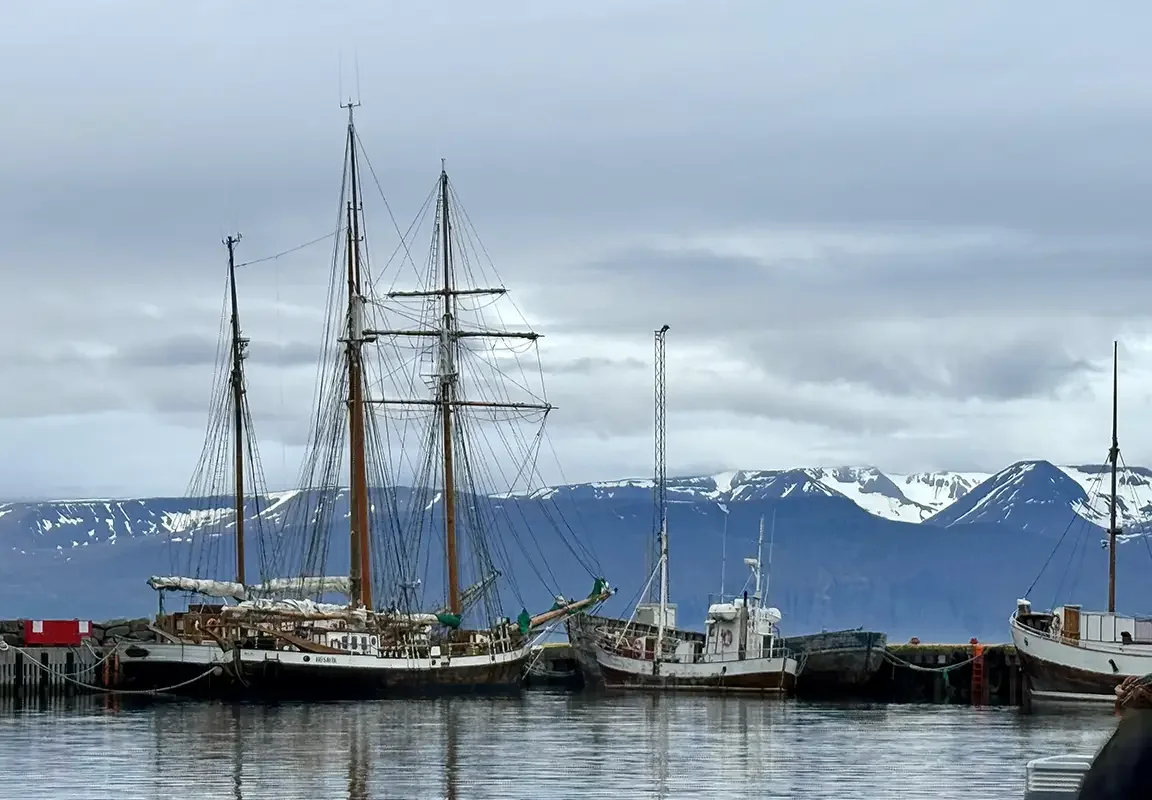

Fishing villages pepper the Icelandic coasts. Each has its own, distinct ethos and landscape.
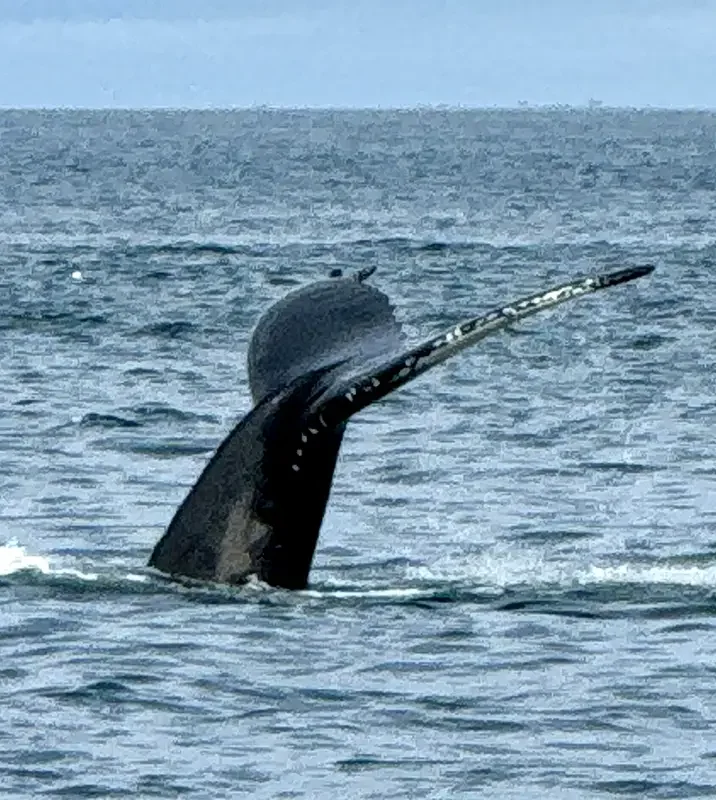
Húsavík, one of the larger fishing towns (population 2300) features stunning white mountain tops and offers the best whale watching. To get up close to these gentle and elegant giants is such a privilege. Magnificent humpback and minke whales are in abundance, as are dolphins and birds. To see how the birds and mammals co-exist is deeply moving and humbling.
Waterfalls
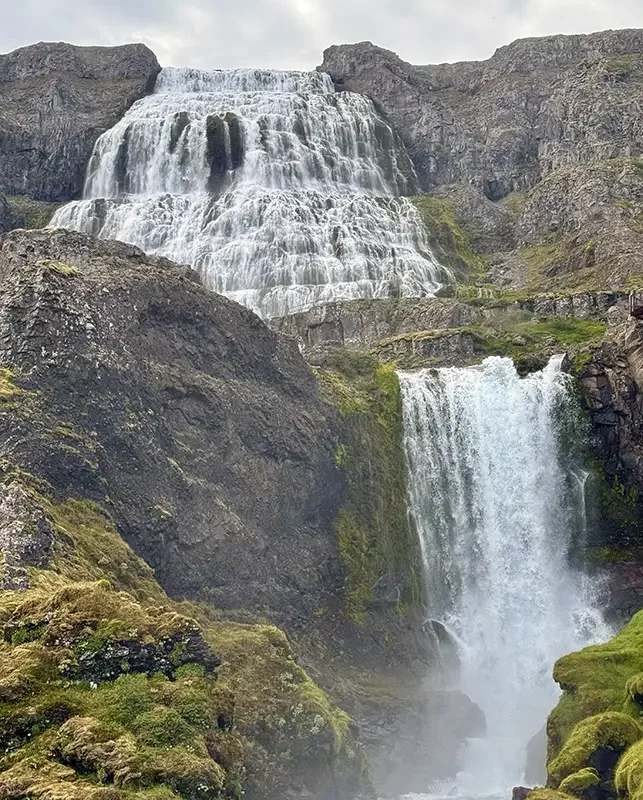
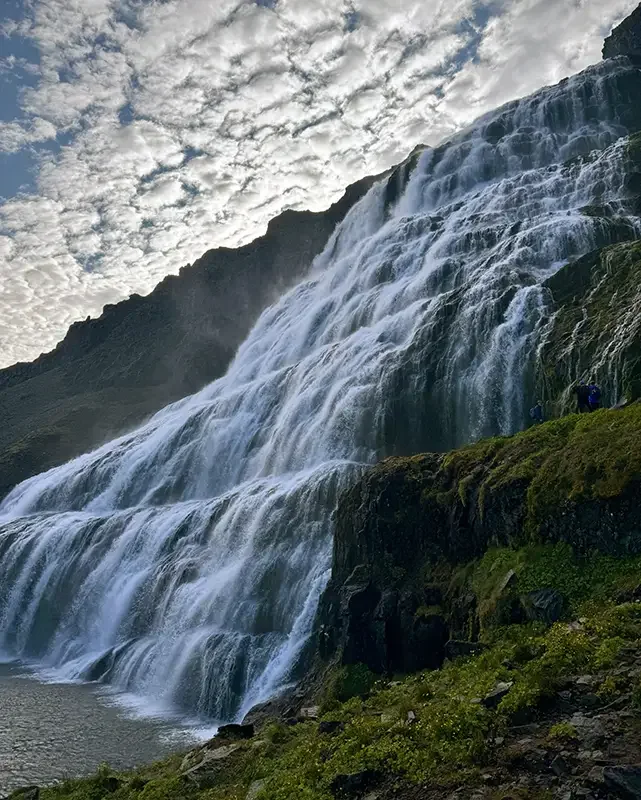
The mighty Dynjandi feeds other waterfalls on the way down to the sea.
There are over 10,000 waterfalls on the island, but Dynjandifoss, meaning “Thunderous Waterfall”, has multiple levels of cascading beauty, measuring 328 feet. It is incredibly remote (and yet paradoxically still a tourist site) and, for many, a spiritual experience. Adventure Canada does its best to make sure we are the only ones around.
A short climb up the waterfall offers spectacular sights of the area — the ocean, the fjords.
Another waterfall visit to Goðafoss, and the "Waterfall of the Gods," has an interesting story.
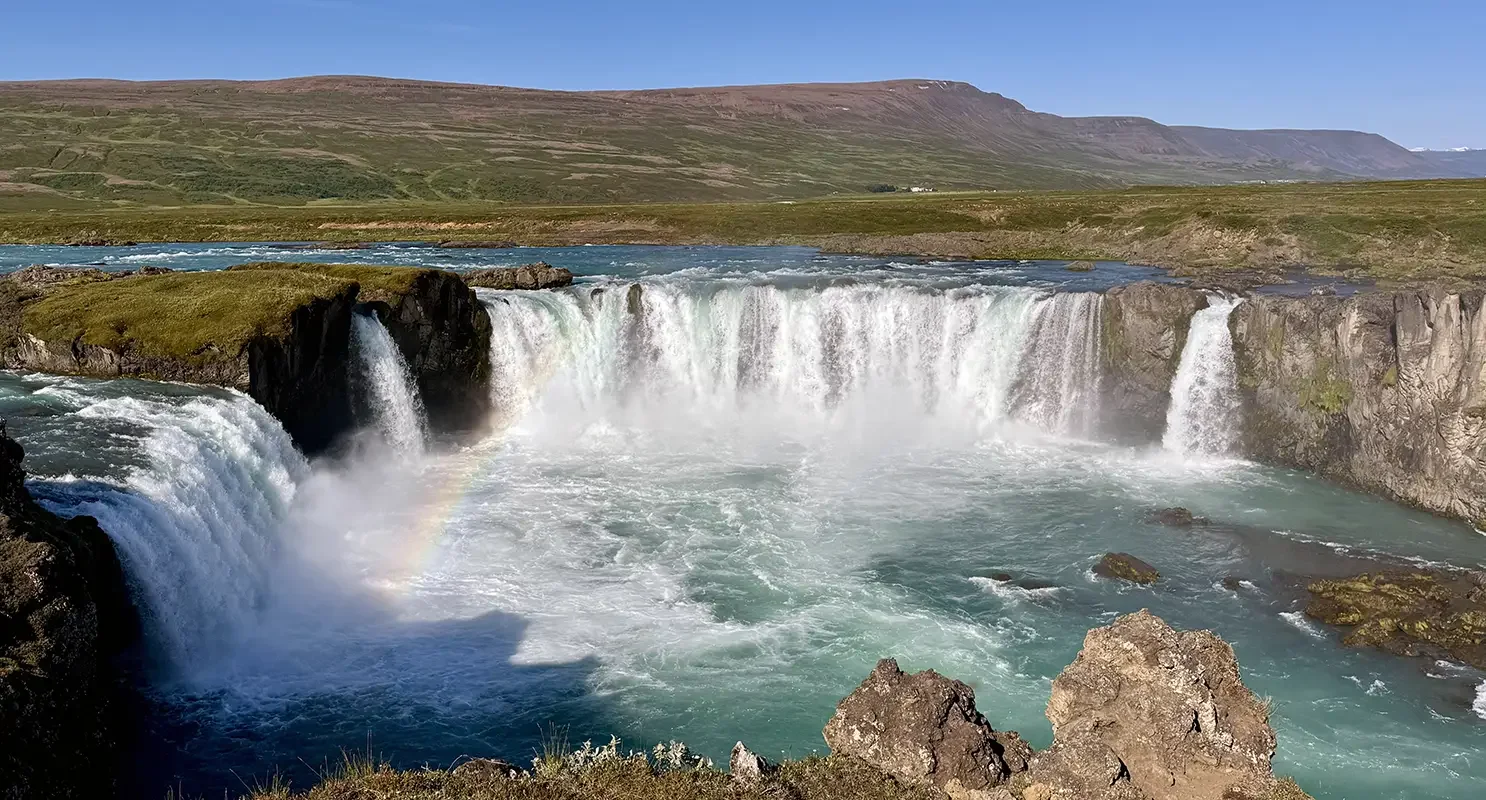
The 12-metre-high cliffs of Goðafoss with their cascading waterfalls are spectacular.
There are walks around the falls and there is something magical about seeing a rainbow in the falls.
Nearby are some spectacular volcanic rock walking paths. The size of the rocks are magnificent.
Putting the Ice in Iceland
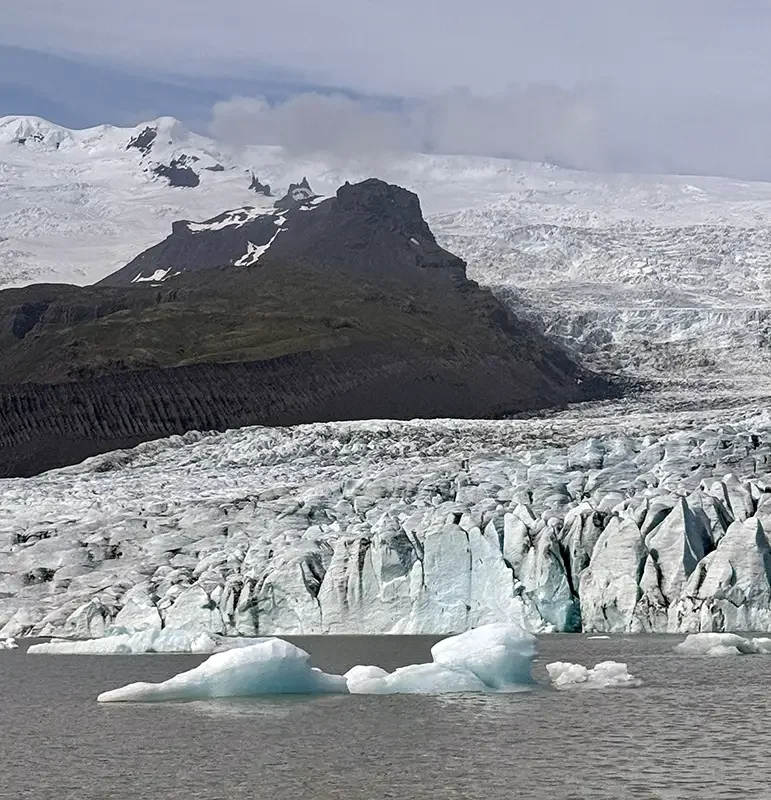
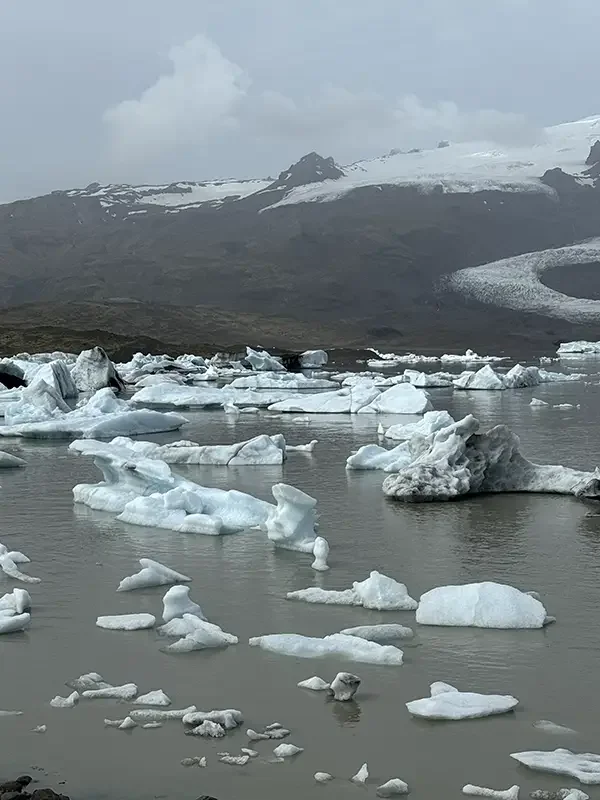
Fjallsárlón Iceberg Lagoon with its humbling glacier and iceberg formations.
There is nothing quite like zooming up to a glacier in a zodiac. It is truly astounding but at the same time sad. Witnessing the retreating glaciers at the Fjallsárlón Iceberg Lagoon and the calved icebergs on their voyage to the ocean is beautiful, but is further evidence of the negative impact of human behaviour.
After exploring Iceland for ten days, the realization that those colours of blue, white and hot red — incidentally, the colours of the Icelandic flag — collide and feed each other, underlining the interconnectedness of earth’s elements, is humbling and awe-inspiring.
“The voyage connects travellers with nature, enlarges our hearts, and making us more fully human.”

The Snaefellsjokull National Park was the first national park in Iceland.
Award-winning Adventure Canada is all about giving back. I have been on their High Arctic (Canada-Greenland) adventure as well as the Iceland expedition and there are on-board auctions and fundraisers for local organizations. They have donated millions so far for conservation and youth organizations, provided in-kind opportunities for science research and cargo space on their flights.
Are you on the lookout to book more cruises this year? Check out our international itineraries below.