
A Hike Along the St. Lawrence River
A road trip down the St. Lawrence River is so full of beautiful places that it is truly hard to decide where to stop and for how long.
So, let’s start with the best. The best? Le Bic provincial park, near Rimouski, and Forillon Park, at the end of the Gaspé Peninsula top of the list for the most beautiful parks in this part of Quebec.
At Le Bic Park, we settle into our Yurt Number 6, well ensconced in the forests, facing Ile aux Amours, or translating freely, Love Island. How did it receive such a poetic name?
In this land of high and low tides, suitors brought their dates to the island at low tide, only to ‘discover’ that the high tide would force them to spend the night on the island! The island is in a beautiful cove, and one feels truly alone with nature.


Chemin du Nord Trail in Le Bic Park. (RIGHT) View from Pic Champlain, Le Bic Park.
Numerous monadnock buttes or ‘cabouron’, en français, dot the park, inducing romantic visions of their own. The monadnocks have played in tourism director Etienne Fabiola’s mind for years: “Often when I see one, I think that in Europe there’d be a castle on it!”
Le Bic Park is renowned for its hiking trails, most with outstanding views. Time permitting, start with Le Pic Champlain, a 6.5 km round trip through root-gnarled forests with enticing glimpses of the St. Lawrence River. At the top, sweeping view of Baie du Ha! Ha!, Flacon Island and L’Anse-à -Mouille-Cul (Wet Ass Cove) will reward your efforts.
Outstanding views of Le Bic Island, and Bicquette Island, a bird sanctuary are also notable here.
After this vertical climb of 230 metres, leave the park for lunch at the Cantine Côtière, a casse-croûte whose chef, Colombe St-Pierre is amongst Quebec’s best. Don’t let the grubby picnic tables fool you. This is a gourmet spot where a lobster roll sandwich will set you back $32 before taxes!
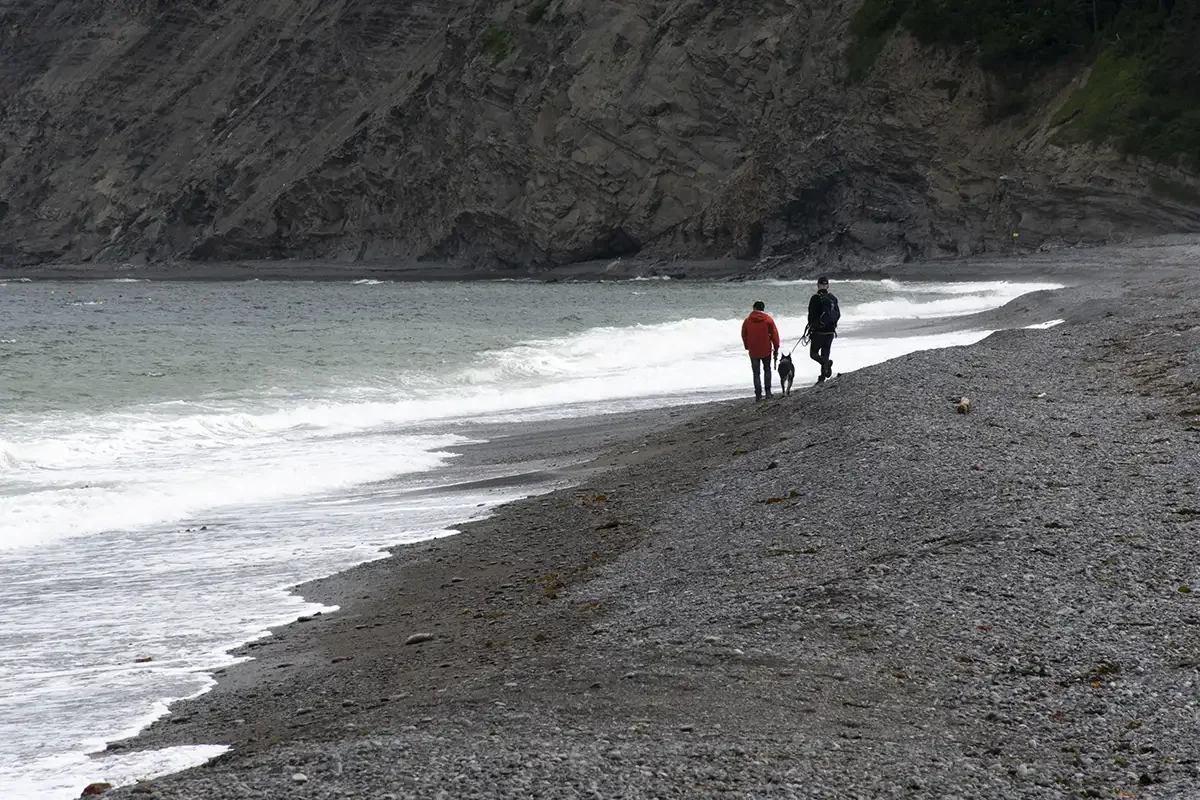
Cap-des-Rosiers, Forillon Park.
Forillon Park
As I relax in my oTENTik glamping structure, listening to the happy chirping of birds in this little slice of paradise, I reflect – this place could be called, ‘Park of the Winds’.
From our campsite at the Des-Rosiers Campground in the north sector of the Parks Canada camping area, we experience massive winds blowing in from the St. Lawrence River. At night, our canvas-topped tent structure shakes and rocks well into the morning. However, come morning, whale watching and sea kayaking on the other side of the park, just down the road on Gaspé Bay, take place in the calmest of waters.
Waves crash, clearly audible in our tent, onto what I call a private, beach, complete with driftwood from as far away as Anticosti Island, making for a most picturesque and isolate spot, with views eastward to Cap-Bon-Ami.
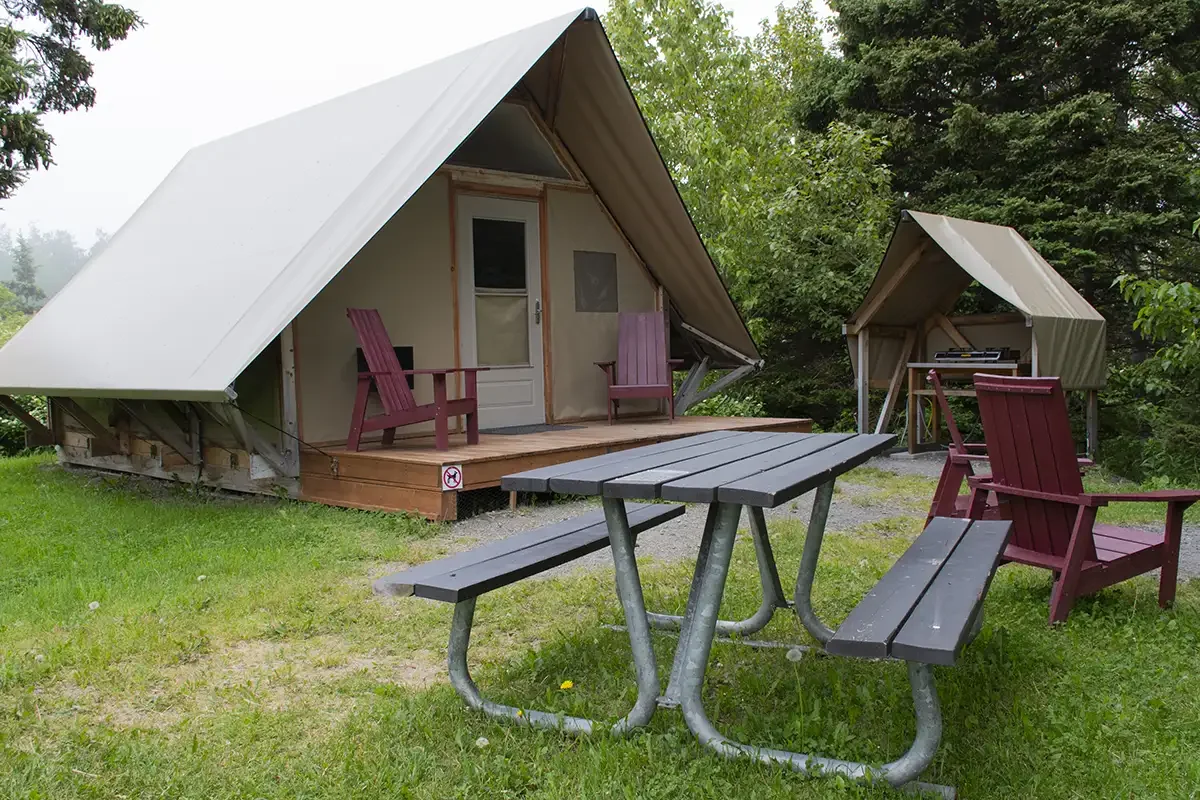

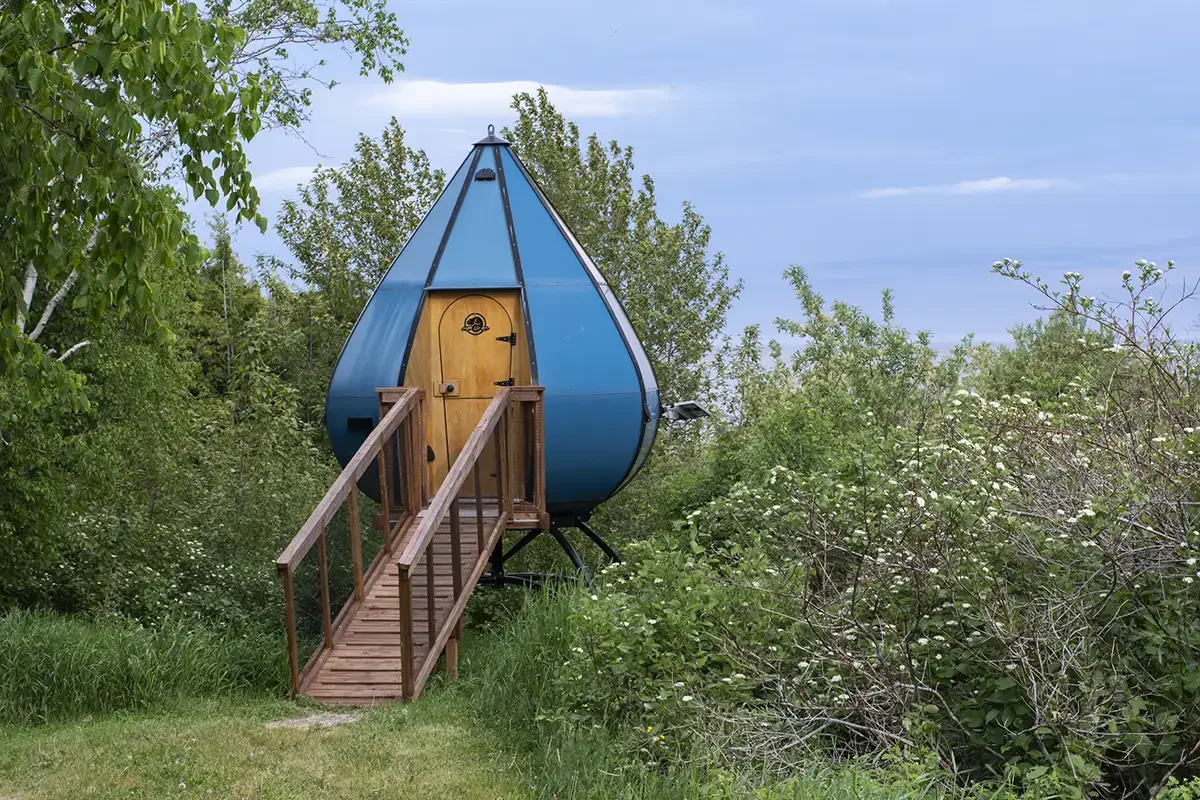
LEFT TO RIGHT: oTENTik cabin, Oasis Lodging and funky Panora Lodges Fluviales with a view of the St. Lawrence River.
Our oTENTik has all the comfort of home, it is glamping at its best. The only nod to old-style camping is the 2-burner propane stove outside and a number of ultramodern bloc sanitaire within sight. Other unique camping sites include futuristic Oasis and Microcube structures.
Forillon Park covers a huge 244 square kilometre area, ending and including Land’s End, which is best viewed from Cap-Bon-Ami.
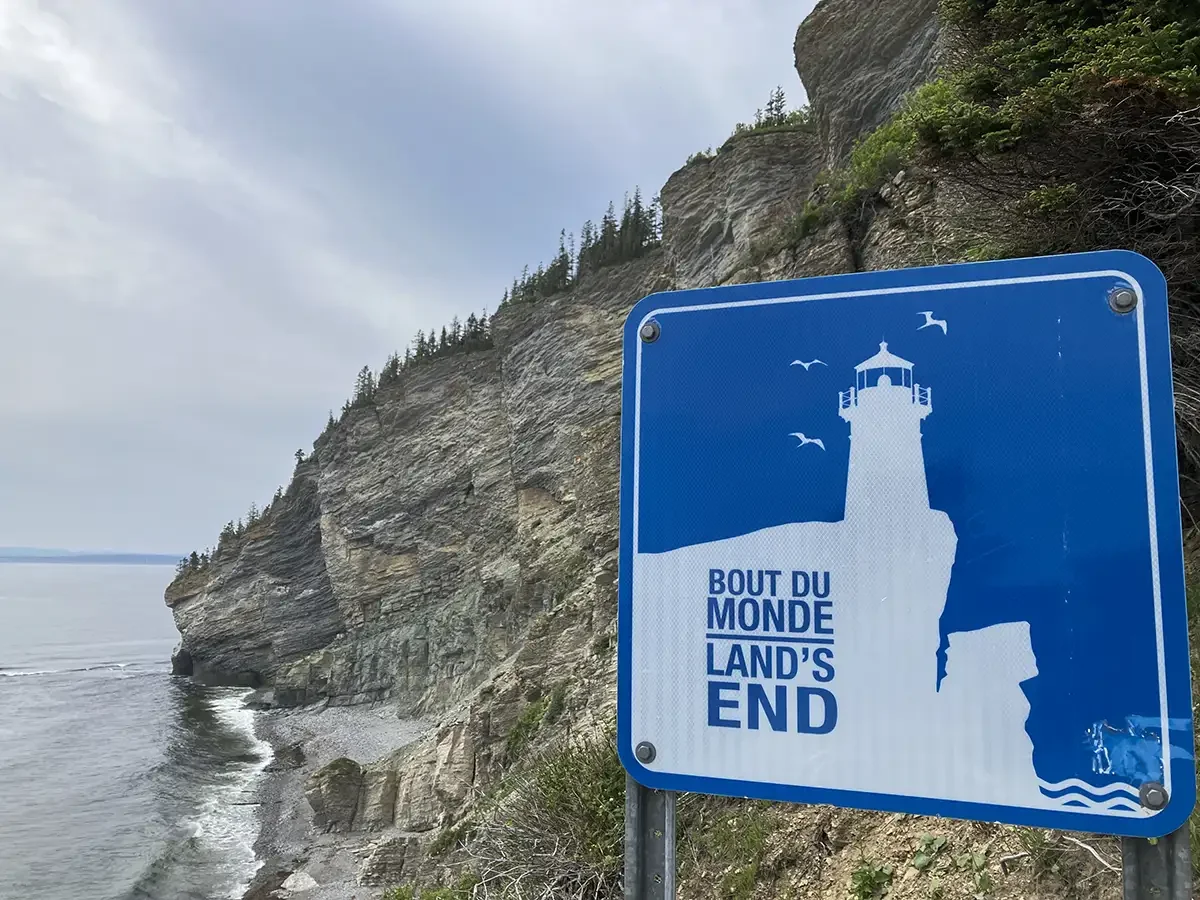
At Cap-Bon-Ami, take trail to the lookout at Mt. Saint-Alban. A splendid view awaits, along with a steep, steep staircase.
At Penouille, a pebble beach area facing the Gaspé Bay, a lovely stretch of land exists, on what is, truth be told, a sandspit. It will eventually erode away but the hundreds of huge driftwood logs, left there on purpose, help fight erosion. We spotted northern gannets, razor-bills, cormorants and even a young bald eagle in this area.
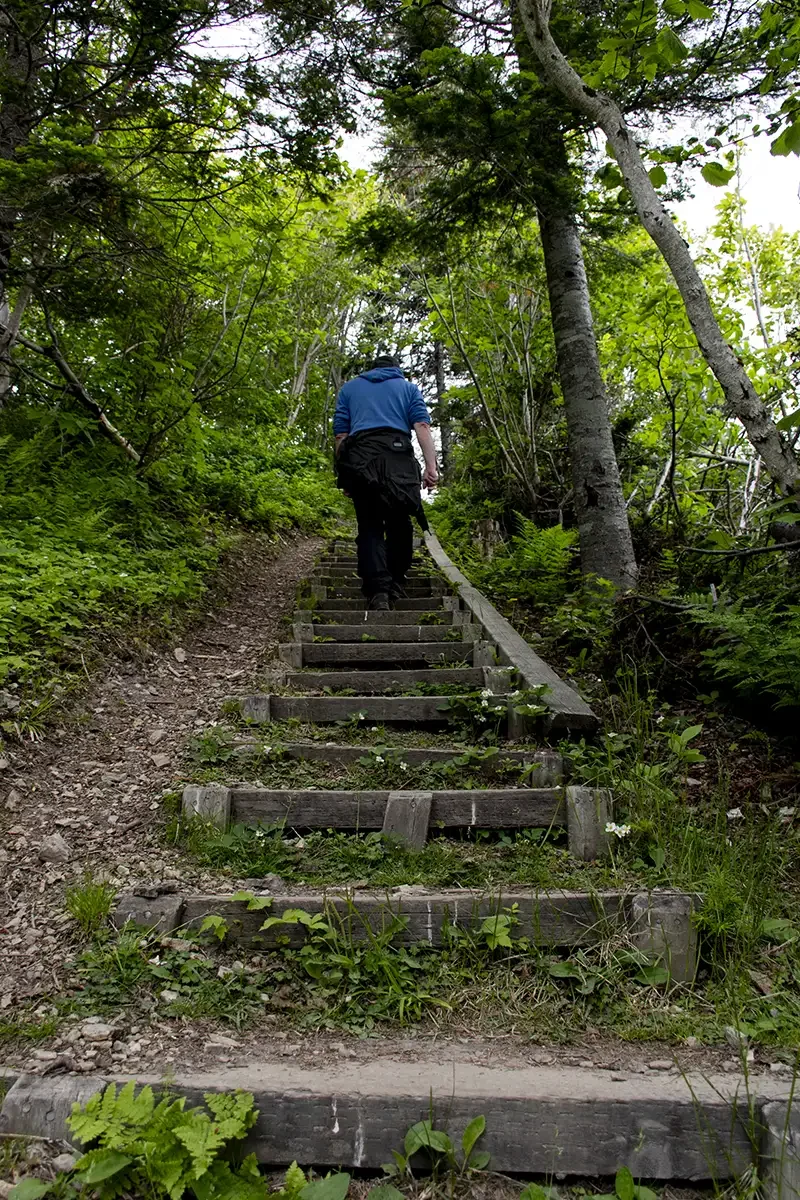

Ascending on the Mt. Saint-Alban trail. (RIGHT) The spectacular view of Land’s End.
Behind the ‘beach’ is a boardwalk leading to a unique area of ‘taiga’-like vegetation. Normally found in more northern areas, lichens and saxifrage flowers abound.
In the middle of this area is the overgrown remains of a primitive, private airstrip.
Yes, until 1970, the entire Forillon Park area was in private hands with farm houses and summer cabins. The expropriation was not pleasant, and reminders of the displaced families remain: houses, churches, cemeteries and words. Quotations on special cairns show the ‘good life’ the farmers and fishers enjoyed here. Lilac bushes in the middle of nowhere indicate where houses once stood. You can visit the Blanchette house, with its billion-dollar views of the bay.
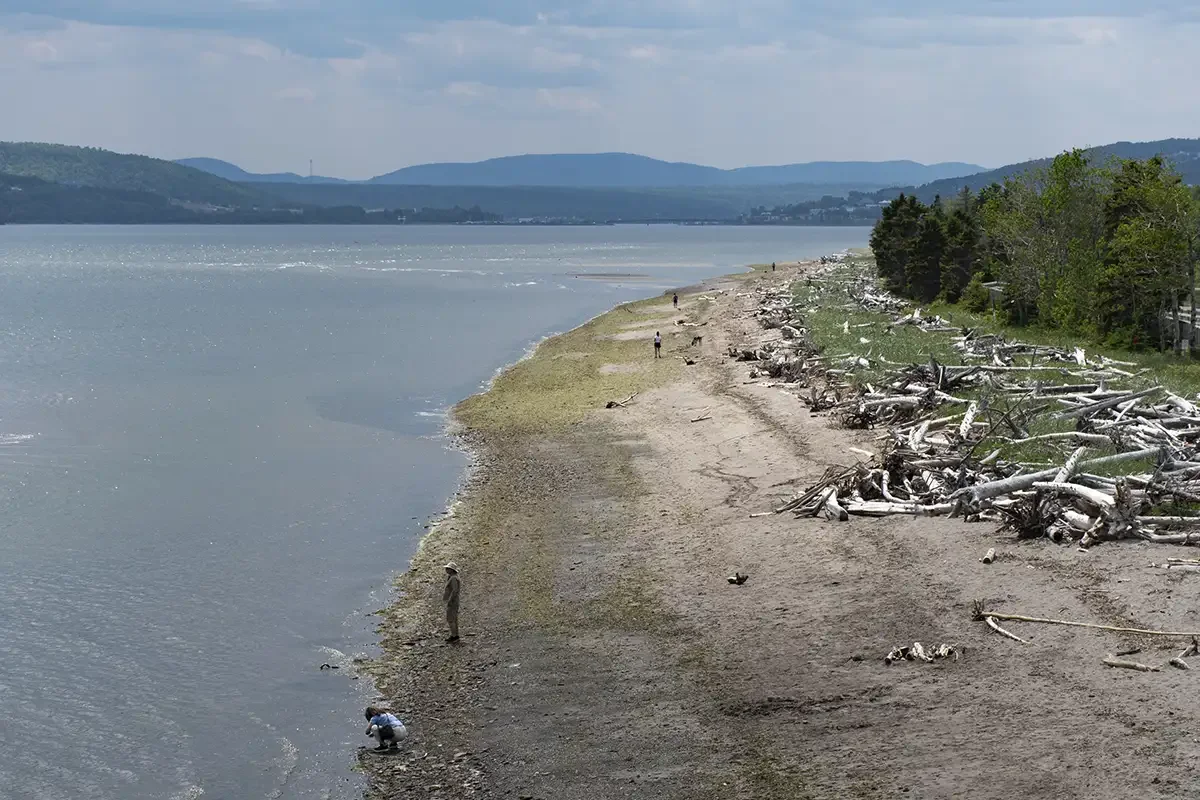
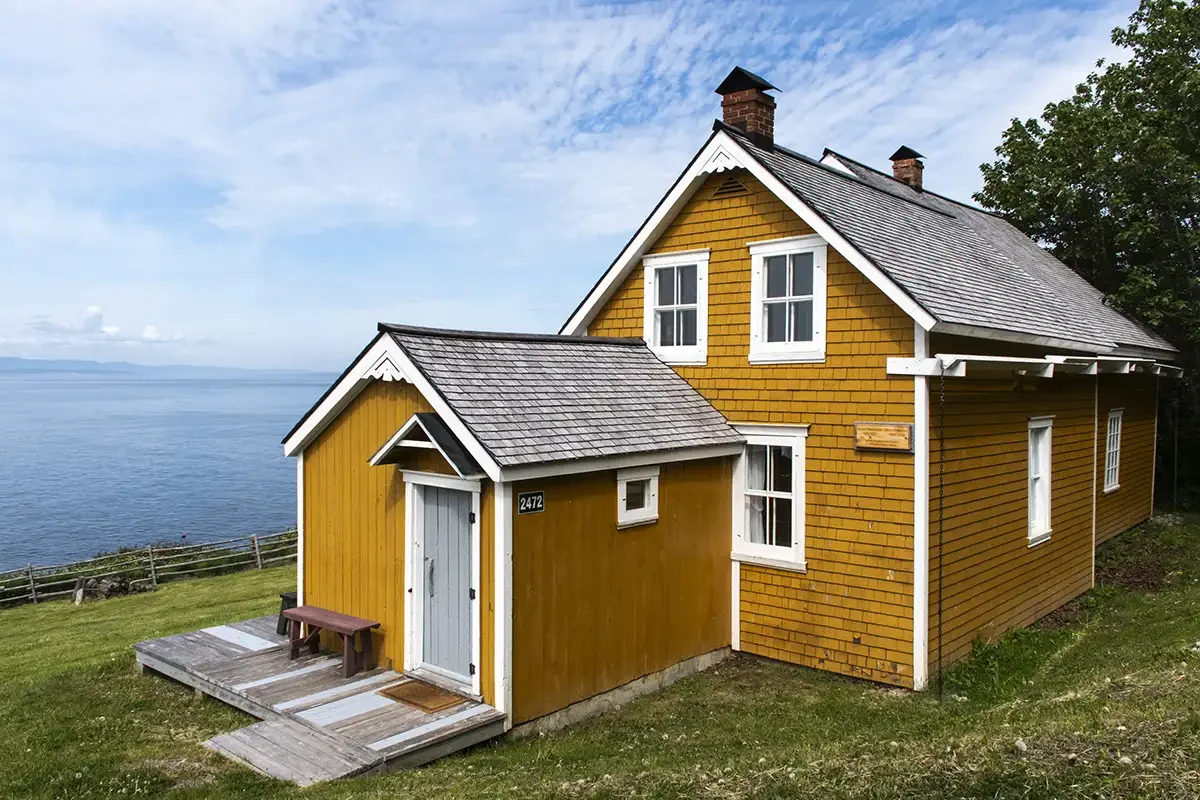
Penouille Beach, Forillon Park. (RIGHT) Blanchette House, Forillon Park.
The story of the area’s involvement in WWII is also revealed here. At Fort-Péninsule, near Penouille beach is the only remaining gunnery post from this era. Complete with a fully restored pill box, trenches and munitions rooms.
It is the only surviving pill box from the Battle of St. Lawrence in WWII. Enemy U-Boats prowled waters in the Gulf of St. Lawrence and Gaspé Bay, destroying 23 Allied convoy ships.

Gunnery Post at Ft-Péninsule, Forillon Park.
The Gaspe Peninsula is a long road trip, and we did not do the full round trip, deciding instead to return the way we’d come. Stops between the two parks mentioned include the surprising village of Ste-Anne-Monts, where many talented potters work and have galleries. Give yourself time to visit at Jü, a funky gallery with many eclectic offerings, often made from beach combing expeditions where sea glass and other surprises are harvested.


Gite du Mt-Albert offers more trails to discover. (RIGHT) Jü Gallery owner Julie Fournier.
Here are two lodgings worth stopping at along the way that don’t involve glamping, both in the Ste-Anne-des-Monts area:
Panora Lodge https://www.panoraloges.ca/
Gite Mt-Albert https://www.sepaq.com/pq/gma/

The route down the Gaspe Peninsula can be scary!
ALL PHOTOS: CAROLE JOBIN