
Ottawa’s Indigenous Heartbeat: A Visit to Mādahòkì Farm
Before European settlers arrived, the Algonquin people lived throughout the Ottawa Valley, using the Ottawa River as a major transportation and trade route. The word “Odawa,” meaning “to trade,” reflects the region’s deep-rooted role as an Indigenous meeting and trading hub.
In the 1830s, during the construction of the Rideau Canal, Scottish-born stonemason Thomas McKay built himself a grand stone mansion overlooking the Ottawa River, now known as Rideau Hall. In the warmer months, it is said that McKay enjoyed playing the bagpipes from the rooftop. Whether fact or local legend, the story goes that when the strange sounds drifted across the water, Indigenous people on the opposite shore would retreat quietly into the forest.
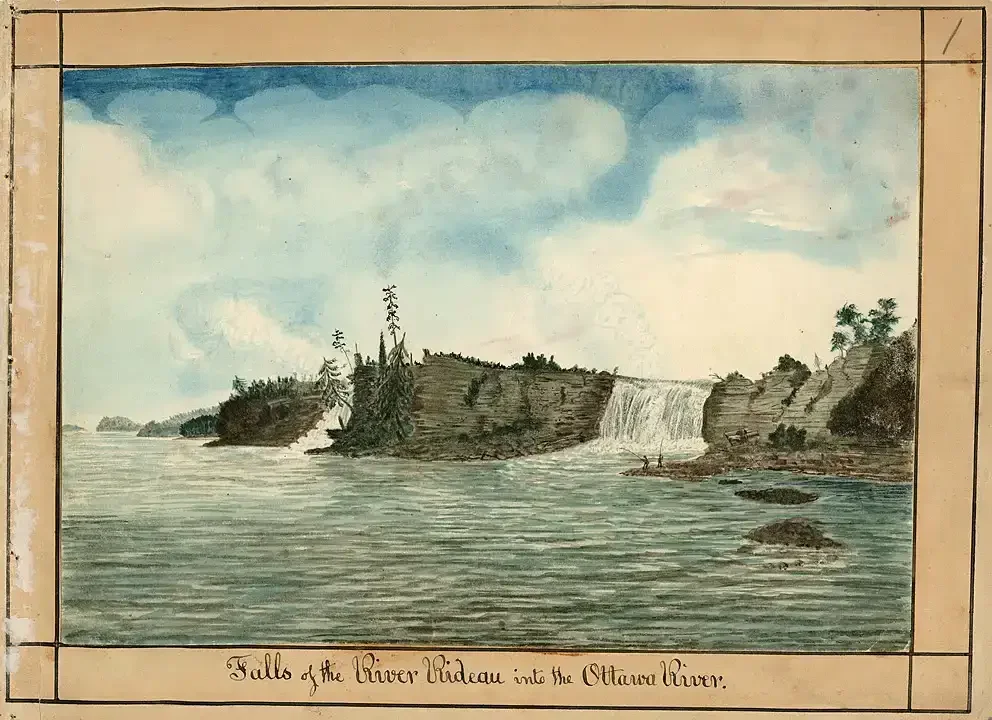
Sketch of the Ottawa River and Rideau Falls in 1826. Archives of Ontario. I0002118
For many years, Victoria Island, situated in the Ottawa River between Ottawa and Gatineau, served as an important site for public education and cultural programming. It was home to Indigenous Experiences, an organization that offered performances, teachings, and interactive activities that shared First Nations culture with school groups and visitors alike.
In 2018, Victoria Island was closed as part of a long-term redevelopment plan. Indigenous Experiences relocated to Mādahòkì Farm, a peaceful, 164-acre property in Ottawa’s rural Greenbelt. The name Mādahòkì, pronounced Ma-dau-ki, means “sharing the land”—an apt expression of the farm’s mission of reconciliation, connection, and community.

Neswin, meaning Air, is one of the two Spirit Horses born on the farm in May 2025.
The move coincided with the arrival of the Ojibwe Spirit Horses, a rare and resilient Indigenous heritage breed. Once nearly extinct, the breed was brought back from the brink in the 1970s, when only four remained. Thanks to the efforts of the Ojibwe Spirit Horse Society, their numbers are slowly growing. Today, Mādahòkì Farm is home to 13 of these majestic animals, and its team is deeply committed to sharing them with the public, Indigenous youth, and other breeders.
Uniquely suited to the northern climate, the Ojibwe Spirit Horse has distinct physical traits, including thick ears to resist frostbite and deter insects, a dark dorsal stripe from mane to tail, and an extraordinary emotional sensitivity. Contrary to colonial myths, these horses were bred by Indigenous Peoples long before Europeans arrived in North America.
Mādahòkì Farm began its journey in 2021 with just four Spirit Horses and has since shared four with other Indigenous breeders—embodying the farm’s values of cultural regeneration and reciprocity. The horses play a powerful role in the farm’s educational and therapeutic programming, representing the deep relationship between Indigenous Peoples and the land.
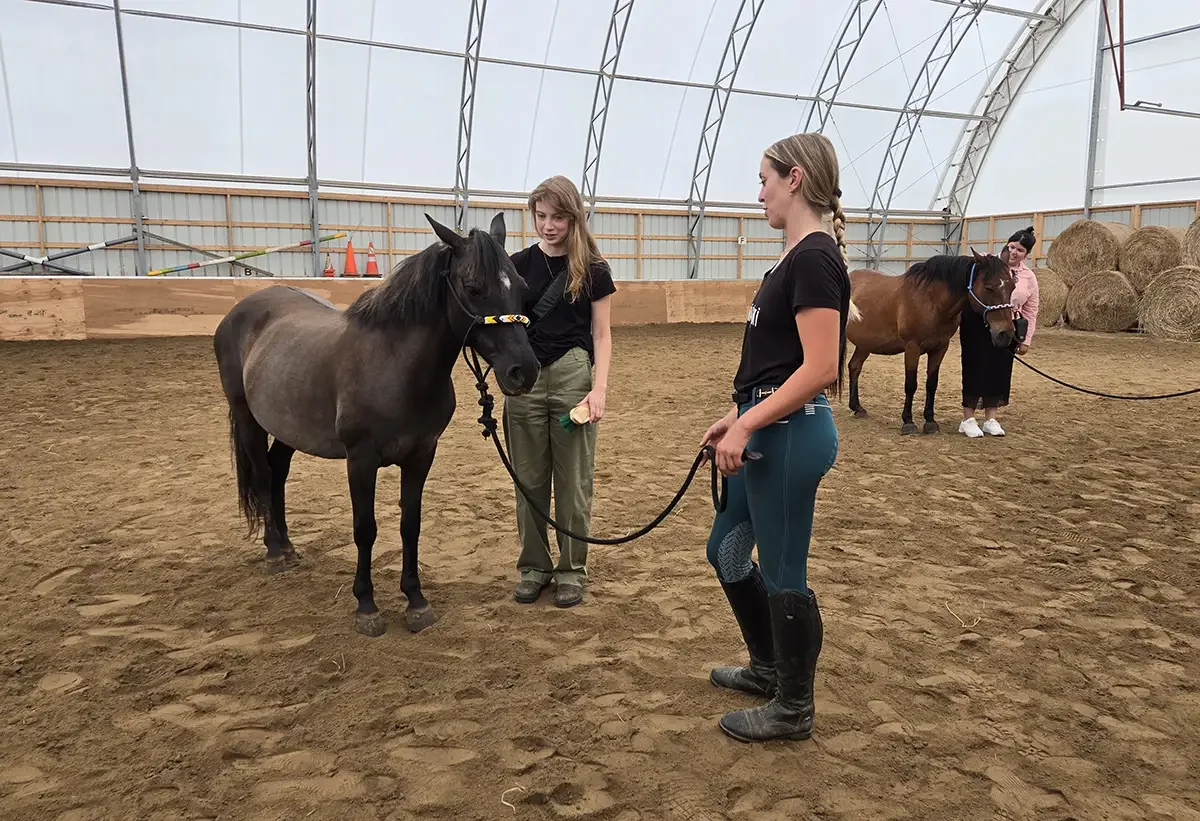
Kaya Simard, an equestrian and trained EAL wrangler, introduces a Spirit Horse to a member of the visiting media.
One of the farm’s most impactful offerings is its Equine-Assisted Learning (EAL) program, now in its second year. Vulnerable youth and community members are paired with a Spirit Horse and a trained coach in a healing, nature-based environment. The program is rooted in the Seven Grandfather Teachings—core Anishinaabe principles that foster harmony with self, community, nature, and the Creator. Each session introduces one of the teachings in a hands-on, experiential way.
New this summer, Mādahòkì is expanding its offerings with small-group programs for families and individuals, creating new opportunities for all visitors to connect with Indigenous culture in an accessible and welcoming way. Through the Mishtadim program, the public can now participate in up-close Spirit Horse sessions every Thursday in July and August.
Expanded programming also includes:
Creation Workshop (Fridays and Sundays): An immersive cultural experience where guests learn about Indigenous teachings and create their own traditional dreamcatcher.
Farm Play (Saturdays): A family-friendly experience that includes animal encounters, a personal tour with the Spirit Horses, and introductions to the newest foals—Nesewin (“air” in Anishinaabemowin) and Mashkodewashk (“sage”).
Legacy Trail Walk: A short, educational trail exploring traditional plants, medicines, and the Seven Grandfather Teachings.
The newly renovated Mamawii Lodge—“Phase A” of the farm’s expansion—adds a gathering space for workshops, ceremonies, and community events. Surrounded by nature and amphitheatre-style seating, the lodge enhances the farm’s peaceful and spiritual atmosphere.

The Marketplace boutique features meals-to-go, thoughtful gifts and artworks from more than 60 Indigenous makers. (RIGHT) Take part in one of their Creation Workshops and make your own dreamcatcher.
In addition to sharing space and stories, Mādahòkì also shares flavour. The on-site Indigenous Marketplace is open Thursday through Sunday, offering grab-and-go meals created by acclaimed Chef Billy Alexander, along with thoughtfully curated gifts and art from more than 60 Indigenous makers.
Looking ahead, fall will bring even more ways to connect. Two new experiences launch in September 2025:
Trail of the Native Ponies: A self-guided, augmented reality tour that shares the history and teachings of the Spirit Horses through Elder wisdom and storytelling.
Spirit Horse Connections: A 3.5-hour guided cultural experience featuring a traditional welcome, tea and bannock, a walk with the horses, and insight into Indigenous worldview.
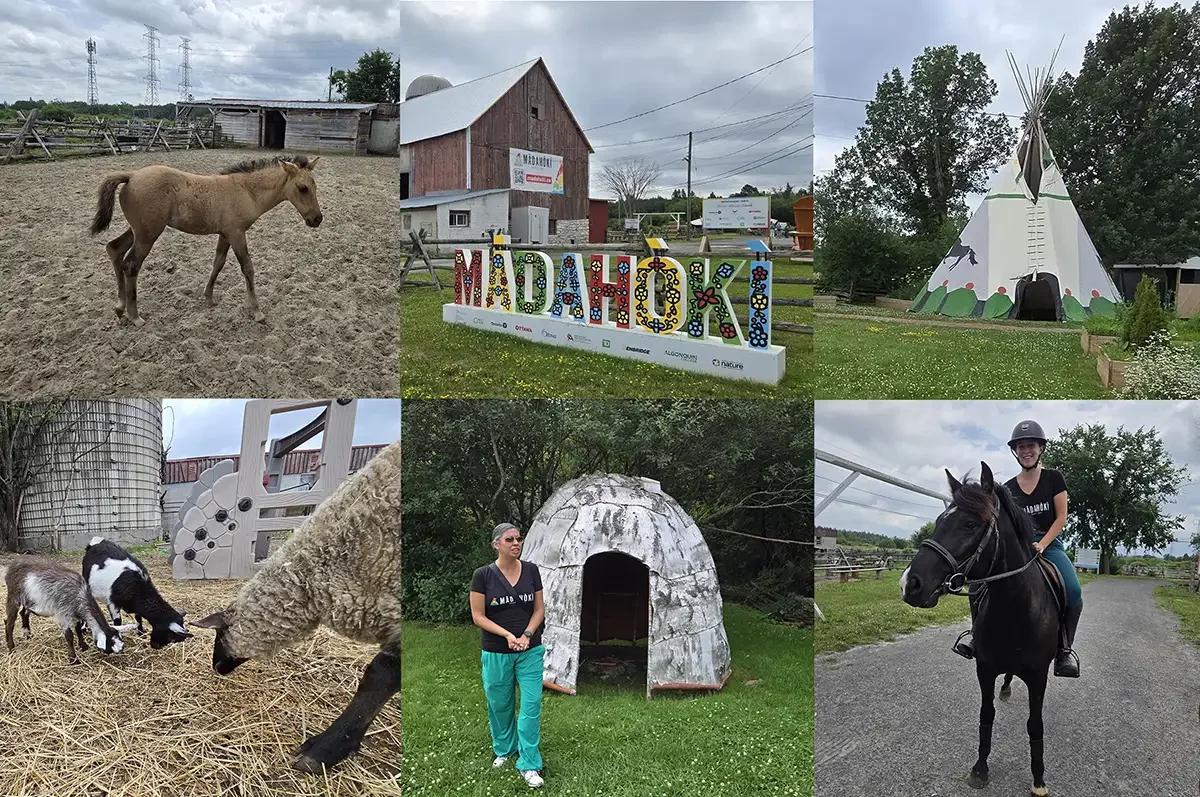
In every sense, Mādahòkì Farm is a place of sharing—of land, of culture, of healing, and of heritage. Whether you come to meet the Spirit Horses, walk the trails, learn the teachings, or enjoy a quiet moment with tea and bannock, there is something meaningful here for everyone.
When visiting Ottawa, be sure to add Mādahòkì Farm to your itinerary. Though not yet accessible by public transit, it’s just a 20-minute Uber ride from downtown.
Mādahòkì Farm is open weekly Thursday to Sunday from 11:00 a.m. to 4:00 p.m. If you are lucky enough to be in the National Capital Region in June, pland to attend The Summer Solstice Indigenous Festival, held annually. The event coincides with National Indigenous Peoples Day in late June, featuring highlights such as a Pow Wow, Indigenous horse experiences, workshops, and marketplace events.
For more information and pricing, visit madahoki.ca/visitor-experiences and follow Mādahòkì Farm on Facebook and Instagram.