
The Magic of Sanibel Captiva Island—Where the People Make the Paradise
The beaches may draw you in, but the friendly people, culture and outdoor activities will keep you coming back.
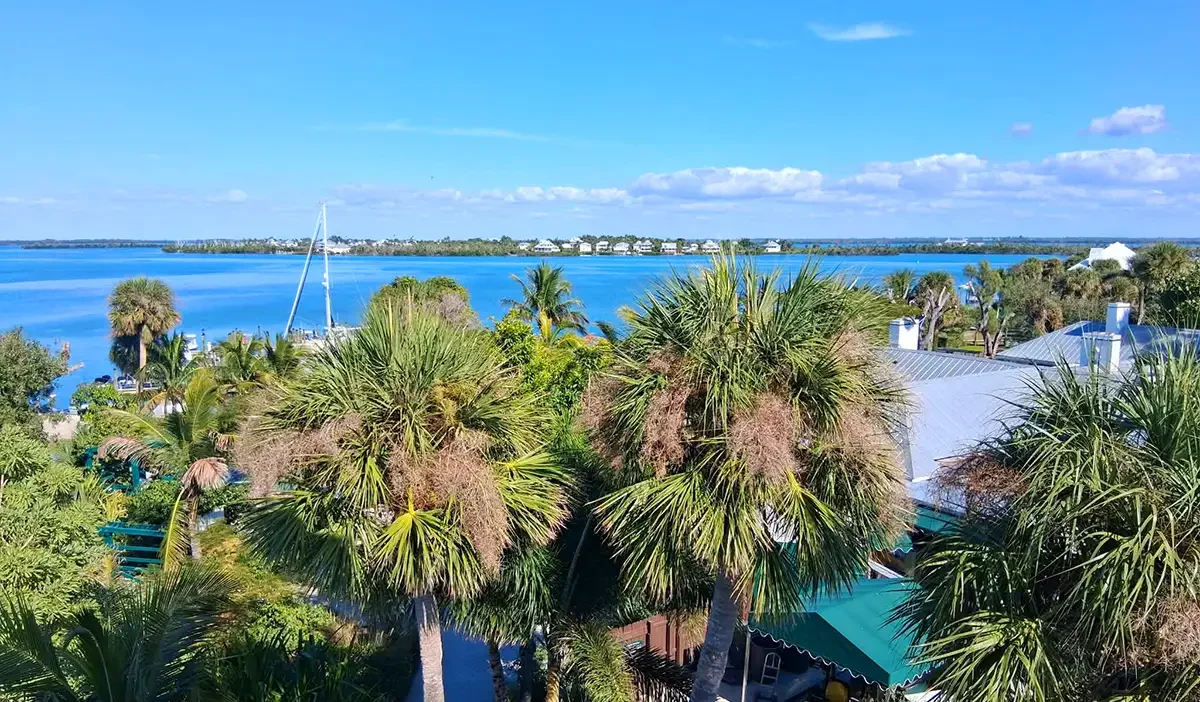
The view from the water tower at Cabbage Key.
Table of Contents:
When you travel, the destination may lure you in—but it’s the people you meet along the way who give a trip its real sparkle. The smiling waiter, the ticket agent who sends you off with a joke, the shop clerk who treats you like an old friend… these are the magic-makers who turn a getaway into an unforgettable adventure. And in Florida, they’re everywhere you turn.
Toni Lapi and ‘Tween Waters
Part of that magic is simply organic. More than two million people have flocked to the Sunshine State since the pandemic, many bringing with them a natural warmth that fits right in. But it’s also intentional.
“We are always trying to find good talent. We only want to hire the best.”
Lapi knows something about creating a welcoming world.
He arrived on Sanibel Captiva in the 1970s from Rochester, New York, and many of his staff—like Nikki, the super-friendly bartender who greeted us at the pool bar—have been there for a decade or more. Their loyalty is honoured with a walkway brick etched with their name, a small tribute to the people who’ve helped shape the resort over the years.
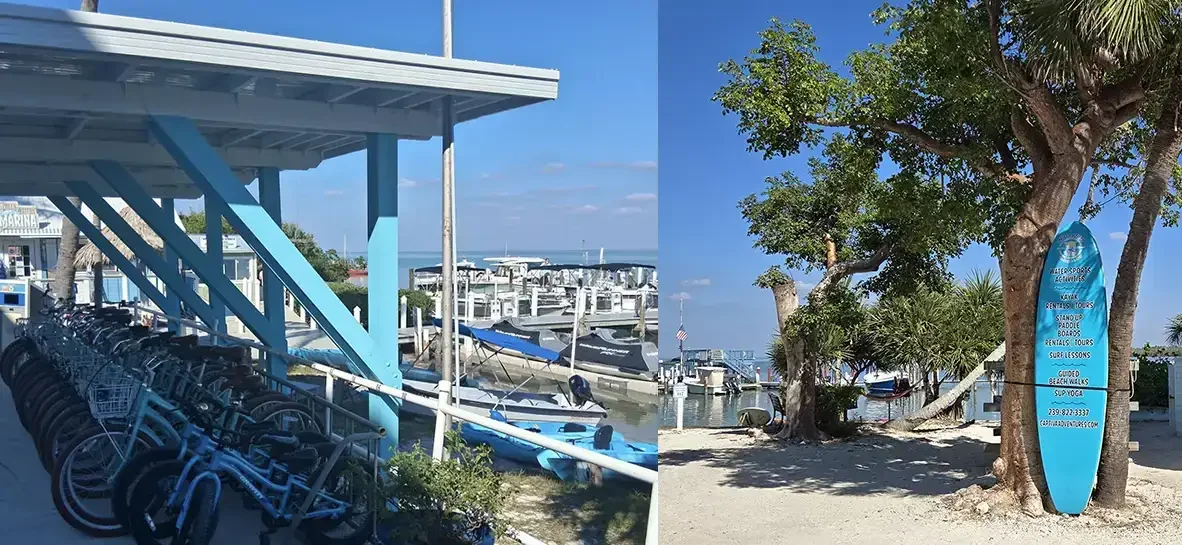
The Pine Island Sound side of ’Tween Waters offers guests a host of water activities and the use of resort bikes.
According to Lapi, who recently published a book about building the business on Captiva, not much has changed since he first arrived, “except the houses are a lot bigger”, he says with a laugh. The joint island of Sanibel Captiva, in Florida’s Gulf Coast west of Fort Myers, remains a sun-drenched, white-sand paradise, part of a region boasting 600 miles of natural shoreline and 50 miles of beaches.
On the northern Captiva end of the barrier island, the resort sits on a narrow stretch of land—hence the name ’Tween Waters—with the marina on one side and the beach on the other. It’s the kind of storied place families return to year after year, where young kids grow up, later return with partners, and eventually bring their own children. One European family has been vacationing there for 30 years and even invited Tony and his wife Angie to a family wedding.
- The rooms, suites, and cottages are held each year for returning guests until they say otherwise.
- High season runs from mid-February through Easter, with weekend peaks in between.
- Summer brings weddings and family holidays
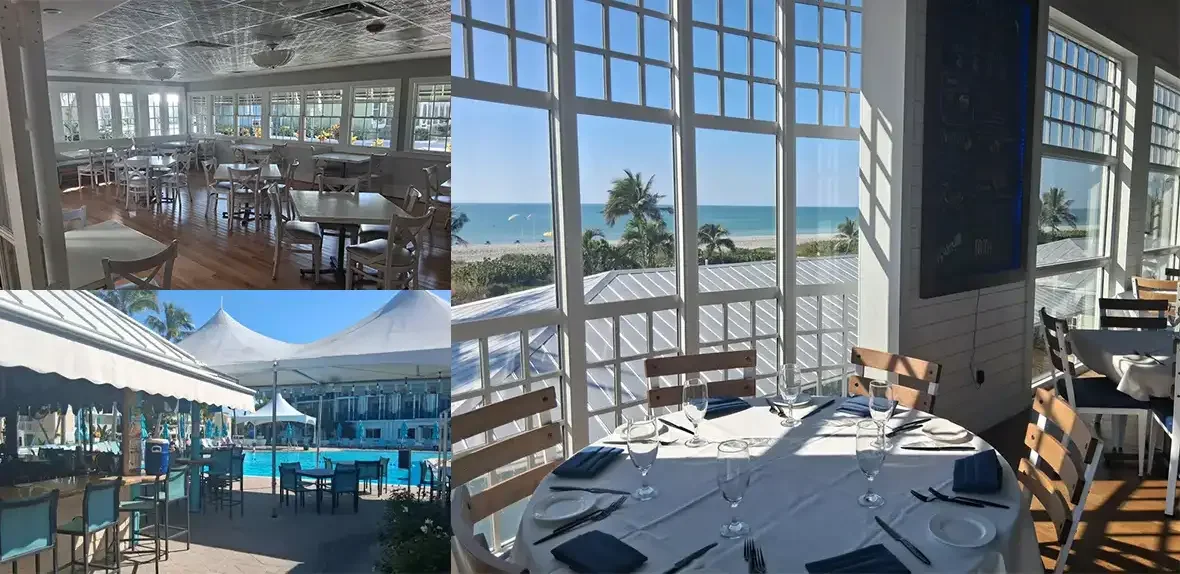
CLOCKWISE FROM TOP LEFT: The original Old Captiva House restaurant offers a historic Florida feel. The second-floor Crow’s Nest Steakhouse has postcard-worthy views of the Gulf of Mexico. The pool and bar are a laid-back spot to get a drink or a bite to eat.
If you’re more of a pool person, the geothermal pool stays warm in the winter and naturally cool in summer. Tennis courts, a spa, a coffee shop, pizzeria, and pool bar round out the experience. The resort has three restaurants: Old Captiva House, which occupies the original 1930s-era building; The Shipyard; and the Crow’s Nest Steakhouse, both on the second storey with westerly views, perfect for Florida’s signature sunsets, welcoming guests from across the islands.
The islands were hit hard by Hurricane Ian in 2022, a Category 5 storm whose 20-foot surge crashed over the reef island. In response, the federal government has been investing more than $30 billion to restore and “renourish” the beaches—dredging sand from the Gulf and using pre-storm satellite images to rebuild the shoreline locals and visitors love.
Businesses have been rebuilding, too. Beloved spots like The Bubble Room, an eclectic, whimsical eatery, recreated their quirky interiors exactly as they were, minus the famously uneven floor, which left patrons feeling as if they had tied one on before being seated. With its Hansel-and-Gretel-meets-Hollywood décor and 1930s–40s memorabilia, it remains a must-visit, along with its equally quirky gift shop across the street.
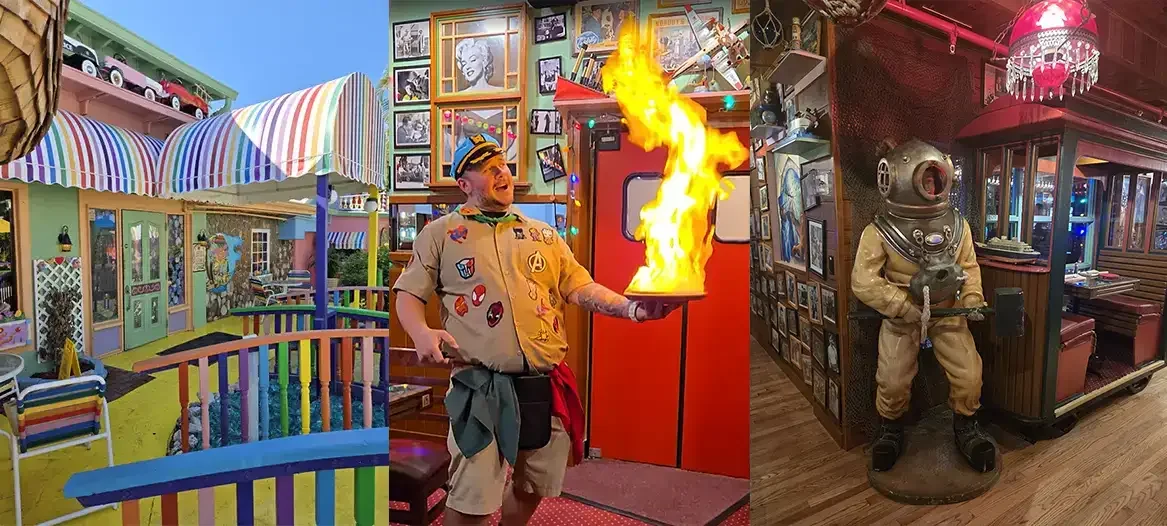
LEFT TO RIGHT: The fun vibe at the Bubble Room greets you outside and extends to the food and interior decor of movie memorabilia.
Captiva is serviced by one road in and out, which means once you arrive, you likely won’t be rushing to go anywhere, which adds to the relaxed island pace. It’s one of the few U.S. destinations where you’ll see as many bikes as cars, not to be outdone by the number of golf carts.
South Seas Resort
At the northernmost tip, South Seas Resort offers a luxury beach experience that feels a bit like a country club—or, to skiers, like a warm-weather version of a ski village, complete with private residences. The activities are pure Florida: golf, boating, fishing, water slides, tennis, and of course, beach time. Everything about the resort celebrates the beauty of Captiva’s natural beauty.
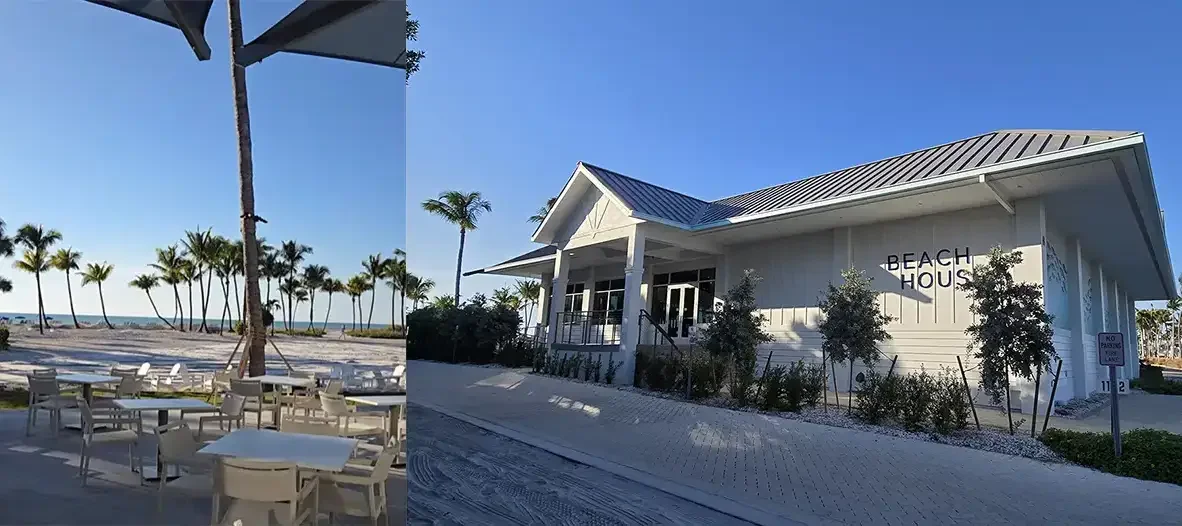
South Seas took a direct hit from the 2022 hurricane and has been rebuilding ever since. But if the newly opened Beach House restaurant is any indication—with its clean, Scandinavian-meets-coastal design, garage-style windows opening onto white-sand views, and seafood so good you’ll want to linger—then the rest of the revitalized resort promises to be remarkable. Order the shrimp. Truly.
“It’s the prettiest restaurant I have ever managed.”

CLOCKWISE FROM TOP LEFT: A mural painted on the side of the Harborside restaurant that overlooks the Yacht Harbor Marina. Getting around the resort is much easier when you rent a golf cart. New this year, Captiva Landing includes a water park with slides, a lazy river, and an adult-only area. Despite the screening on the porch of our third-floor unit, the view of the beach and sunset is so spectacular that it keeps families returning year after year.
The 330-acre resort includes four additional restaurants and a bar, along with local shops, a market, and a Starbucks. Getting around is easy thanks to bikes, golf carts, and a complimentary trolley running every 15 minutes. The resort is cashless. Guests simply tap their wristbands to charge food and service, like on a cruise ship, making it wonderfully easy to unwind.
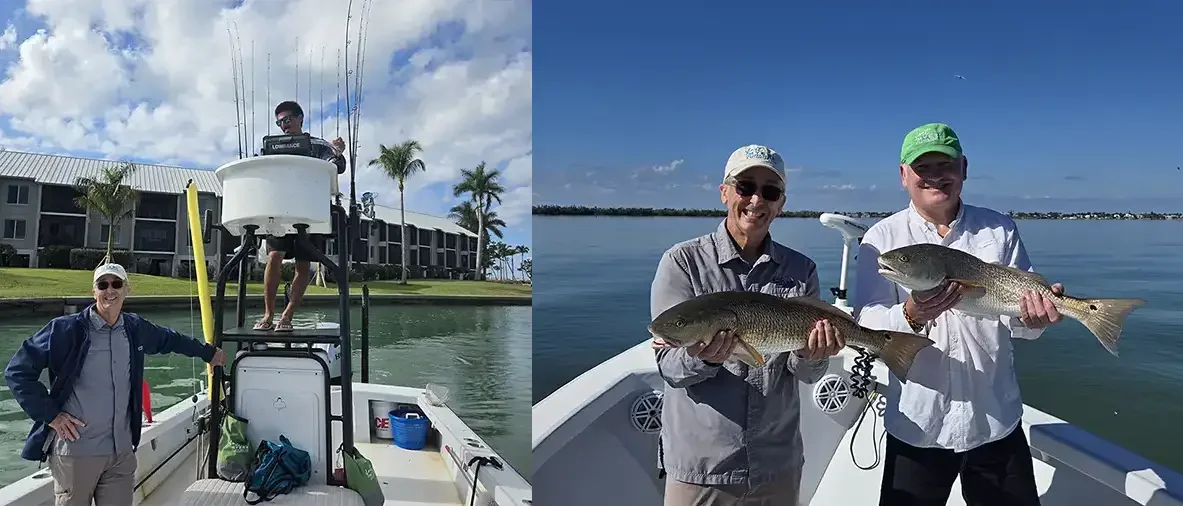
Leaving the marina at South Seas and heading out for a day on the water with Captain Andre (pictured at the top left of the photo) of Go and Get It Charters.
The Perfect Day In Captiva
Speaking of unwinding, we spent a day on the calm intercoastal waters of Pine Island Sound with Captain Andre Luttana of Go and Get It Charters.
It was a bright, typically sunny Southwest Florida day—this region sees an estimated 266 days of sunshine each year—and the water was glassy. Andre has a quiet confidence about him that rubs off on even the least experienced anglers, who will feel like a pro before long.
As an amateur fisher, I barely had my line in before I was reeling in an eight-pound redfish. And the fish just kept coming—so much so that a pair of opportunistic dolphins hovered nearby, hoping to snag a free lunch as we released our catch.

Cabbage Key is a boat-access-only island restaurant and Inn. (RIGHT) One of the remaining fishing huts we passed in the sound en route to Cabbage Key.
Andre zipped us over to Cabbage Key for lunch, pointing out the historic fishing huts along the way—weathered cabins on stilts that once supported local fishing. Many were removed in the 1980s, and new ones are no longer allowed due to navigational hazards and environmental protection, so seeing the remaining huts feels like a glimpse of Old Florida.
On Cabbage Key, we met Scott Lepson, who manages the restaurant on the island getaway, which also includes an inn, six guest cottages and a marina where boats can dock overnight. Like many Floridians, Scott moved to Southwest Florida after interviewing for the job, no doubt drawn by the sun-drenched island life.
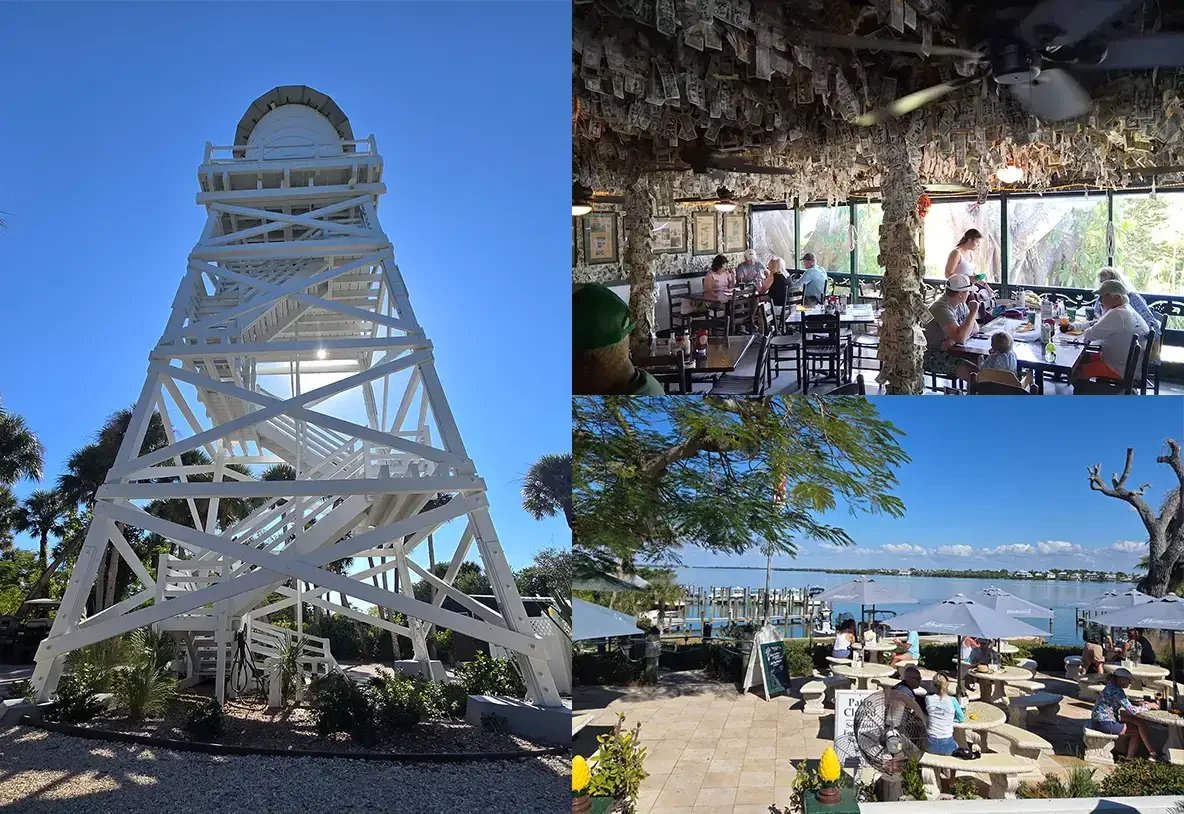
CLOCKWISE FROM TOP LEFT: The island's 6,000-gallon water tower was built by the original owners of Cabbage Key and is still in use today. A climb to the top offers great views (see the header image at the top of the page!). The Dollar Bill Bar is literally papered in dollar bills, which are removed and donated to charity annually. The restaurant at Cabbage Key also offers a spacious two-level patio where guests can dine while enjoying the tranquil view.
The restaurant is beloved not just for its seafood and signature Cabbage Creeper cocktail but for its iconic “Dollar Bill Bar,” where tradition holds that early fishermen left a dollar in the rafters to ensure they could always buy a meal—even on days the fish didn’t bite. Now part of the National Park Service’s Register of Historic Places and run by the Wells family, Cabbage Key remains a small, magical slice of paradise.
After a week in the sun, it was time to head back to the frosty north. And while Florida’s sun-soaked beaches, nature-rich waterways, and postcard-perfect sunsets certainly set the stage, it’s the people who bring the destination to life. From the long-time locals who greet you like family to the new transplants who’ve embraced the state’s spirit of warmth and optimism, their hospitality turns simple moments into lasting memories. It’s this blend of natural beauty, easygoing charm, and genuine human connection that keeps travellers returning to Florida again and again—because here, the sunshine comes from more than just the sky.