What to Do in Singapore: Top Attractions, Neighbourhoods & Insider Tips
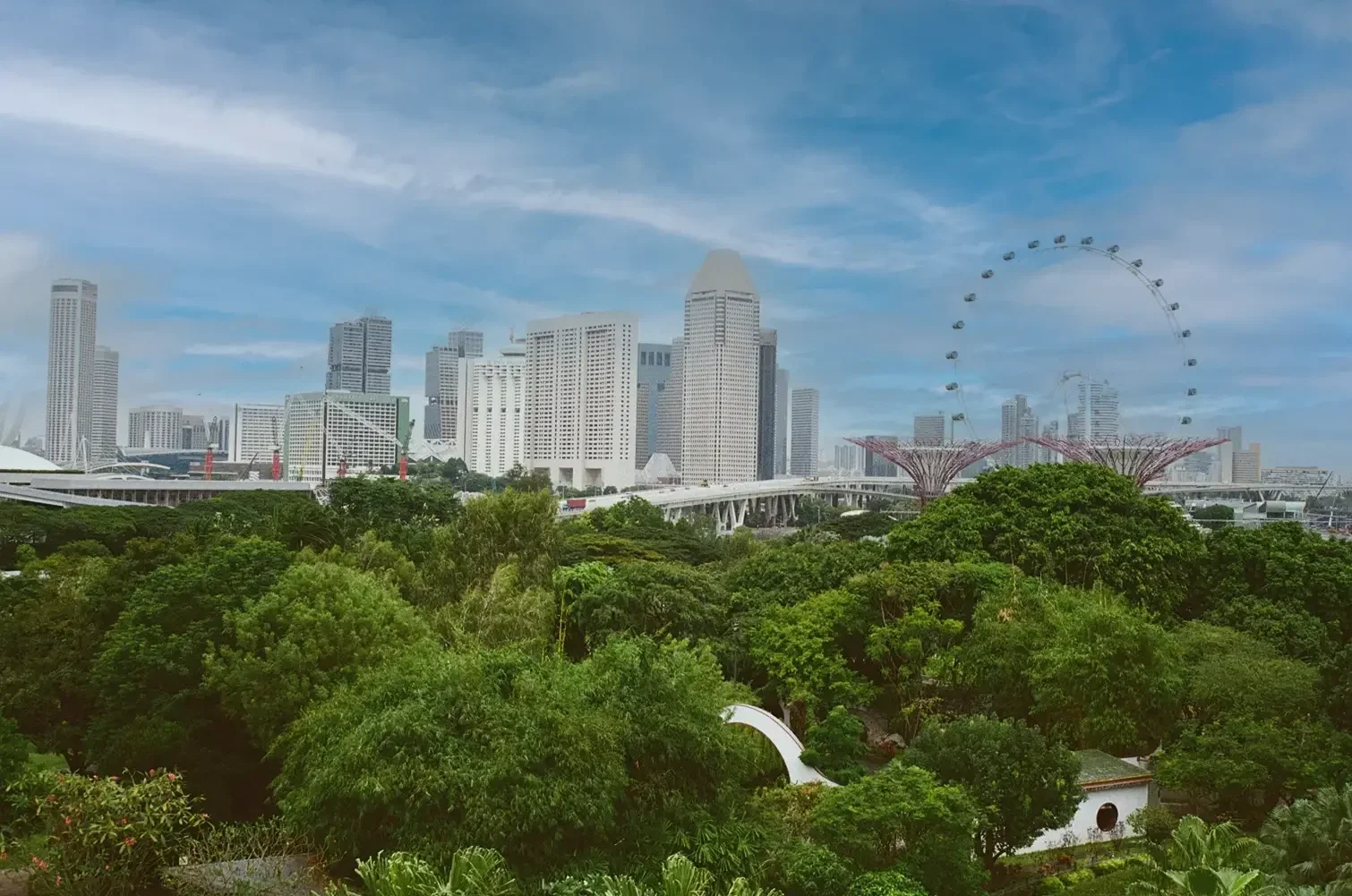
For years, the scents of countless bakeries and luxurious malls permeated my memories whenever I thought of Singapore. Recently, I returned for the first time in 12 years. My visit made clear the city’s persistent evolution and proved that even the smallest country still has plenty to discover.
These might be some of Singapore’s classics, but after a week and a half of eating, wandering, and photographing everything in sight, I’m ready to share my guide of the places that genuinely won me over.
Things to Do
1. Explore malls
One of the most iconic streets in Singapore is Orchard Road, a line of luxurious shopping malls where each feels more fancy than the last. From the famous Tiong Bahru Bakery to photobooths, luxury brands, nail salons, and tea shops, each mall had something fun to browse. One of my personal highlights was the skyline view from the ION Mall. The large windows were a helpful guide to orient myself to the city, with markers pointing to different neighbourhoods and as far as Malaysia. There’s even a bar at the top for those who want to sip a drink to soak in the view.
However, my most anticipated mall was the Shoppes at Marina Bay Sands. As a child, it wasn’t just the high-end shops that pulled my mouth agape, but also the indoor central canal patrolled by tourists in boats. 12 years later, I still enjoyed a stroll to appreciate the luxurious shops and restaurants. However, the main attraction for a budget traveller like myself was the view from the top floor overlooking the Merlion and the Singapore River.
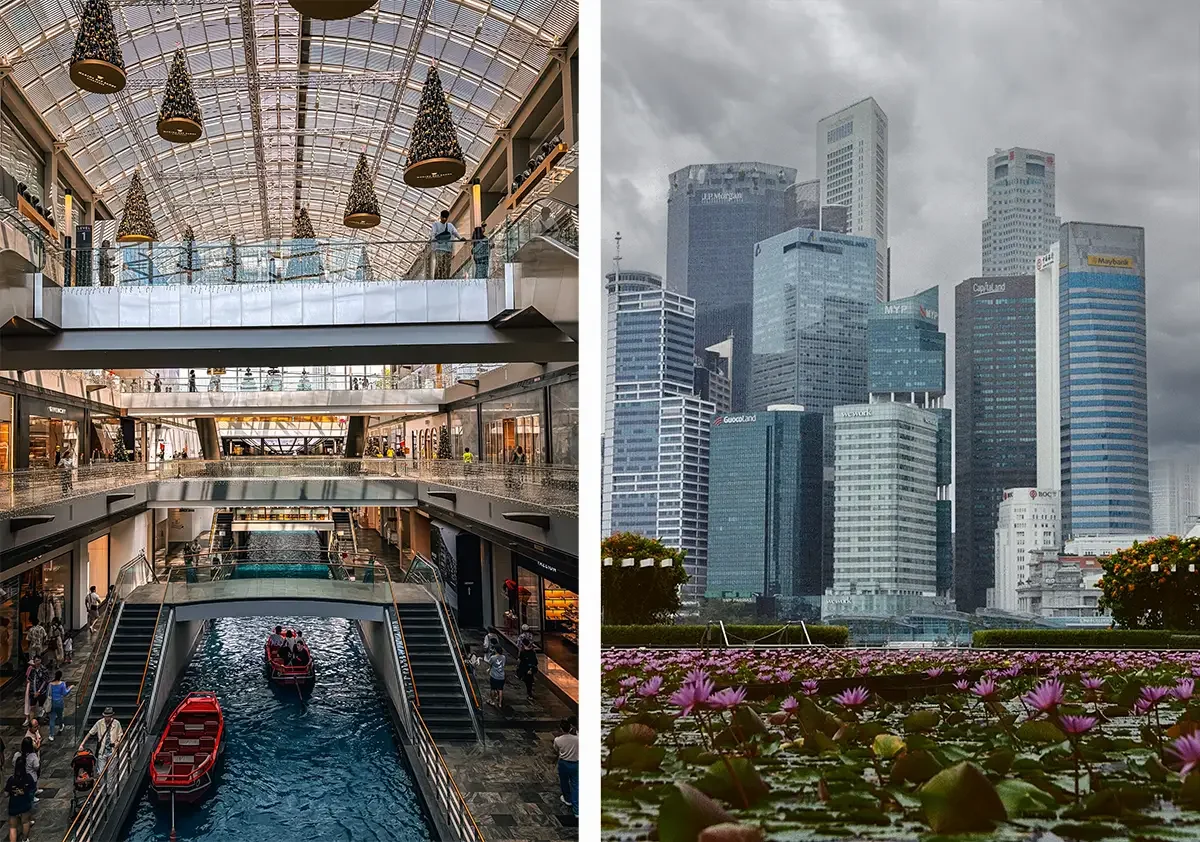
ABOVE: Christmastime in the Shoppes at Marina Bay Sands. (RIGHT) The view of the city skyline from the rooftop.
2. Gardens by the Bay
Just a walk from the Shoppes at Marina Bay Sands are perhaps some of Singapore’s most famous spots today: Gardens by the Bay and the Cloud Forest. As you make your way to the main attractions, take a moment to enjoy some of Singapore’s most iconic views—from Marina Bay Sands and the Singapore Flyer to the lush gardens filled with over 1.5 million plants.
Our first stop in Gardens by the Bay was the towering Supertrees, whose suspension bridges guide visitors along the city skyline and the Singapore River. Next, we had to stop at the iconic Flower Dome and mist-enshrouded Cloud Forest. Both were impressive, innovative feats. More than 72,000 plants thrive in the Cloud Forest, and more than 50 of those species can be traced to the Jurassic Period. The Flower Dome is a love letter to the beauty of the unique habitats that span our globe, and offers a cool escape from the humidity.
We ended the visit with a delicious lunch at Satay by the Bay, a little walk down the path from the Cloud Forest. On the way, we appreciated the views of the ocean and even spotted the infamous monitor lizard.
Tip: Most attractions charge a higher ticket fee for tourists, so be sure to keep this in mind when budgeting for your trip.
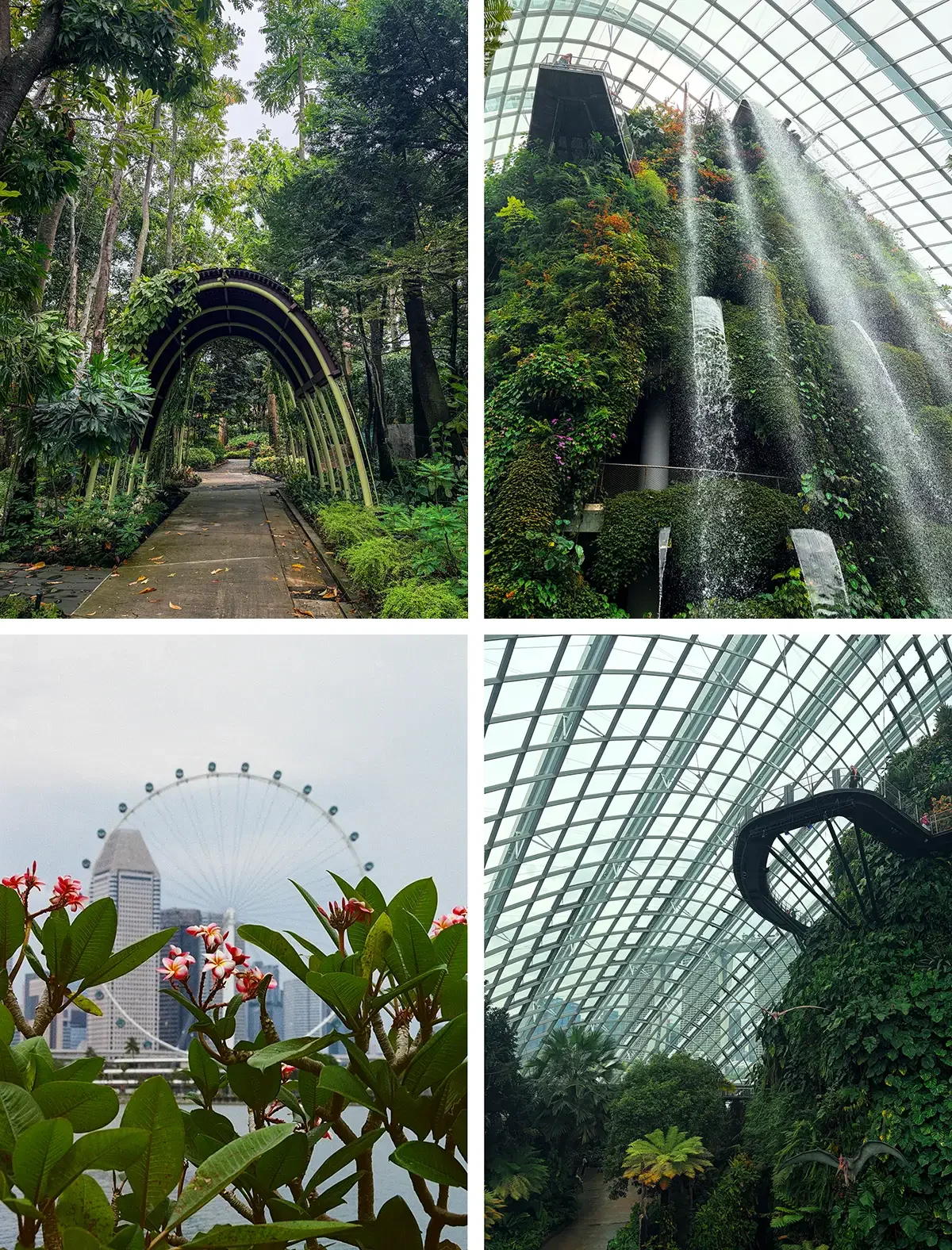
ABOVE: (CLOCKWISE FROM TOP LEFT) One of the many monuments throughout the lush, quiet trails leading to the domes; The waterfall and greenery at the heart of the Cloudforest dome; The Singapore flyer and frangipani spotted along the walk to Satay by the Bay.
3. The Civic District:
The Civic District instantly pulled me in with its resounding calls to Singapore’s colonial past. Once designated as an administrative zone for the 1820s colonial government, today it is dedicated to telling the story of Singapore. For a history lover like me, the museums in the Civic District offered more than I could cover in one trip. Still, the sites I managed to visit are ones I’d place at the top of my priority list.
Fort Canning Park: Originally built in the 1300s as the seat of power for the ancient Malay kingdom of Singapura, Fort Canning later served as a military base for the British and Japanese. Today, traces of its long history sit quietly among lush, towering trees and walking paths. It is the ideal spot for a leisurely afternoon stroll for nature and history lovers looking for an escape from the city.
The National Art Gallery is a testament to the vast array of creativity and preservation found across Singapore. The Gallery is housed in two national monuments—City Hall and the former Supreme Court. Some exhibits inside are free, but the highlight for me was the view, where the city’s colonial past shone alongside the modern skyscrapers. The gift shop also deserves a notable mention, as its colourful local textiles make for the perfect souvenir.
The Asian Civilization Museum was my favourite museum I’d visited in ages. The centuries-old textiles, ceramics, jewelry, and religious monuments invited visitors into a gateway of Southeast Asia’s deeply intercultural past. Each artifact pointed to the mighty role Singapore played in trade and the unity of cultures from across the world, making each room just as interesting as the last. Until June 2026, tourists can check out their feature exhibit showcasing the history, art and design of Asian games.
Bonus recommendation: Reflections at Bukit Chandu is a World War II interpretative centre which honours Singapore’s most important war heroes. The quiet, forested setting at Kent Ridge Park and the quaint heritage building might feel serene, but the exhibits inside are powerful and filled with stories essential to understanding Singapore’s history and resilience.
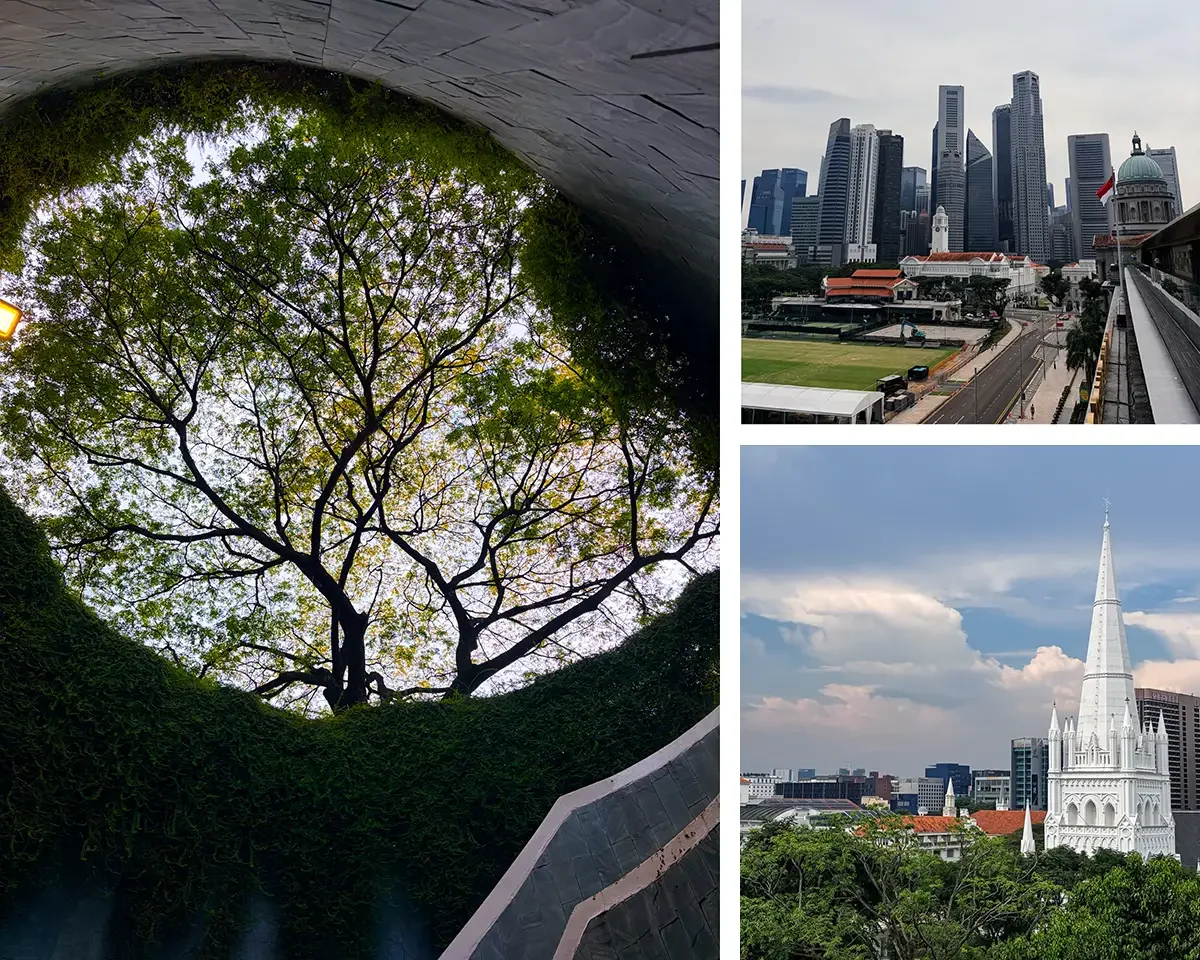
(Left image) One of the most iconic photo spots at Fort Canning Park. (Images on the right) Views of the Civic District and St Andrews Cathedral.
4. Clarke Quay:
Right around the corner from Fort Canning is Clarke Quay, the historical trading post turned into a vibrant riverside nightlife hub. As a child, my highlight was my first taste of Hokkaido-style ice cream from Azabu Sabo. 12 years later, it remained a refreshing stop to recover from the humidity. However, the main pull of Clarke Quay is the evening food scene and the challenge for adrenaline junkies. For those feeling brave enough after a meal, Slingshot Singapore will be waiting.
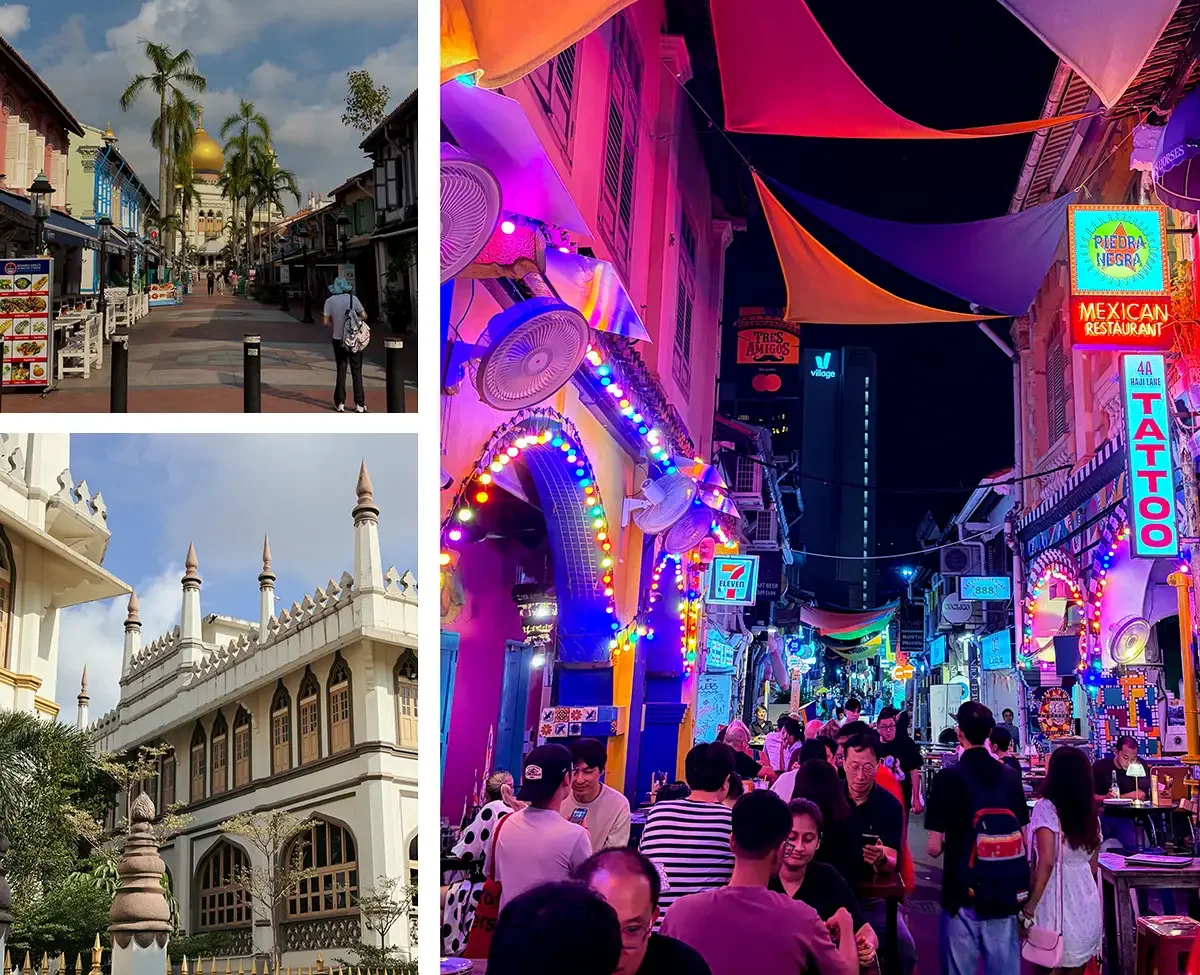
5. Haji Lane:
Haji Lane is one of Singapore’s most photographed spots, and for good reason. Once upon a time, Arab pilgrim-brokers bustled the streets, welcoming Muslims preparing for the Hajj. The street eventually fell into disrepair until the early 2000s, when the creativity of artists and small businesses invited colour and light back to the streets. This same vibrancy energizes each corner today. During the day, passersby will admire the iconic street art, photobooths, and the intricate design of the pristine Sultan Mosque. In the evenings, Arab Street comes alive with music, and the streets dance with the bright lights from bars.
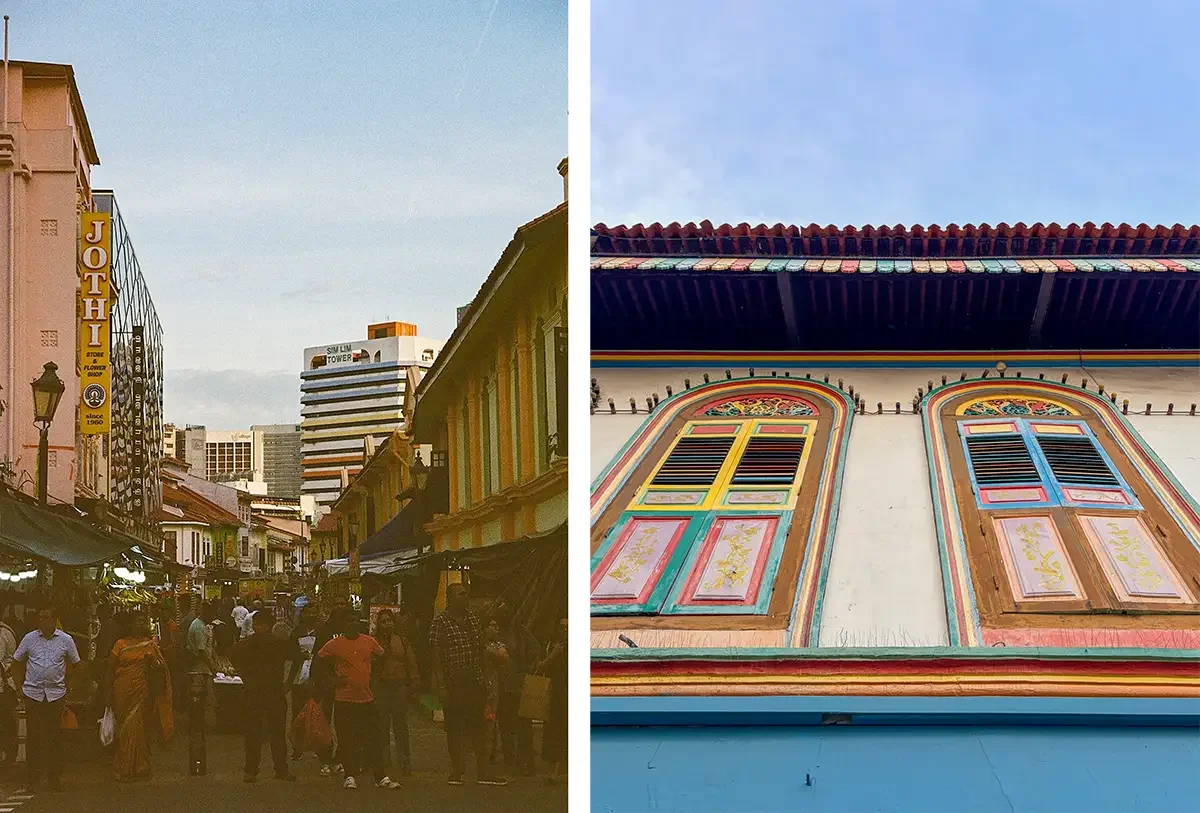
6. Little India
Little India is one of the most vibrant neighbourhoods I’ve visited, where the bright architecture is just as vibrant as the food. However, the main highlight for me was the famous Mustafa Centre. Its 6 levels offer an array of options for tourists and locals alike, from used electronics, clothes and tea to textiles (all of which I bought as gifts for my family friends).
7. Chinatown
We began our journey to Chinatown on Amoy Street, wandering past quiet shops and cafés before passing through the unexpected, tranquil greenery of Ann Siang Hill Park. Moments like these were one of my most treasured throughout my time in Singapore. The city has mastered the art of efficiency and modern living, while also prioritizing quiet greenery that makes itself a comfortable home between the skyscrapers.
As we arrived at the heart of Chinatown, I immediately fell in love with the streets of traditional, quaint Sino-Portuguese buildings, many of which were converted into hip bars and restaurants. In particular, we enjoyed drinks on the rooftop of Foxtail, a small bar overlooking Keong Saik Road, with many innovative and tempting dinner options ranging from food courts to French cuisine lining the streets.
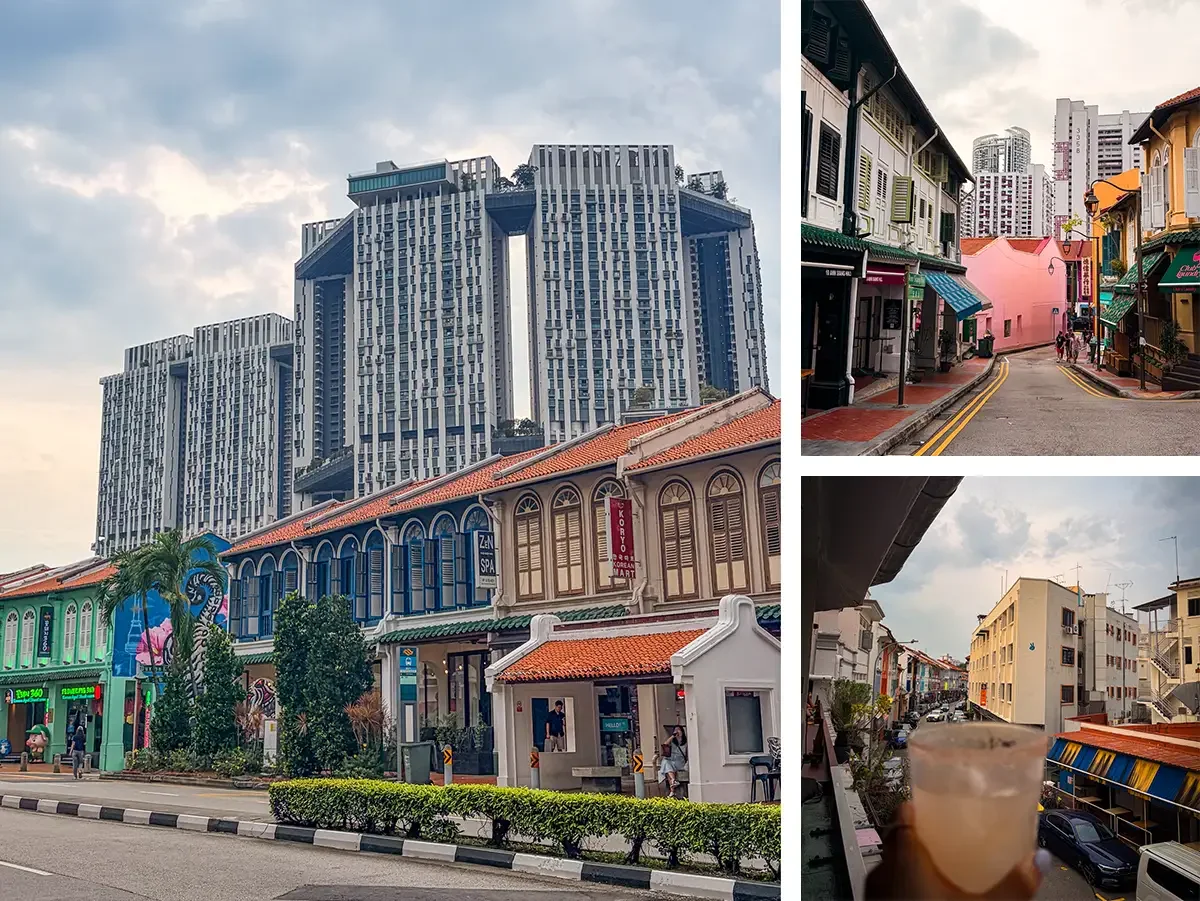
(Top left) The peaceful and quaint streets of Ann Siang Hill Park and Chinatown. (Left and bottom right) The evening views from Foxtail.
Getting Around
Although I remain impressed by the luxurious malls and food scene, I equally appreciated how easy it was to explore the city. I was never stuck waiting for a bus or a train longer than 3 minutes. Today, more than 160 stations across six MRT lines span Singapore. This level of efficiency made it equally as convenient as a taxi, but for a significantly cheaper cost. EZ-Link cards can be purchased at each station and American Express, Mastercard® or Visa contactless credit and debit cards can be used for tap.
For more on where to explore in Singapore, check out our list of the most iconic photo spots.
All photos taken by Analise Saavedra on an iPhone 17 and Minolta Maxxum 7000.