Tastes of Prague – Mozart and Michelin
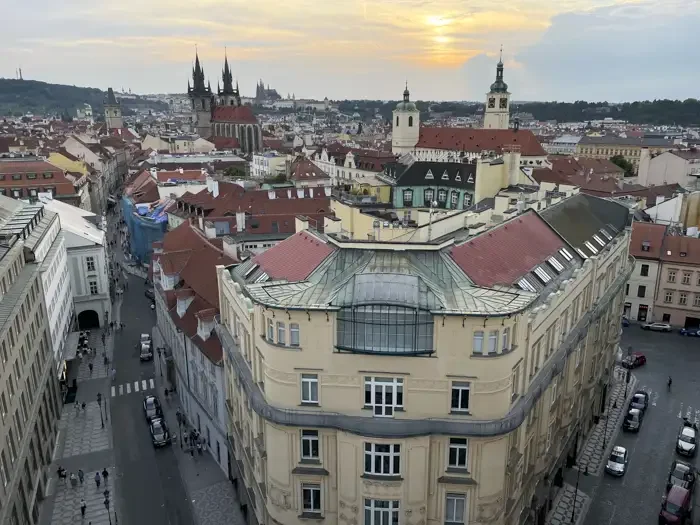
Although Mozart is most often associated with Vienna where he lived and died, Prague in the Czech Republic is also intimately connected to his music. Indeed, Mozart once quipped that, ‘Prague understands me’. His funeral was in Prague and following his death, his widow organized concerts in Prague to help pay off their debts.
Music is everywhere in Prague, and if you want to learn more about Mozart and his music, I would recommend visiting the newly opened Mozart Interactive Museum, located in the heart of Prague’s New Town, right across from the famous astronomical clock. Indeed, the best views of the clock can be had from the museum’s second floor!
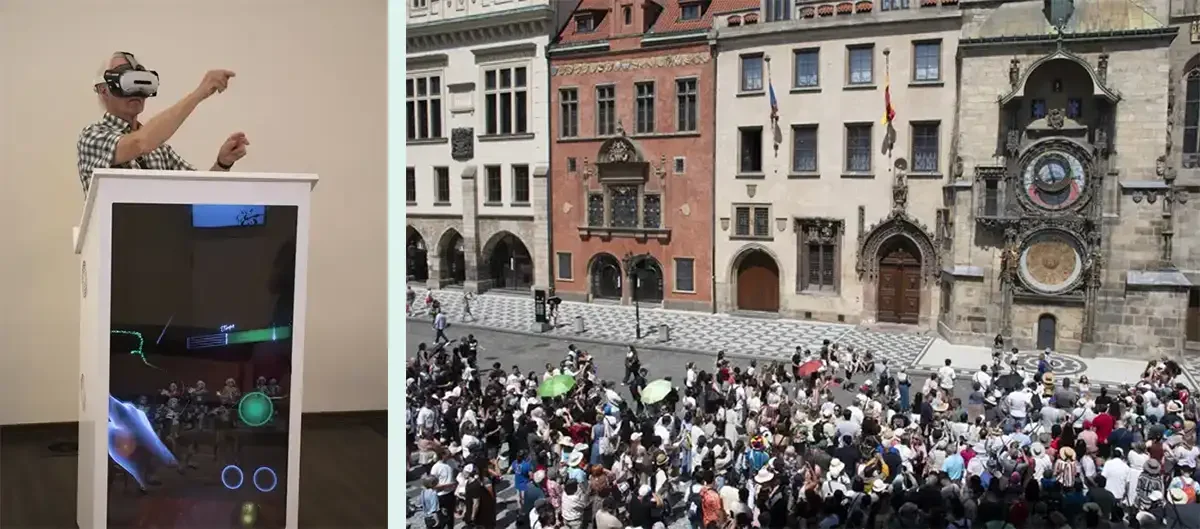
Although this interactive museum is extremely child-friendly, I learned a lot about Mozart’s music and life.
As a child prodigy, Mozart became a long-distance traveller long before our era. In one huge map exhibit, his many journeys across Europe are detailed, telling the number of kilometres he traversed, and even how many kilograms of oats his horses ate! You can conduct a virtual orchestra, and Mozart’s opera librettos are explained in booths designed for the little ones.
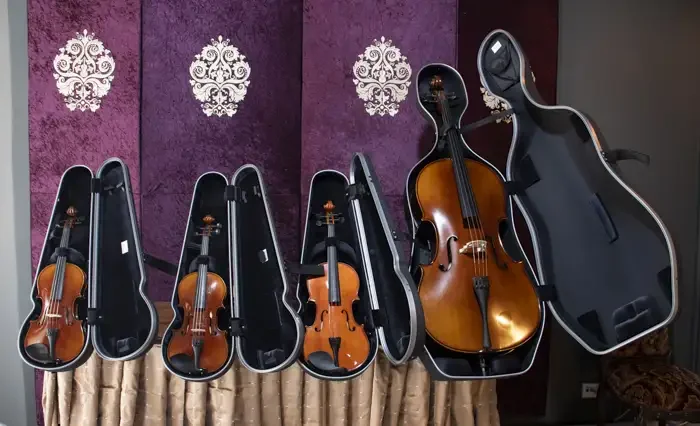
In another exhibit, the cases of four string instruments remain closed, awaiting the first visitor. When say, the cello case is opened, the cello partition of a Mozart piece, ‘The Hunt’ starts playing. As you open the remaining cases, the other string instruments join in seamlessly playing their part, without missing a beat!
A surprising feature of Prague and Czechia or the Czech Republic, (you’ll hear the country referred to as both), is that Czechia’s and Prague’s restaurants now figure prominently in the Michelin guide, and National Geographic includes Czechia as one of the top 25 food destinations in 2026.
Czechia now has seventy-nine restaurants recommended by Michelin guide inspectors, which includes the four newly awarded green stars, such as Stangl in Prague.
This restaurant was recently awarded a Michelin star, due to its in-house farm embracing hydroponics.
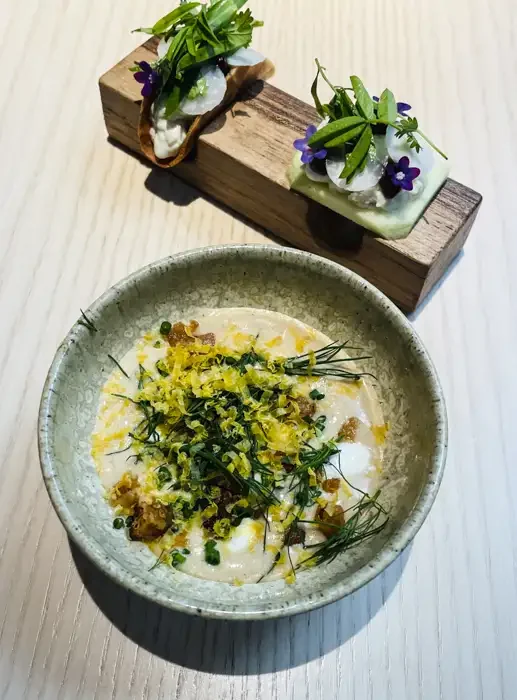
I think I had one of my most colourful and most delicious meals ever at the Stangl. This, in a refurbished factory (only 100 years old, in Prague terms, a mere bagatelle), in the city’s Karlin District.
We opted for a three-course meal, a wine pairing with local Moravian wines, a judicious choice. Even the wine glasses had a unique, double rounded shape.
The menu is based entirely on seasonal Czech ingredients, and without being fancy, the dishes are delicate and elegant, the flavours clear and well balanced.
I will never forget the aged striploin, tomatoes and especially the lardo covered in tightly cornered beet leaves that we were served.
Bread comes fresh from the Eska Bakery located on the ground floor – this place has been going strong for decades – I visited it exactly eight years earlier.
Tastes of Prague
Our exploration of Czech cuisine led us to take a food tour with Taste of Prague, with guide Klara.
The tour started at Local. Czechs, who still hold the global record for the most beer consumed per capita, love this kind of no-nonsense pub. Our guide Klara explained that there are no TVs, no radios, and that Czechs feel at home here, in a décor unchanged for decades. There were even large tables reserved for regulars.
The pub food was as good or better than pub food anywhere, with a Slavic twist. Fried cheese and tartare sauce, Prague ham with creamed horseradish were just two of the dishes I enjoyed. I developed a taste for the dark Kozel beer, which Klara described as being ‘like Guinness without the weight’.
One of the pub coasters showed a man looking at a drawing of a beer stein, saying ‘I call it Art’. A good example of Czech humour.
Our guide explained how mediocre meals became during the communist regime in Czechoslovakia.
Meals had to conform to a bare list of ingredients provided by the government in something called the Book of Standards.

Karla’s tour took us to the Mysak Pastry Shop. In spite of the infamous Book of Standards, Mysak Pastry Shop survived.
Founded in 1911 on Vodickova Street, this high-end pastry shop outlived the communist regime and, although it was not returned to its original owners, is still going strong. Its vibe is centuries old.
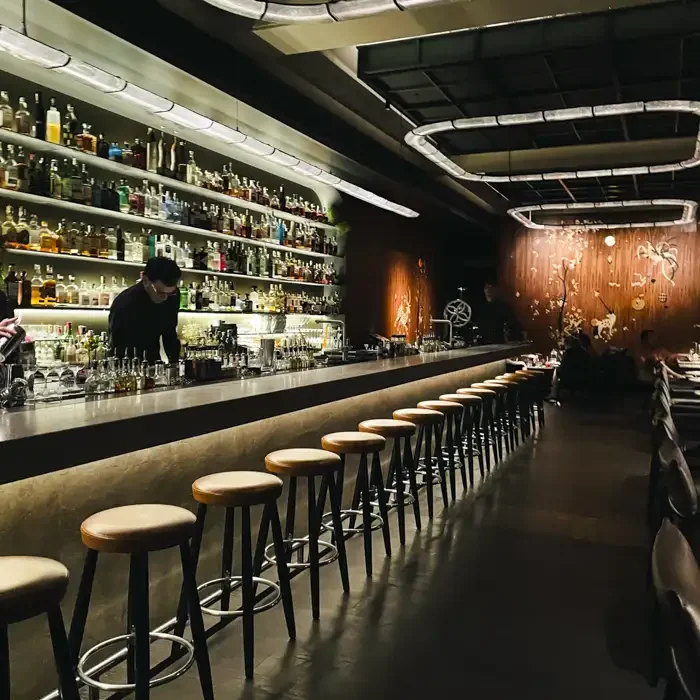
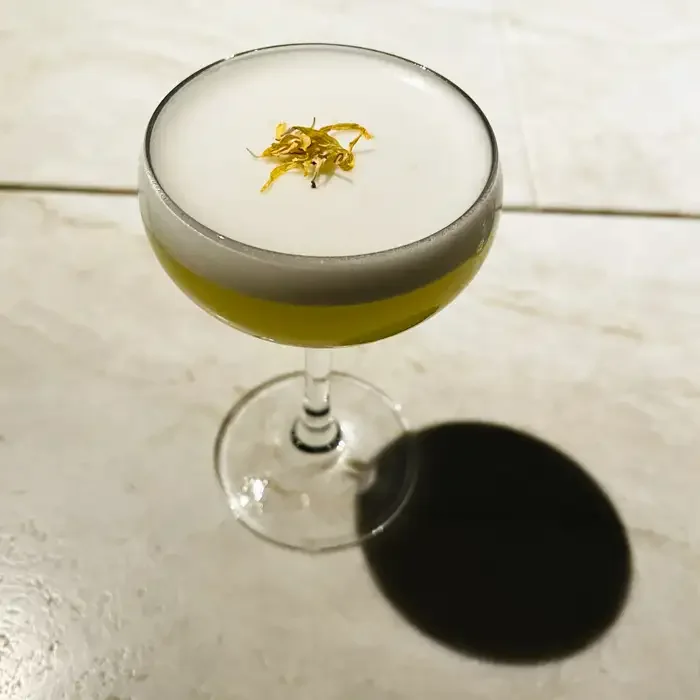
A final stop was at the Forbina Hotel, where we enjoyed Rusalka cocktails. This signature drink was inspired by Antonín Dvořák’s Czech fairy-tale opera of the same name, often performed at the National Theatre of Prague, located nearby.
Our concierge at the Hotel Julius told us to ‘follow the crowd’ in order to find the very well-known Old Town Square. He was right. And, on another occasion, those same crowds helped us discover an Art Deco gem which houses a restaurant.
I am referring to the Kvarna Obecni Dum, where we enjoyed typical Czech cuisine. Typical, yes, but in a splendorous atmosphere. Surely by chance, a brass quartet announced our arrival, playing from a balcony on this Art Deco municipal hall. Inside, a jazz pianist tinkered on a grand piano.
Music is everywhere in Prague, not surprising, for a town that loved Mozart. Even from the WC of the Kvarna I could hear music. In fact, every WC I visited in Prague had music: a staff playlist in one, a recording of birds singing in another, and yes, Mozart Requiem in another.
The latter was a coincidence, as the WC at the Mozart Interactive Museum happens to be located close to the exhibit where Mozart’s Requiem is always being played!
The Prague Visitor Pass covers transport and entrances to many attractions, including a tour of Prague City Hall, which lets you visit the Astronomical Clock from inside.
ALL PHOTOS BY CAROLE JOBIN