
Step Into the Past: Discover Jamestown, Williamsburg and Yorktown in Colonial Virginia
Explore Virginia’s Historic Triangle—Jamestown, Williamsburg and Yorktown—plus Virginia Beach on a journey through America’s founding history, colonial heritage and Revolutionary War landmarks.
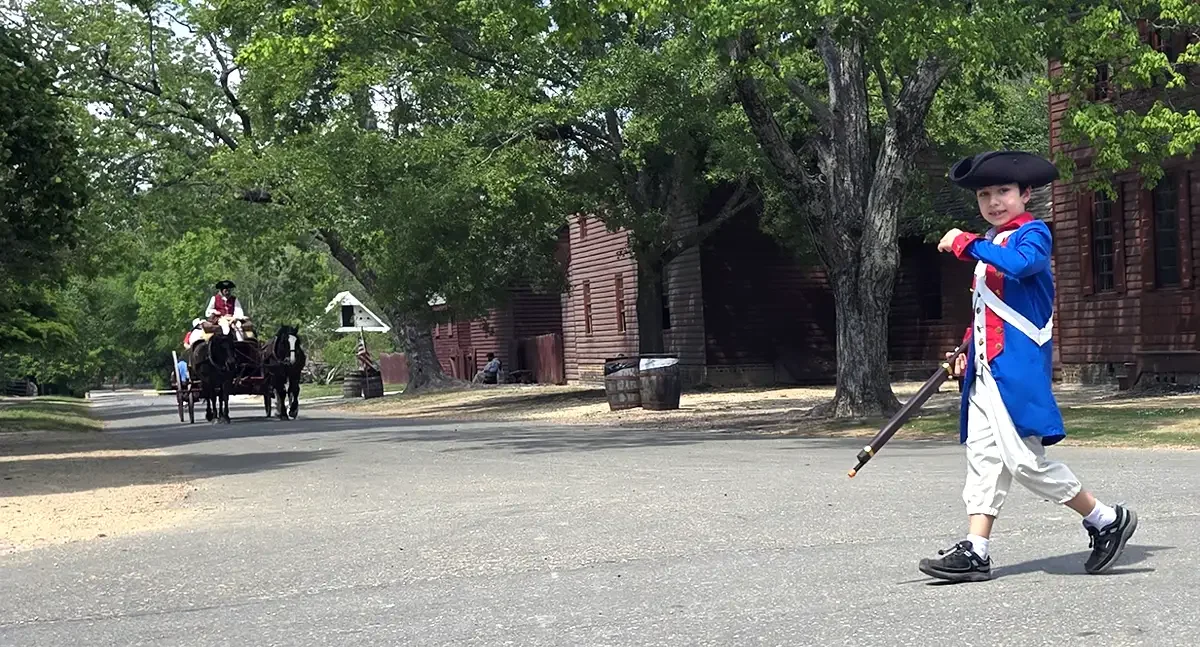
The iconic three‑cornered tricorn hats of the 17th and 18th centuries are a familiar sight in Williamsburg — even on little ones dressed in full colonial costume.
Table of Contents
Long before there was the United States, there was Jamestown, Virginia. Originally established as a for-profit venture by the Virginia Company of London in 1607, the colony became a royal possession just 17 years later when King James I revoked the company’s charter and declared Virginia Crown land. The English had officially joined the French and Spanish in their race to expand into the “New World.”
Given that this year marks the 250th anniversary of the Declaration of Independence, it seems only fitting to visit the place where America’s story began: the Historic Triangle of Jamestown, Williamsburg and Yorktown.
Fun Fact: The term “Virginia” was once used by the English to describe a vast stretch of North America’s Atlantic coastline that extended far beyond the colony’s eventual borders. The region was named in honour of Queen Elizabeth I, the “Virgin Queen.”
Jamestown
Before setting out to explore the original Jamestown settlement, we fuelled up with a hearty breakfast. Whatever your preferred morning meal may be, in the Historic Triangle of Williamsburg, Jamestown and Yorktown, chances are you'll end up at a pancake house—there are eight in Williamsburg alone. George Washington was said to be particularly fond of pancakes, although he reportedly preferred cornbread versions.
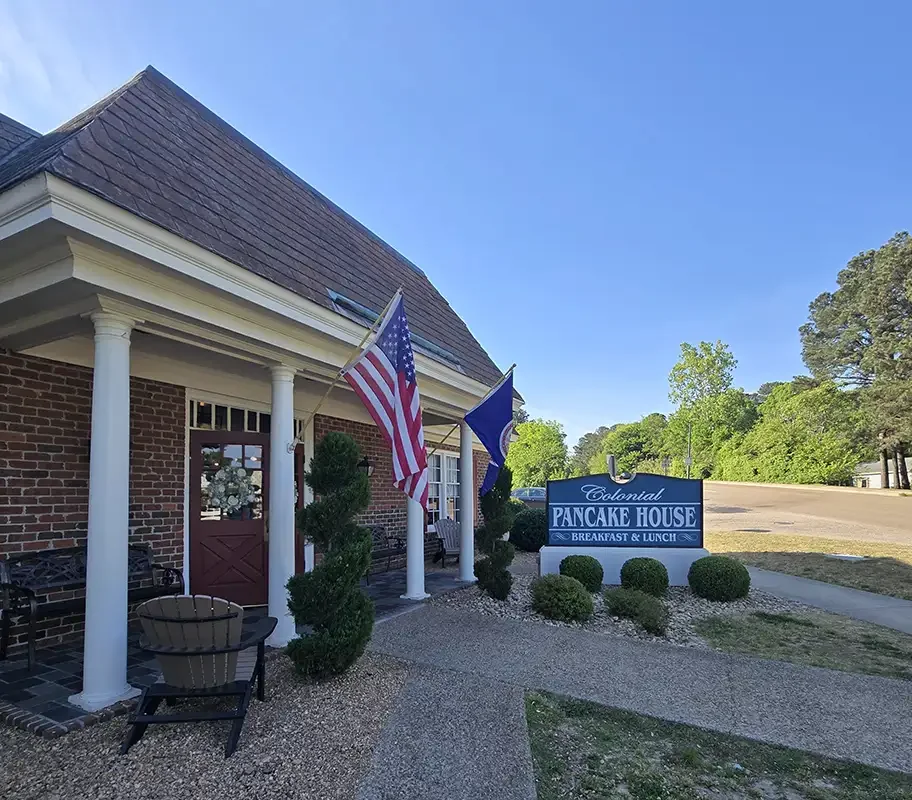
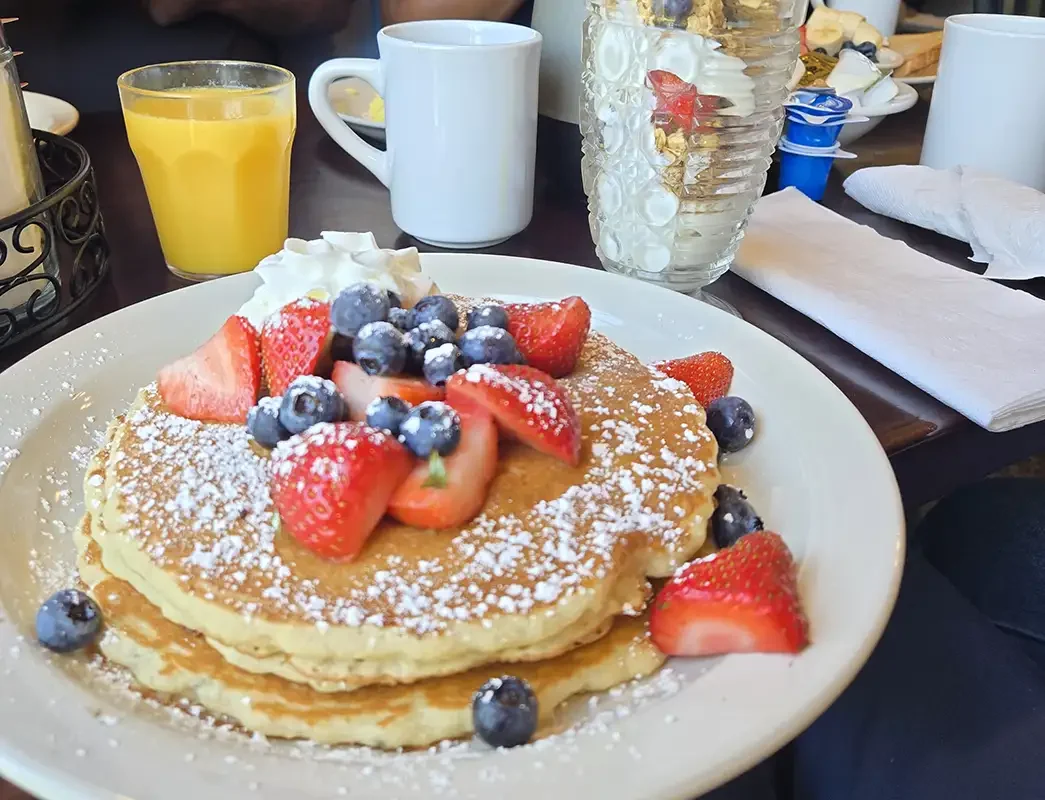
After filling our bellies, we headed to Historic Jamestown, the site of the first permanent English settlement in what would eventually become the United States. Washington likely never visited Jamestown itself. By the time he came of age, the original settlement had long been abandoned and sold off as farmland. He would, however, have been very familiar with nearby Williamsburg, where Virginia's capital was relocated in 1699.
The Virginia Company provided detailed instructions for where the colony should be established. It needed to be on an island, away from local Indigenous communities, and easily defended against any lingering Spanish threats that may not have received the memo that England and Spain were no longer at war.
Fun Fact: Jamestown was named after King James I, who ascended to the English throne in 1603.
Life in early Jamestown was extraordinarily difficult. Settlers battled disease, damp conditions, food shortages, and conflict with the Powhatan Confederacy. The infamous winter known as “The Starving Time” nearly wiped out the colony altogether.
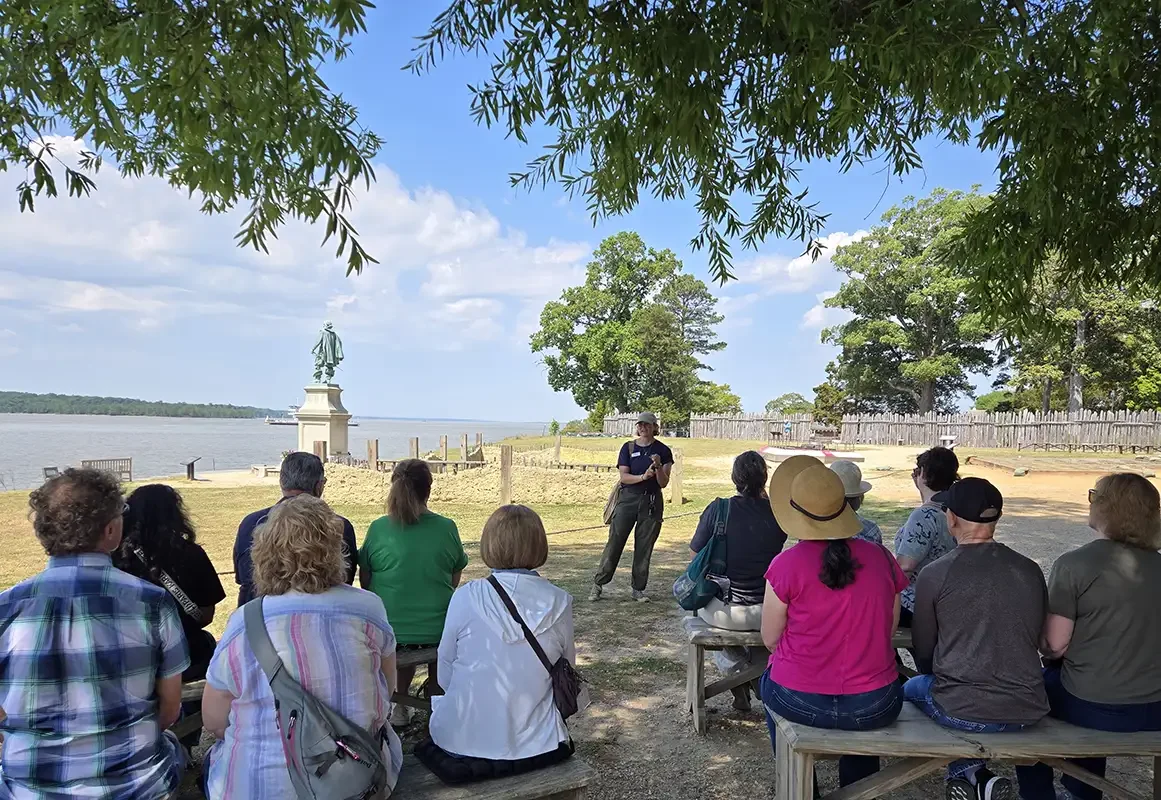
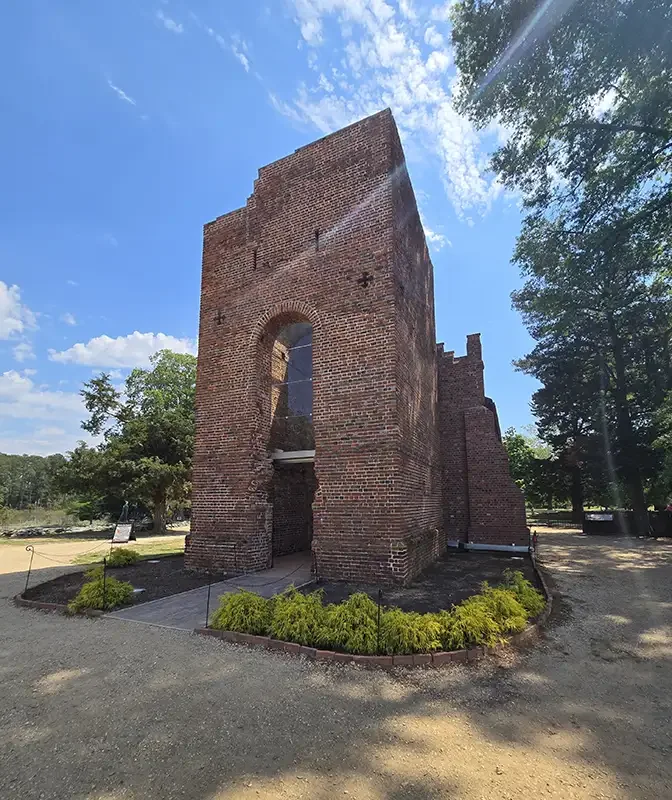
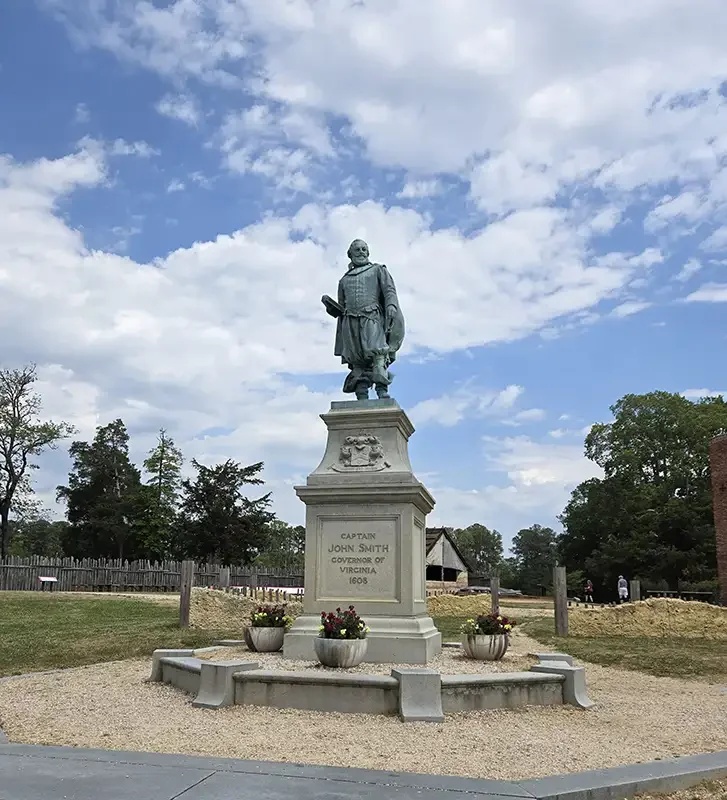
CLOCKWISE FROM LEFT: The on‑site archaeologists at historic Jamestown bring the story of life on the peninsula vividly into focus. The original church tower and the reconstructed church where Pocahontas and John Rolfe were married. A statue of John Smith, Jamestown’s first governor, looks out over the James River. BELOW: A commemorative marker for the first General Assembly of Virginia, held at Jamestown in 1619, the first permanent English settlement in the Americas.

This mosquito-infested outpost was also the site of one of early America’s most famous unions. It was here that Pocahontas married settler John Rolfe in 1614. The church tower where they wed remains the only original structure still standing on the site today.
What remains of James Fort, which became Jamestown, is largely an open-air archaeological site, although the church itself has been reconstructed. The archaeologists and interpreters are walking encyclopedias whose enthusiasm is impossible not to catch. Their stories, combined with the setting—including a towering statue of Captain John Smith overlooking the river—bring the settlement vividly to life.
Williamsburg
From Jamestown, the next stop is Colonial Williamsburg, Virginia’s second capital from 1699 to 1780 and a place George Washington certainly knew well. Other notable visitors included the Marquis de Lafayette, General Rochambeau and Thomas Jefferson, who studied law at nearby William & Mary.
We joined a walking tour of the historic district, which somehow feels as though it has been frozen in time since the late 1700s. The streets, gardens and buildings appear untouched by modern life, yet remain beautifully maintained.
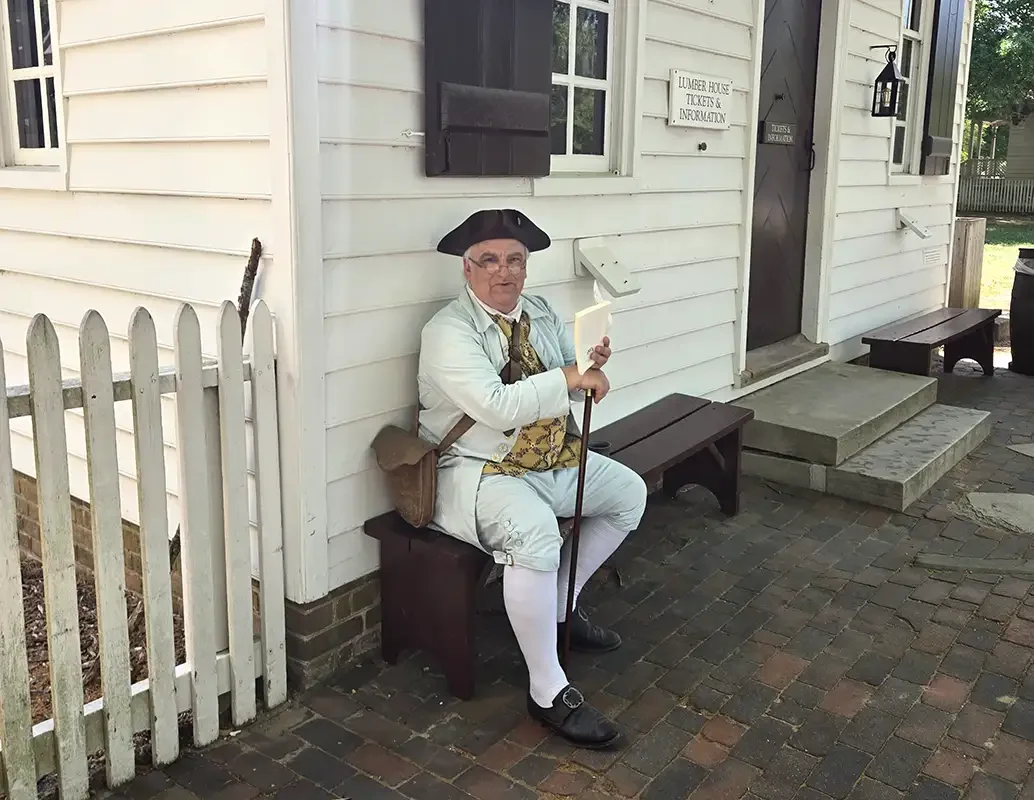
Williamsburg’s costumed interpreters blur the line between past and present.
Known as “the world’s largest living history museum,” Colonial Williamsburg owes its survival to the vision of Reverend W.A.R. Goodwin and the financial backing of John D. Rockefeller Jr.
Our tour began at Bruton Parish Church, where Goodwin launched his campaign to preserve Williamsburg’s historic buildings. As he quietly purchased properties, locals began to wonder where a minister was finding the money. The answer eventually came when Rockefeller stepped in, purchasing additional properties through life-estate agreements that allowed residents to remain in their homes for the rest of their lives.
What elevates Williamsburg from merely interesting to truly exceptional are the interpretive guides. Blacksmiths, milliners, jewellers and countless other tradespeople continue to practise their crafts using traditional methods while dressed in period clothing. During our visit, we even spotted Lafayette riding through town on horseback, occasionally tipping his hat and greeting visitors with a cheerful “Bonjour!”
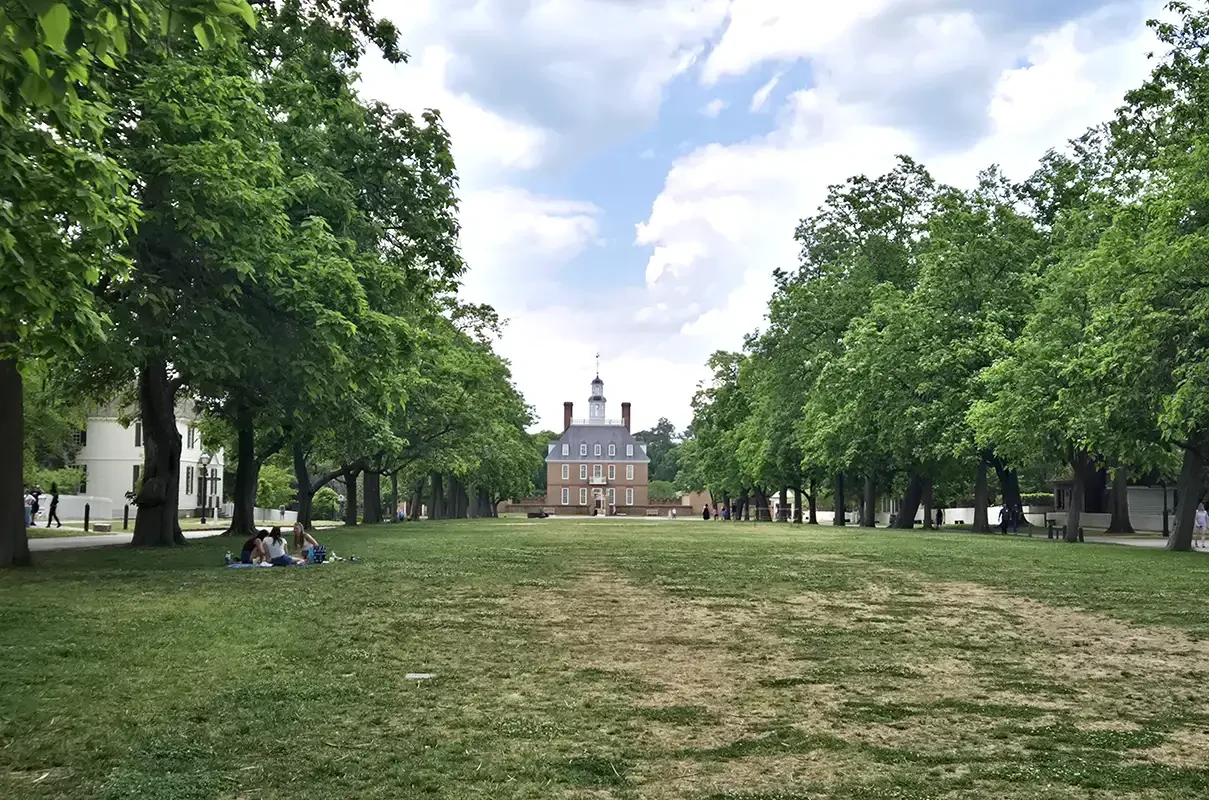
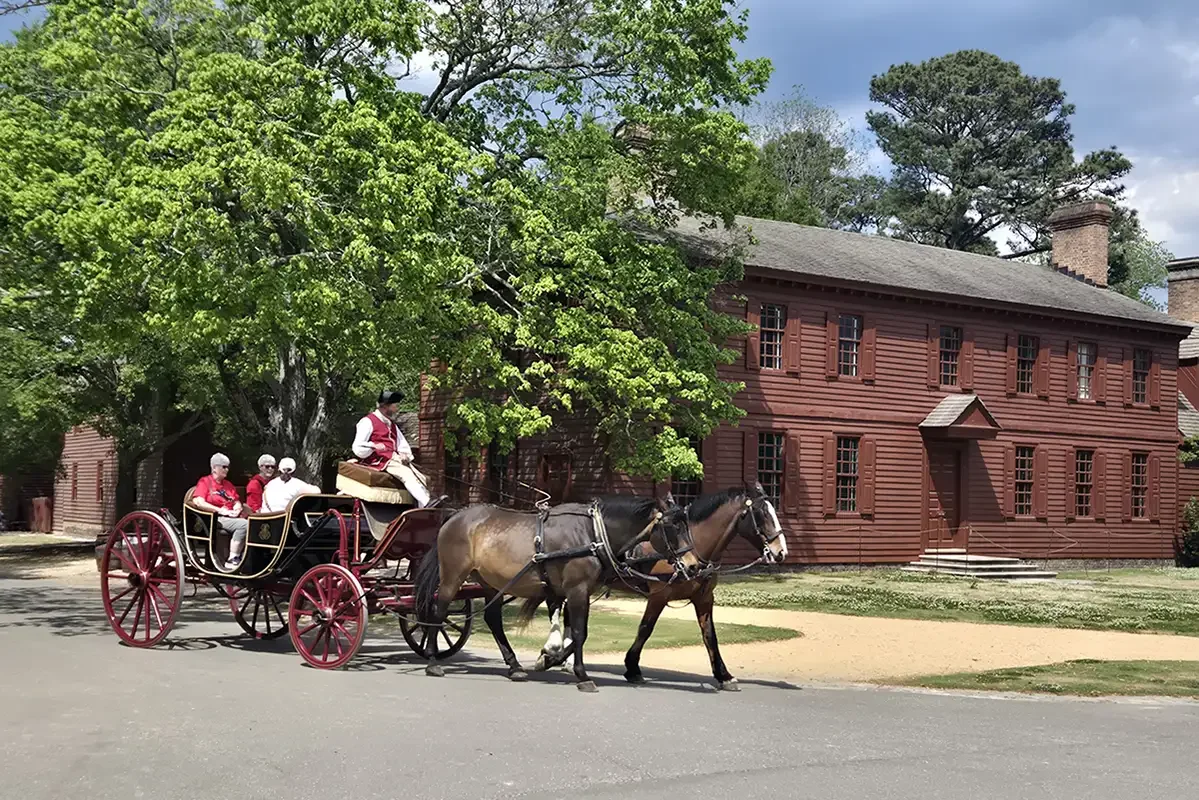
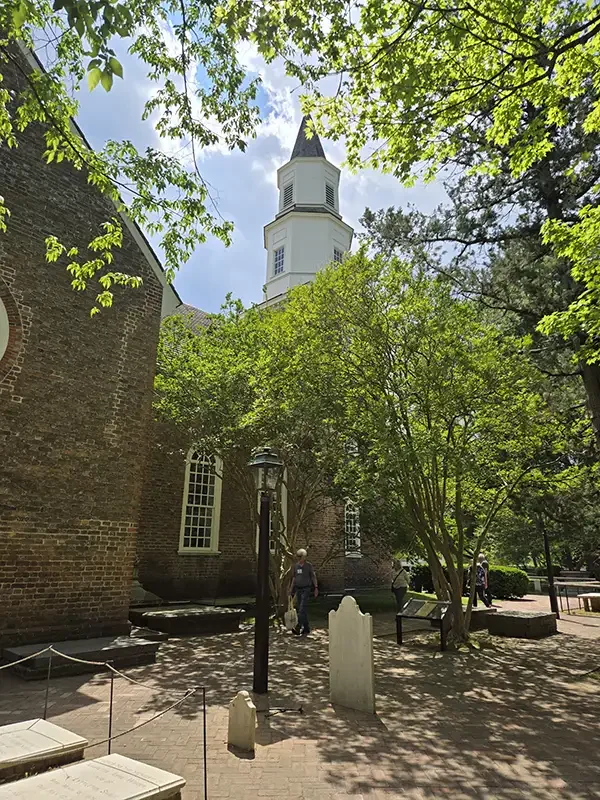
LEFT TO RIGHT: The Governor’s Palace; Carriage rides of Williamsburg are available for a fee; A view of Bruton Parish Church from the rear.
Though not dressed in period costume, our private guide, Trish Thomas, from Williamsburgh Walking Tours, was equally effective at bringing the town’s past to life through stories of the people who once called Williamsburg home.
Bordered by William & Mary—one of the oldest universities in the United States, founded in 1693—the town also benefits from a youthful energy. Students, along with the tourists, mingle among the shops, cafés and restaurants that line the area.
After a full afternoon of exploring, we wrapped up the day at King’s Arms Tavern, an authentic 18th-century tavern where servers in period attire serve traditional colonial fare. The food was hearty, the atmosphere lively, and the evening’s entertainment added another layer of historical immersion.
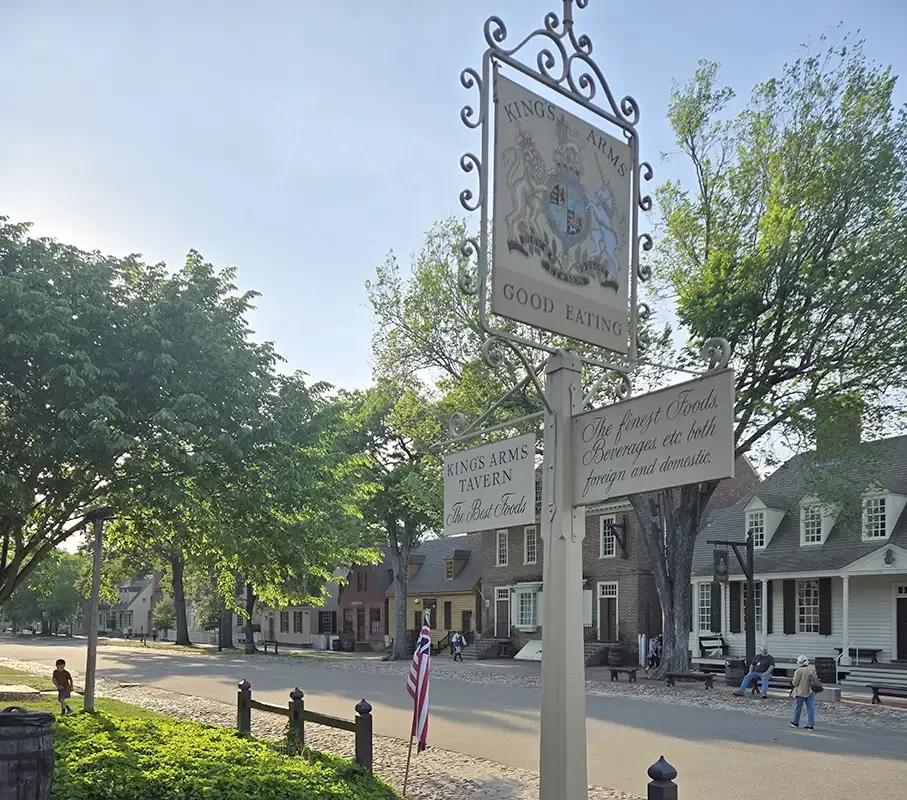
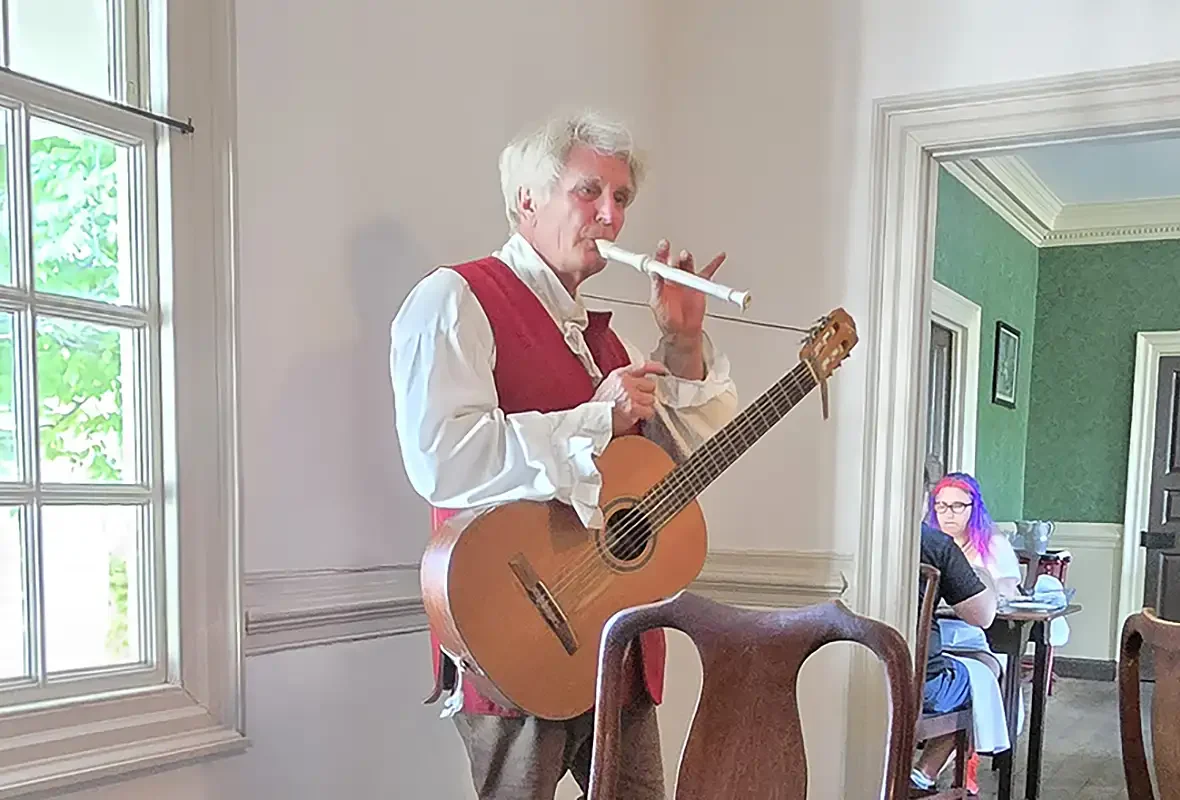
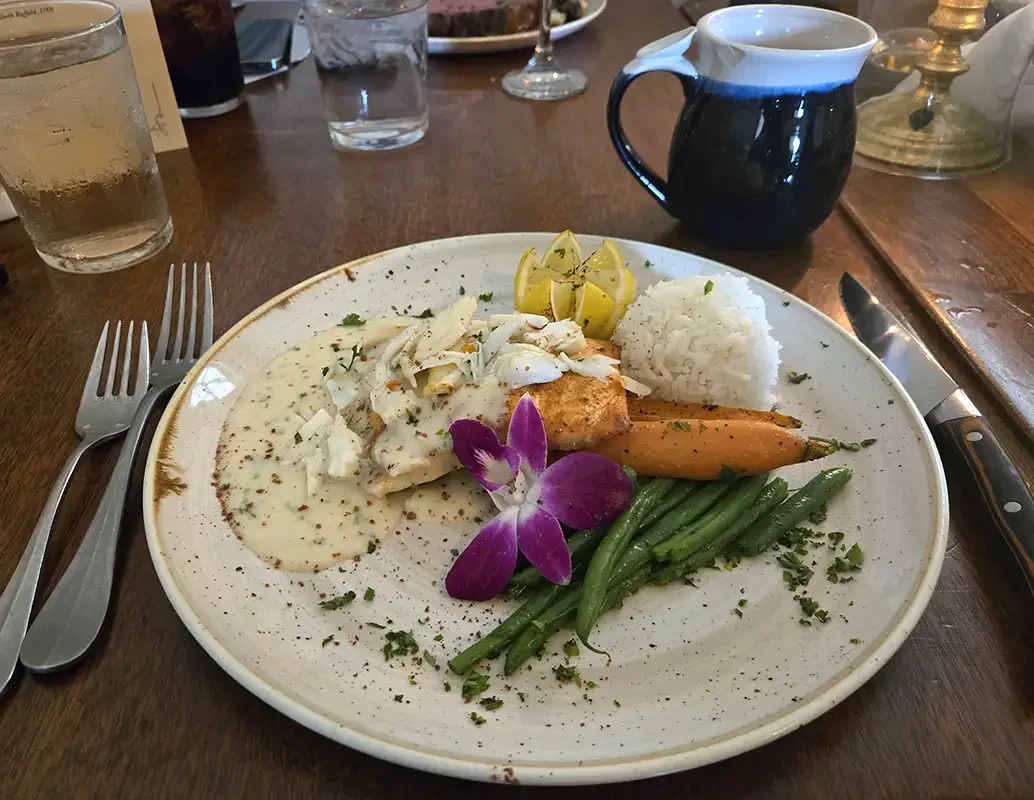
You could easily spend a full day in Williamsburg alone. If your schedule is tight, however, consider dedicating one day to Williamsburg, then returning to Jamestown the following morning before visiting the Art Museums of Colonial Williamsburg. Despite the name, it often feels more like a history museum and is well worth a visit. During our stop, I was fortunate enough to catch a fascinating lecture on the history of archaeology in Williamsburg.
Williamsburg itself is free to wander, but admission is required to enter most of the historic buildings staffed by interpreters. The Art Museums of Colonial Williamsburg and the Colin G. and Nancy N. Campbell Archaeological Research Center are both free to visit.
The capital of Virginia officially moved from Williamsburg to Richmond in 1780 during the American Revolution. It also became a “capitol” with an “o,” reflecting a deliberate break from British tradition and an inspiration drawn from Rome’s Capitoline Hill.
Fun Fact: The move to Richmond was partly strategic and partly architectural. Thomas Jefferson admired the work of Italian architect Andrea Palladio and envisioned a capital city built around classical ideals. Richmond’s seven hills reminded him of Rome, making it the perfect location for the new seat of government.
Yorktown
The deep waters of the York River and Yorktown’s proximity to Virginia’s capital made it a vital colonial port.
This was where travellers arrived, enslaved Africans were unloaded from ships, and goods were exported throughout the British Empire. The town also served as a protective gateway for the capital farther upriver.
Though small, Yorktown played an outsized role in the creation of the United States. It was here that a major battle of the American Revolution unfolded.

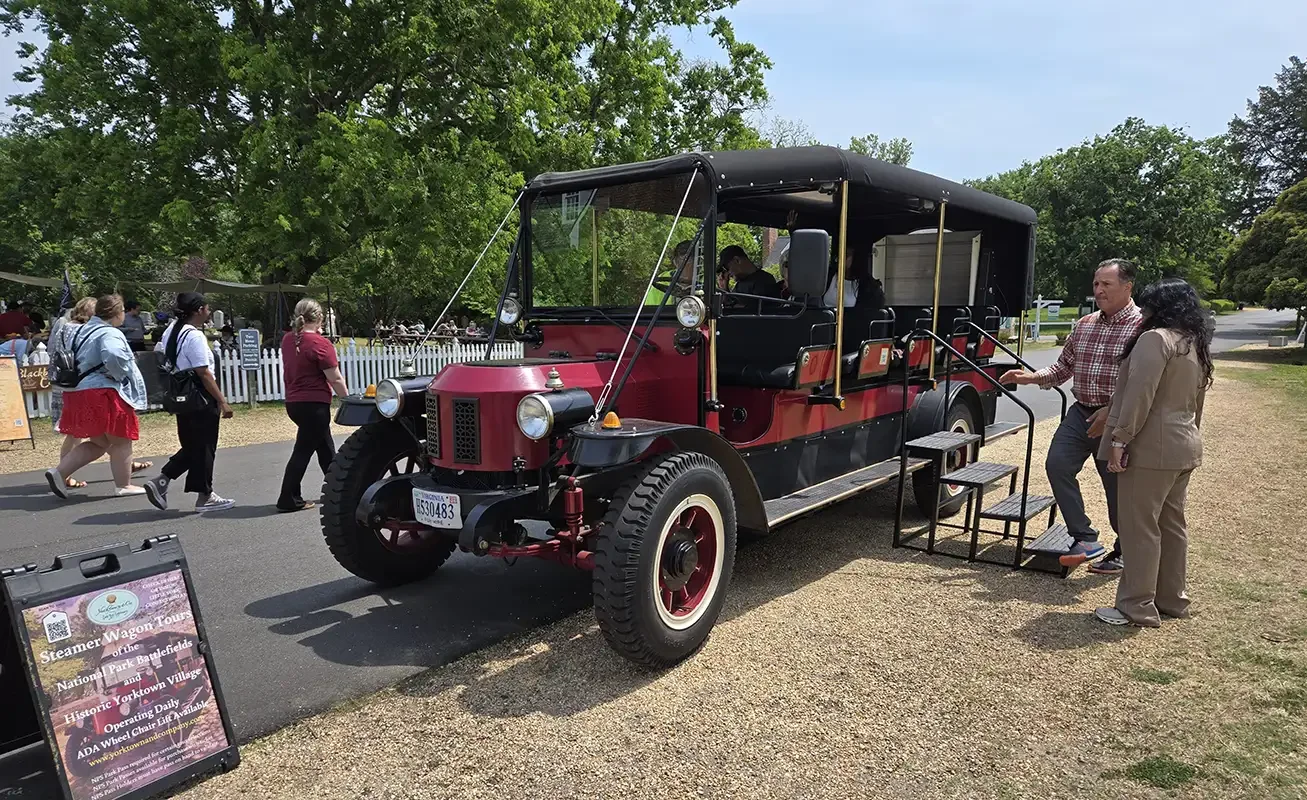
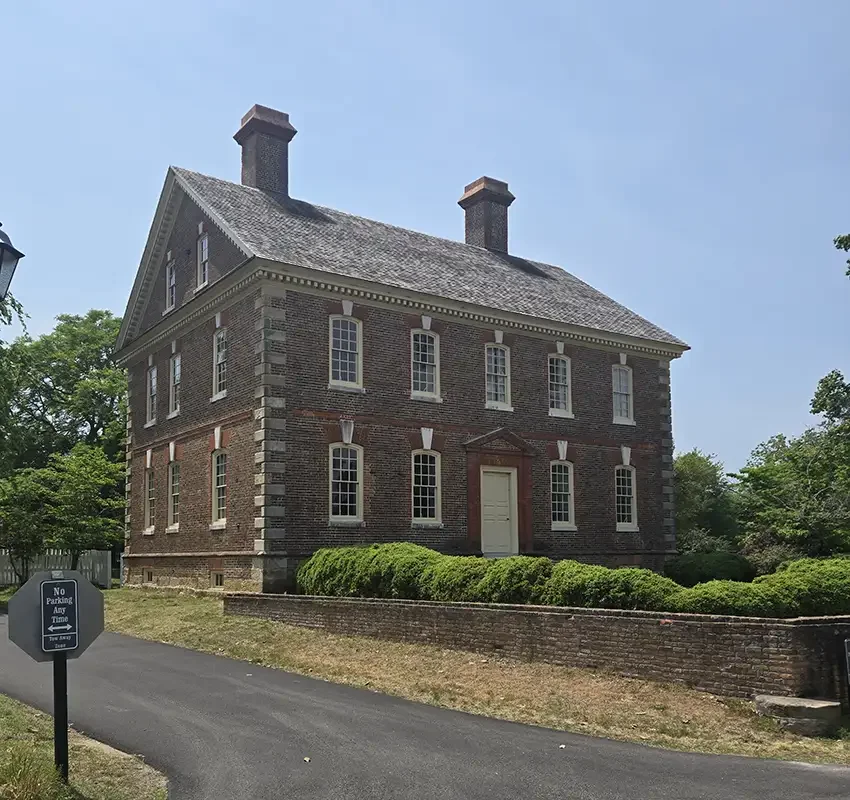
FROM LEFT TO RIGHT: On October 18, 1781, officers from both armies met at the Moore House to negotiate the terms of Cornwallis’s surrender to General Washington. The Steamer Wagon National Park Battlefield Riding Tour offers a vivid retelling of the pivotal battle that shaped the American Revolution. A historic Yorktown home still bears a cannonball embedded in its brickwork, visible on the side of the home just to the right of the main‑floor windows.
We boarded the Steamer Wagon National Park Battlefield Riding Tour and spent the next hour exploring the battlefield while receiving a fascinating history lesson from our guide. We saw the positions occupied by British forces under General Charles Cornwallis as well as the locations held by the Continental Army.
With the support of the French navy, which prevented British reinforcements from reaching Yorktown, and the artillery provided by Admiral de Grasse, Washington’s forces were able to overwhelm Cornwallis and secure a decisive victory.
The tour transforms names from history books into real people. Washington, Hamilton, Rochambeau, de Grasse and countless others emerge as complex personalities whose decisions shaped history. Looking at those fields, it was easy to imagine the fear, exhaustion, heartbreak and eventual triumph experienced by those who fought there.
On our return to town, we passed the house where the Articles of Capitulation were negotiated. Although Cornwallis famously skipped the surrender ceremony, the agreement signed there formally ended British hopes of winning the war. Several buildings in town still bear scars from the conflict, including visible cannonball damage in their brick walls. One homeowner has even inserted a cannonball into a surviving indentation, creating the illusion that the battle happened only yesterday.
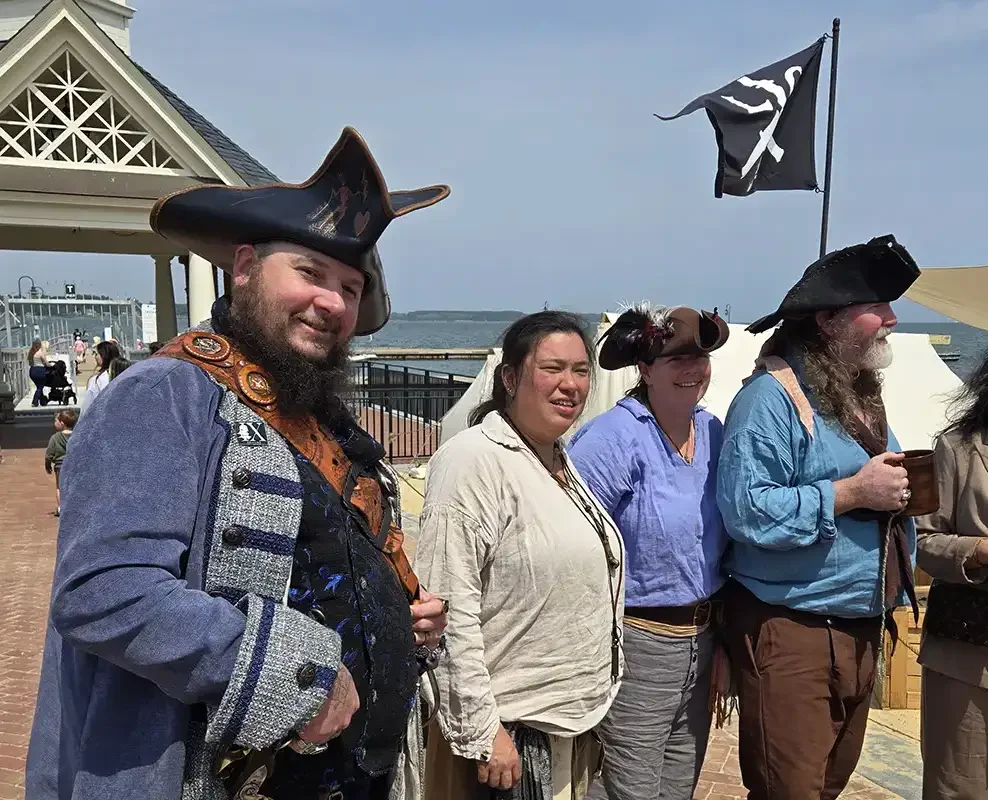
The day we visited coincided with Yorktown’s annual Pirate Festival. We stopped for lunch at Mobjack Bay Coffee Roasters and Petite Café—a fitting nod to the French allies who helped secure victory 250 years ago. Pirates filled the streets, pubs and waterfront, creating a lively carnival atmosphere.
The battle at Yorktown itself did not end the war, and a visit to the American Revolution Museum at Yorktown helps fill in the larger story. The museum also features an excellent recreation of a colonial farm and military encampment staffed by interpretive guides.
Virginia Beach
As fascinating as history can be, every vacation should include time to simply relax. Just an hour’s drive from Yorktown, Virginia Beach is the perfect place to unwind.
A favourite family destination since the late 19th century, our first stop was the historic Cavalier Hotel and Beach Club. Dating back to the 1920s, this elegant property sits proudly above the shoreline and exudes old-world charm. We stopped in for afternoon tea and quickly understood why the hotel has become such an icon.
The Cavalier feels like a grand dame overlooking the Atlantic. Its indoor pool practically radiates Great Gatsby energy. In fact, the novelist F. Scott Fitzgerald was inspired to write the classic novel after a 1927 stay at the hotel.
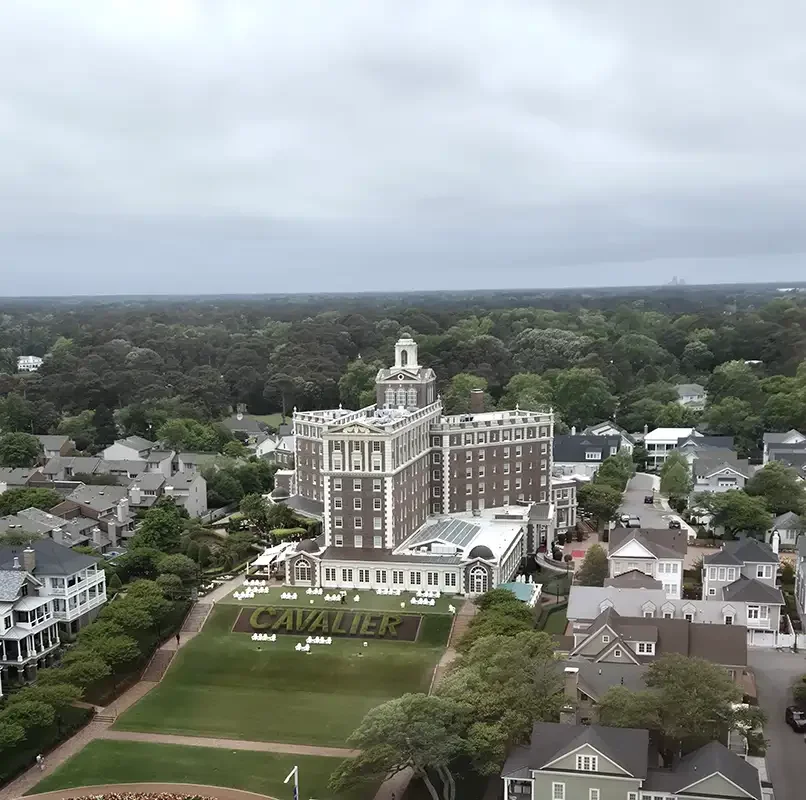
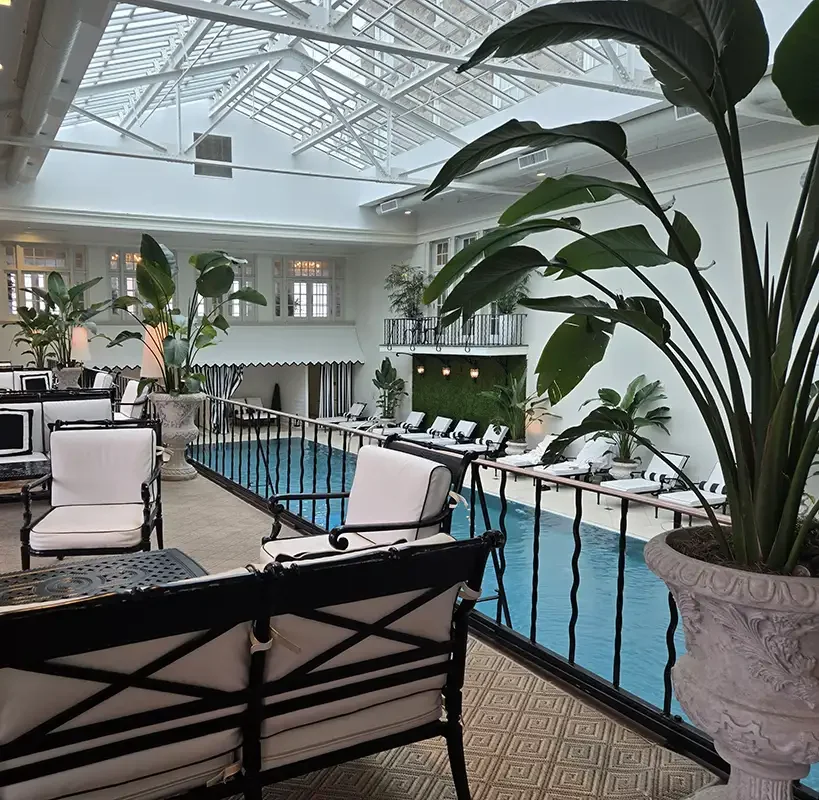
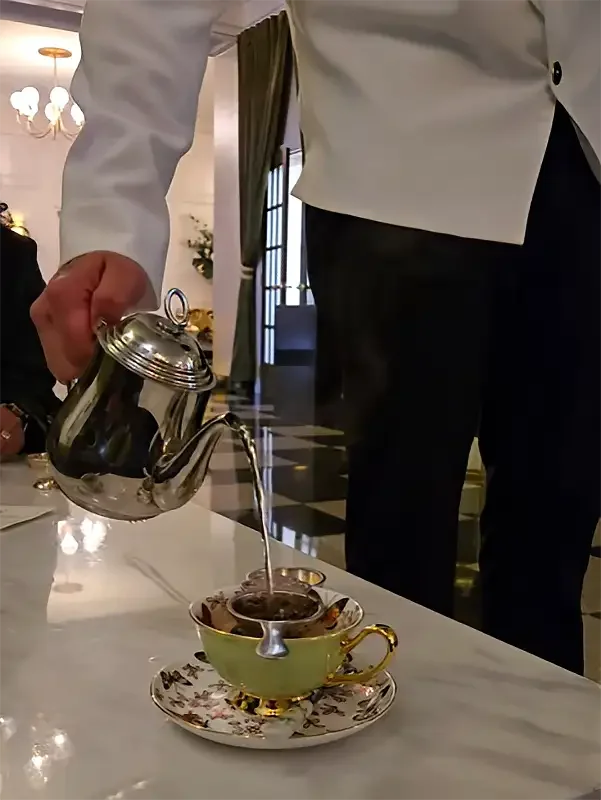
FUN FACT: Due to its enormous size, a local legend claims that the U.S. Navy commandeered the Cavalier’s pool during the Second World War for sonar training. While no official records support the story, it remains a favourite piece of lore.
Across the street, we enjoyed dinner at Orion’s Roof, a rooftop, oceanfront Asian-fusion restaurant offering killer views of Virginia Beach’s 35 miles of shoreline. Even early in the season, the restaurant on the top of the Marriott Hotel was bustling. Reservations are strongly recommended.
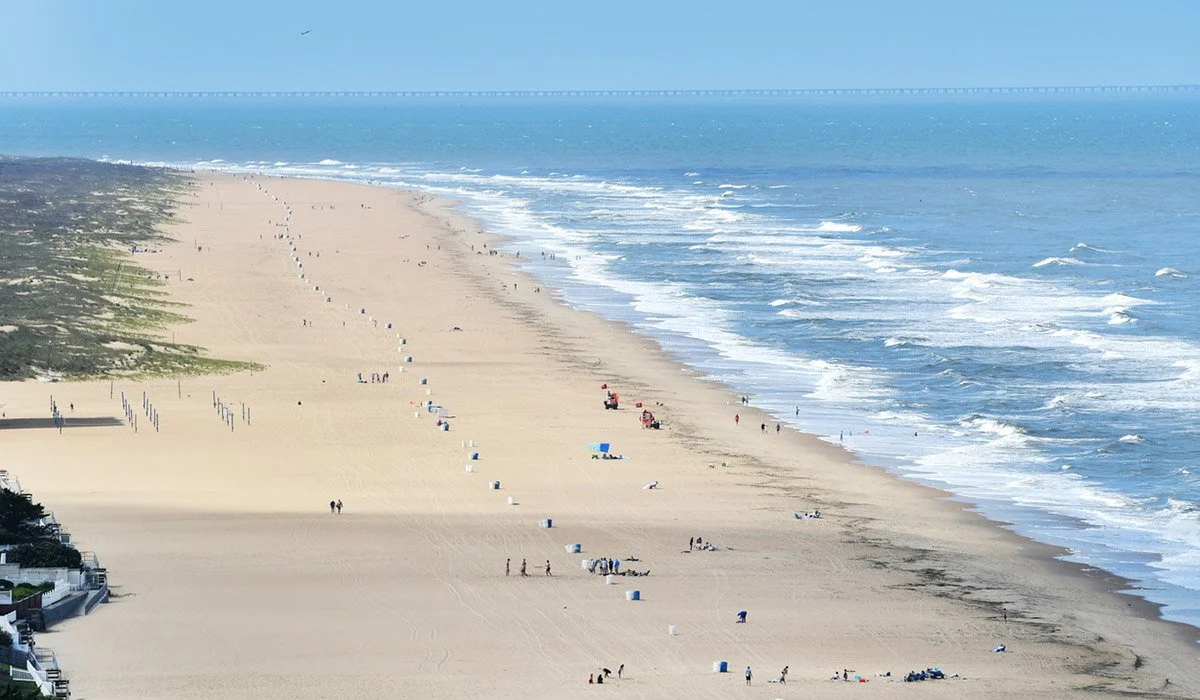
The beach may be the star attraction, but there’s plenty more to discover. The ViBe Creative District is home to artists, makers and entrepreneurs. A continual rotation of art walks, farmers’ markets, live music, food festivals and public art installations makes it a worthwhile detour from the sand.
Those seeking something more spiritual can visit Edgar Cayce’s Association for Research and Enlightenment. Founded in 1931, the organization promotes holistic health and personal growth. Visitors can attend lectures, join meditation sessions, browse the bookstore or simply explore the fascinating history of one of America’s most famous mystics.
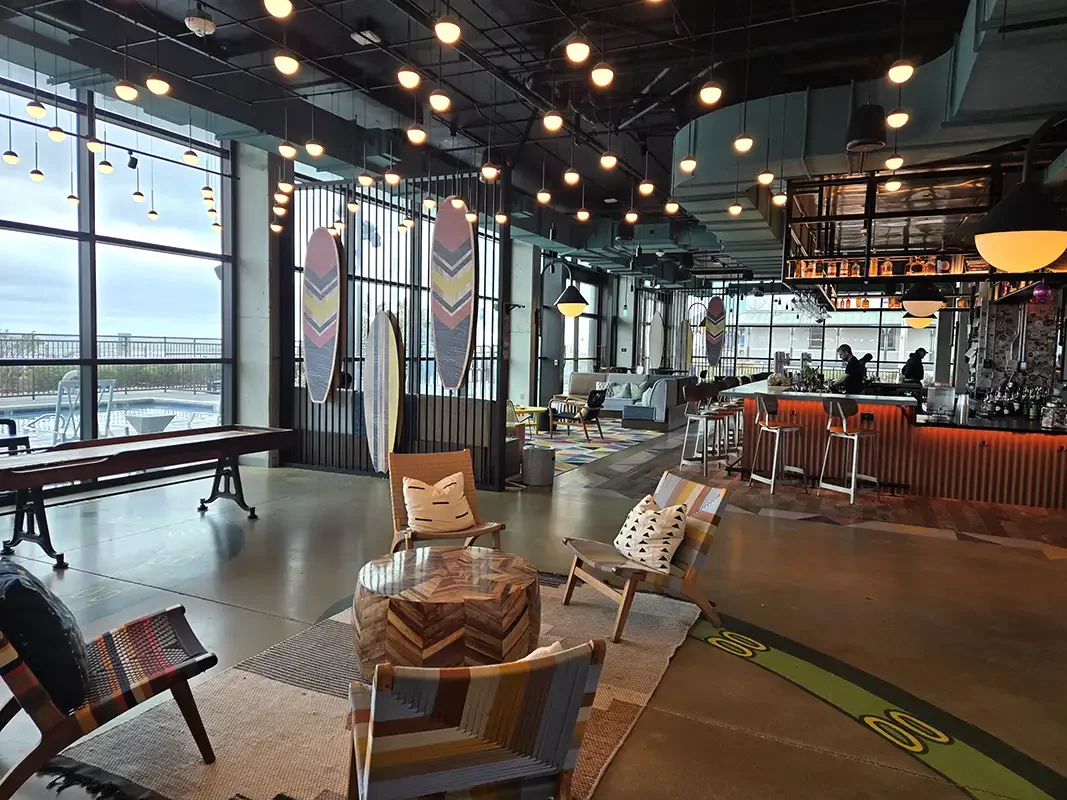
The Moxy’s sprawling, style‑forward lobby blends bar vibes, lounge nooks, and poolside energy — with a sweeping view of the Atlantic.
During our stay, we checked into the Moxy Virginia Beach Oceanfront, a fun and energetic Marriott property at the south end of the strip, directly on the beach. The open-concept lobby feels more like a stylish living room than a hotel reception area, complete with multiple lounge spaces and a giant indoor slide connecting the second floor to the lobby. After 8 p.m., the slide becomes adults-only—a perfect example of the hotel’s playful personality.
With friendly staff, ocean views, and a laid‑back coastal vibe, it was the perfect place to wrap up a journey through the birthplace of America — especially as the nation approaches its 250th anniversary.
Threaded through the Historic Triangle is the unmistakable presence of George Washington, from the colonial world that shaped him in Jamestown and Williamsburg to the decisive moment in Yorktown when he accepted Cornwallis’s surrender. His story rises and falls with these places, turning the trip into a walk through the making of the man who would help shape a nation.
And if you want to follow Washington’s story to its most personal chapter, continue to our story on Fairfax County and explore his beloved estate at Mount Vernon.
For more information on travel to Virginia, www.virginia.org

Photo of Virginia Beach via iStock. All other photos by Karen Temple.